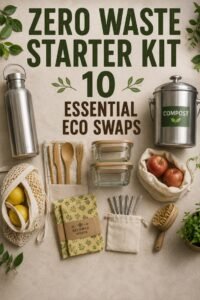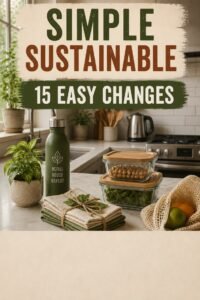
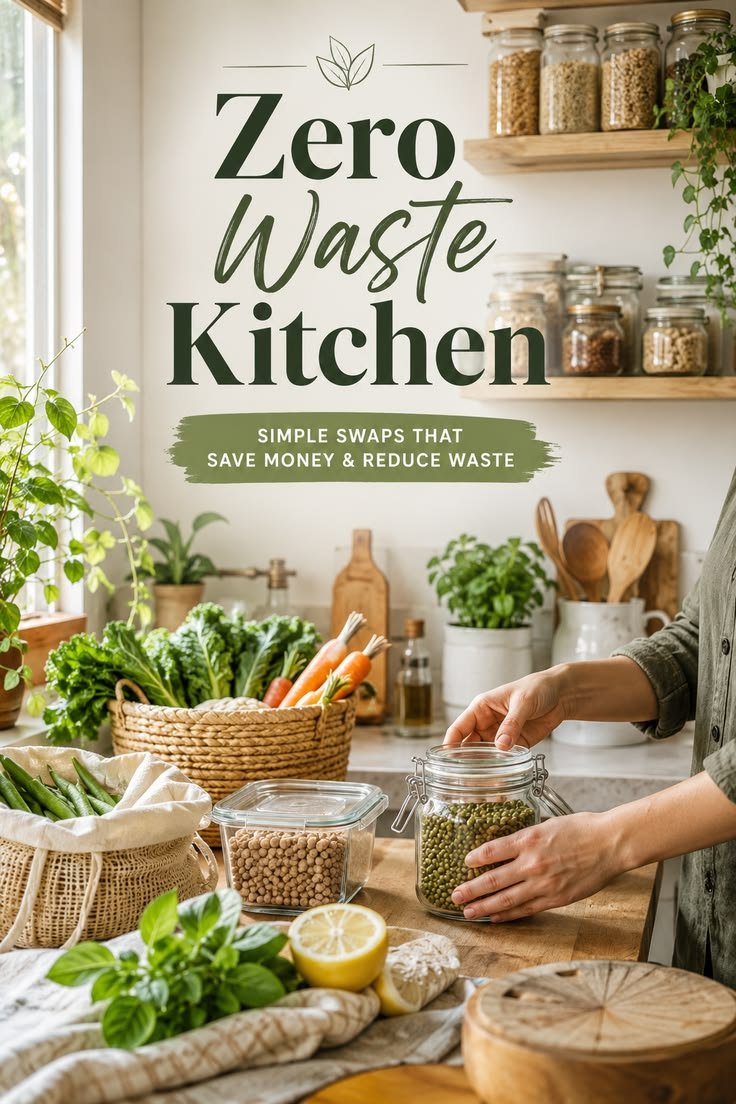
Blog Introduction
The kitchen is one of the best places to start a zero-waste journey because it produces waste from food packaging, leftovers, disposable products, and food scraps.
Sections
1. Plan Your Meals
Meal planning can help prevent buying more food than you can use.
2. Shop With a List
Make a shopping list before going to the store.
3. Choose Less Packaging
Whenever practical, choose products with minimal or reusable packaging.
4. Use Reusable Containers
Store leftovers and ingredients in reusable containers.
5. Reuse Glass Jars
Jars can be useful for:
- Spices
- Grains
- Sauces
- Snacks
- Homemade food
6. Reduce Food Waste
Use vegetables and other ingredients efficiently.
For example:
- Use vegetable scraps where appropriate.
- Freeze food before it spoils.
- Turn leftovers into another meal.
7. Compost Food Scraps
Explain basic composting and which materials are generally suitable.
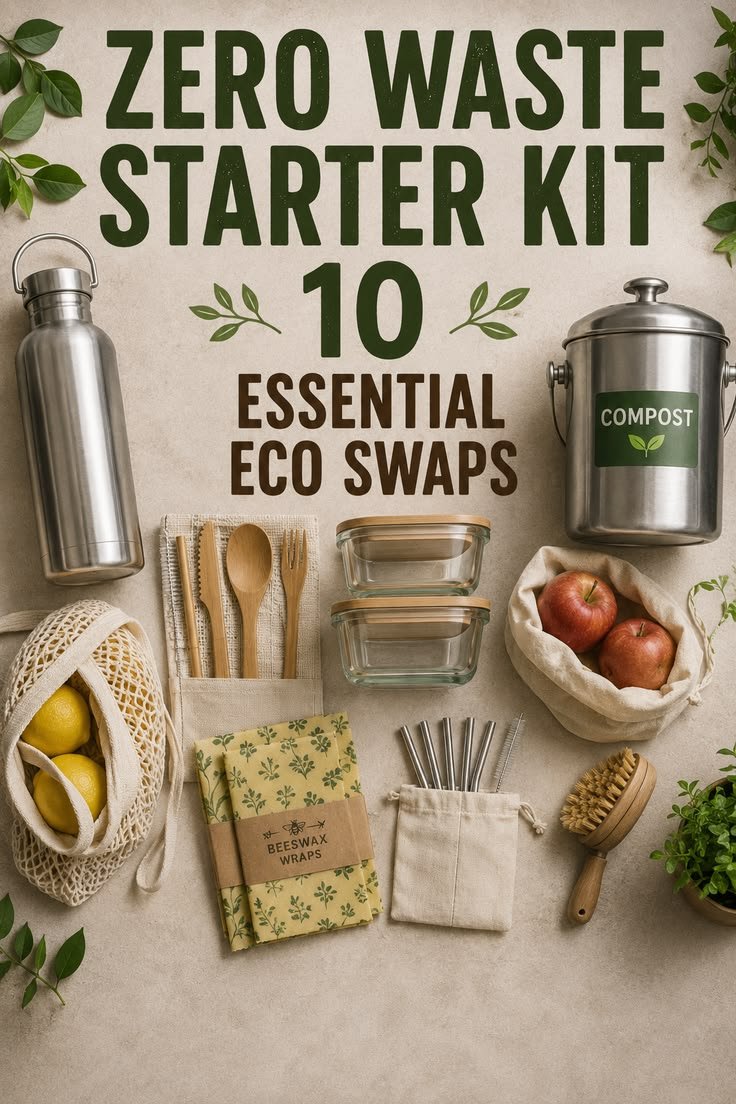
8. Replace Disposable Kitchen Items
Examples:
- Paper towels → washable cloths
- Plastic bags → reusable bags
- Disposable containers → reusable containers
Zero-Waste Kitchen Checklist
☐ Reusable shopping bags
☐ Reusable containers
☐ Reusable water bottle
☐ Cloth kitchen towels
☐ Meal planning
☐ Food storage system
☐ Composting option
CTA
“Start your zero-waste kitchen by changing just one disposable item this week.”