What Are Eco-Friendly Habits?
Eco-friendly habits are simple actions that reduce harm to our environment. They help us use water, energy, and other resources more wisely. These habits can also reduce waste and unnecessary pollution.
You can practice them at home, school, work, or while traveling. Small choices can make a difference when we practice them regularly. For example, reuse bags, save water, and turn off unused lights.
Living eco-friendly does not require changing everything at once. Start with one simple habit, then add more over time.
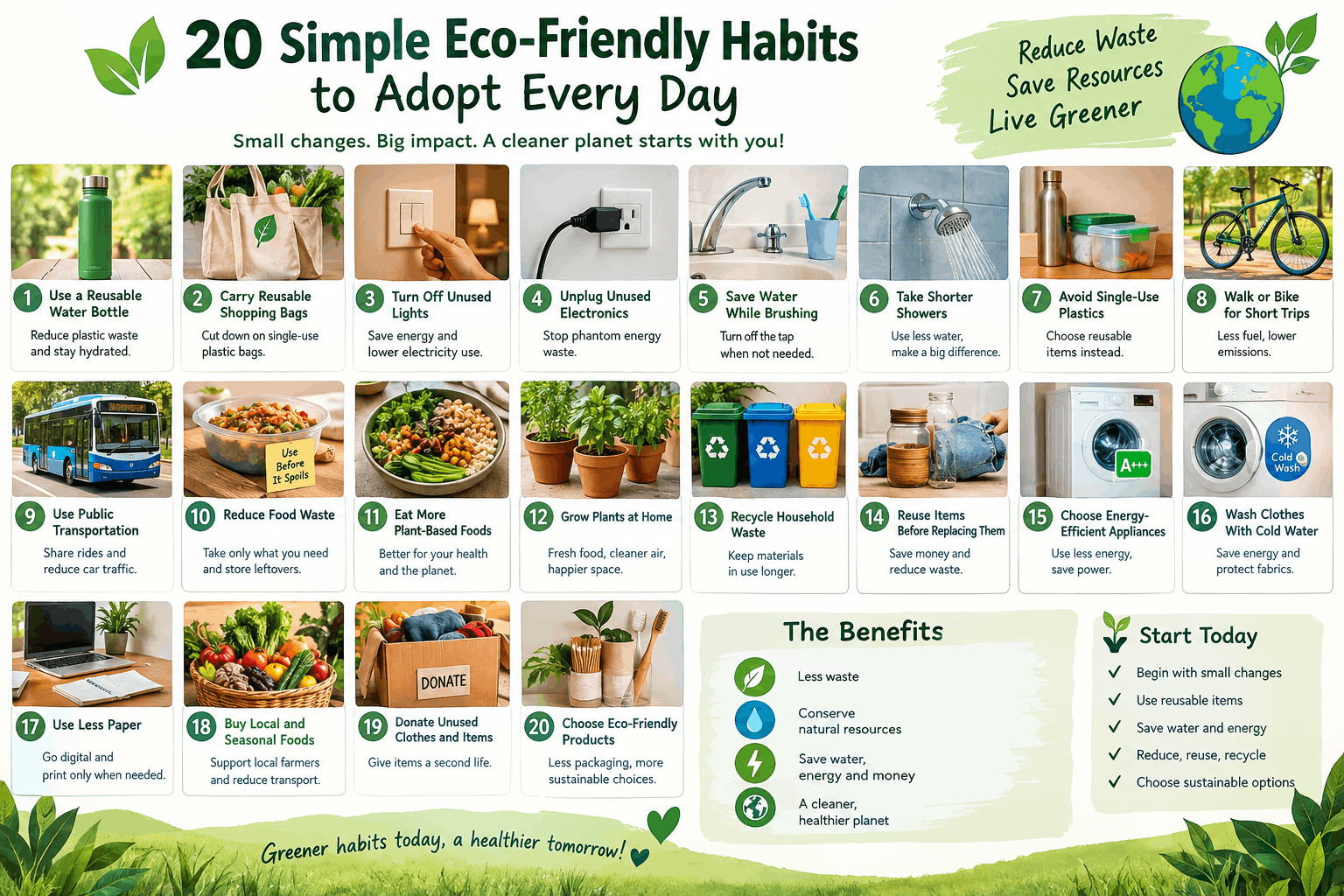
20 Simple Eco-Friendly Habits to Adopt Every Day
1. Use a Reusable Water Bottle
Carry a reusable bottle instead of buying bottled water. It helps reduce the amount of plastic waste you create.
2. Carry Reusable Shopping Bags
Take reusable bags when you go shopping. They can reduce your use of disposable plastic bags.
3. Turn Off Unused Lights
Turn off lights when you leave a room. This simple habit helps reduce unnecessary electricity use.
4. Unplug Unused Electronics
Unplug devices when you do not need them. Some electronics still use electricity while plugged in.
5. Save Water While Brushing
Turn off the tap while brushing your teeth. This helps prevent clean water from going to waste.
6. Take Shorter Showers
Keep your showers short to use less water. You can save water without changing your daily routine.
7. Avoid Single-Use Plastics
Choose reusable items instead of disposable plastic products. This can help reduce plastic waste in your daily life.
8. Walk or Bike for Short Trips
Walk or bike when nearby places are easy to reach. These choices can reduce fuel use and vehicle emissions.
9. Use Public Transportation
Use buses or trains when they are available. Sharing transportation can reduce the number of cars on roads.
10. Reduce Food Waste
Take only the food you expect to eat. Store leftovers properly and use them before they spoil.
11. Eat More Plant-Based Foods
Include more beans, vegetables, fruits, and whole grains in meals. Plant foods can have lower environmental impacts than many animal foods.
12. Grow Plants at Home
Grow herbs, flowers, or vegetables if you have enough space. Plants can provide food and support local insects.
13. Recycle Household Waste
Separate recyclable materials according to your local recycling rules. Proper sorting helps recycling programs process materials more effectively.
14. Reuse Items Before Replacing Them
Use items again when they are still safe and useful. Repairing or reusing things can reduce unnecessary waste.
15. Choose Energy-Efficient Appliances
Look for appliances designed to use less energy. Efficient appliances can lower electricity use during regular operation.
16. Wash Clothes With Cold Water
Wash clothes with cold water when suitable for the fabric. Cold washing can use less energy than hot washing.
17. Use Less Paper
Use digital notes when paper is not necessary. Print only when you genuinely need a physical copy.
18. Buy Local and Seasonal Foods
Choose local and seasonal foods when practical. They may require less transportation than some distant food choices.
19. Donate Unused Clothes and Items
Donate clean items that you no longer need. Someone else may find them useful instead of buying new ones.
20. Choose Eco-Friendly Products
Choose products with less packaging when possible. Reusable, durable, and repairable products can help reduce waste.
Benefits of Following Eco-Friendly Habits
Eco-friendly habits help reduce waste and conserve natural resources. They can also save water, energy, and money. These simple actions support a cleaner and healthier environment.
How to Start an Eco-Friendly Lifestyle
Start with small changes that fit naturally into your daily routine. Use reusable items instead of disposable ones whenever possible. Save water by turning off taps when they are not needed. Reduce waste by reusing, repairing, donating, and recycling useful items. Walk, bike, or use public transportation for suitable short trips. Choose energy-efficient products when you need to replace household items. Focus on one habit first, then slowly add more habits.
Common Mistakes to Avoid
Avoid buying things you do not need or will rarely use. Do not choose disposable items when reusable options work well. Avoid throwing useful items away before trying to reuse or repair them. Do not put unsuitable items into recycling bins. Always check your local recycling rules before recycling household items. Avoid wasting food by buying only what you need. Do not try changing everything at once. Start with simple daily habits.
Frequently Asked Questions (FAQs)
1. What are eco-friendly habits?
Eco-friendly habits are daily actions that help reduce waste and protect natural resources.
2. Why are eco-friendly habits important?
They can help reduce waste, save water and energy, and lower pollution.
3. What is the easiest eco-friendly habit to start?
Using a reusable water bottle is an easy habit to start.
4. How can I reduce plastic waste every day?
Use reusable bags, bottles, containers, and other durable products.
5. How can I save water at home?
Turn off taps when unnecessary and take shorter showers.
6. Can eco-friendly habits save money?
Yes, some habits can lower spending on energy, water, and disposable products.
7. How can I reduce food waste?
Buy only what you need and store leftovers properly.
8. Is recycling an eco-friendly habit?
Yes, proper recycling can help recover useful materials and reduce waste.
9. How can I make my lifestyle more eco-friendly?
Start with simple habits like reusing items, saving energy, and reducing waste.
10. Do small eco-friendly habits really make a difference?
Yes, repeated small actions can help reduce resource use and household waste.
Final Thoughts on 20 Simple Eco-Friendly Habits
Eco-friendly habits can become simple parts of your everyday routine. Small choices can help reduce waste and conserve natural resources. Start with habits that feel easy and practical for your lifestyle. Reuse, repair, and recycle items whenever possible instead of wasting them. With time, these simple habits can become a natural part of daily life.
Disclaimer
This article provides general environmental information and does not guarantee specific results from adopting these habits.