
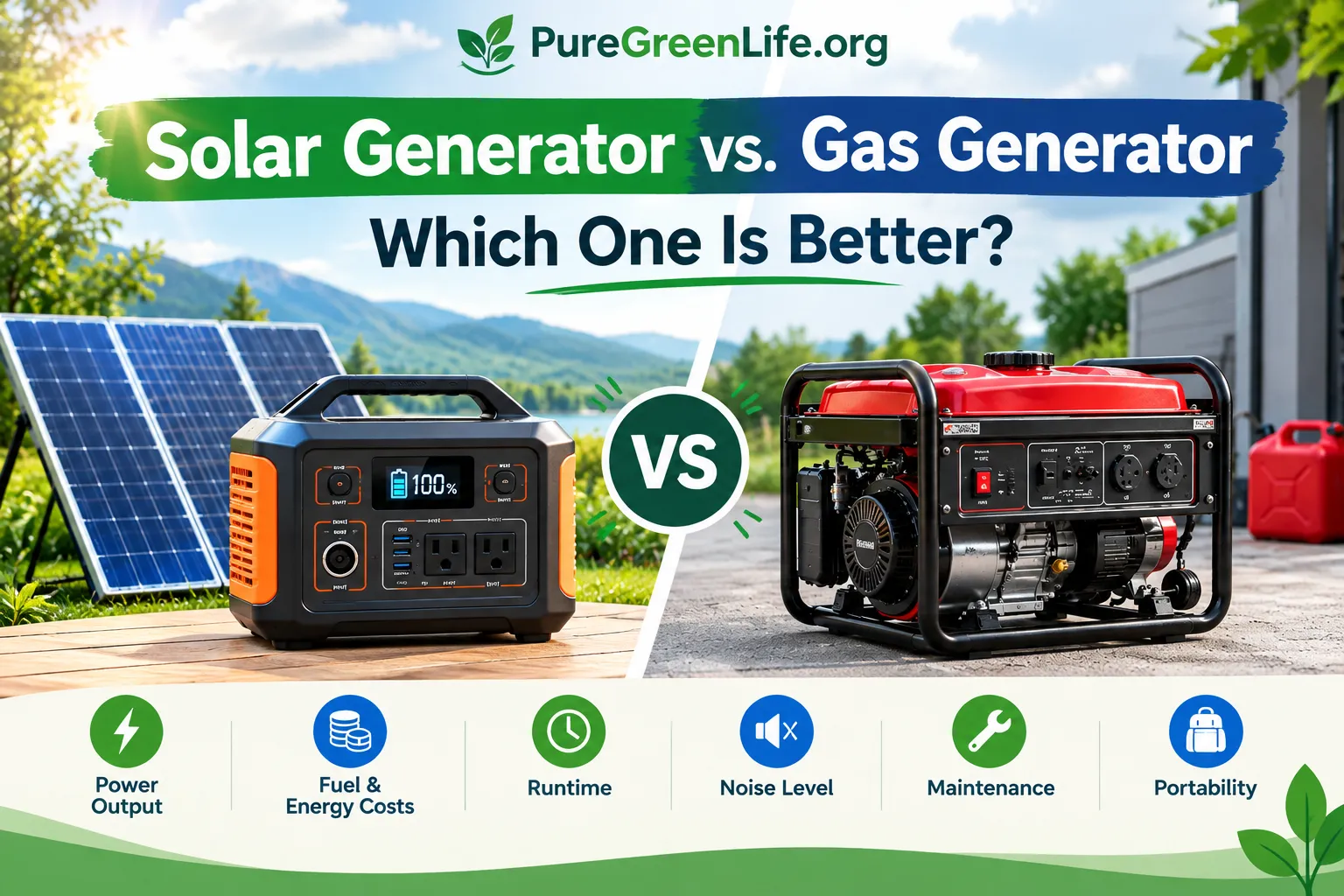
Choosing between a solar generator and a gas generator can be difficult. Both options can provide backup power during an outage. However, they work in very different ways. Solar generators use stored battery power and solar energy. Gas generators burn fuel to produce electricity. Your choice depends on power needs, runtime, noise, maintenance, and cost. Understanding these differences can help you choose the right generator.
What Is a Solar Generator?
A solar generator is a battery-based power system that stores electricity. Solar panels can charge its battery using sunlight. Many models can also charge from a wall outlet. An inverter converts stored energy into usable AC power. Solar generators do not burn gasoline during operation. Their battery capacity and inverter output determine how much power they provide.
What Is a Gas Generator?
A gas generator uses an internal combustion engine to produce electricity. The engine burns gasoline to power an alternator. Gas generators can provide strong electrical output for many appliances. Their runtime depends on fuel capacity, power demand, and engine efficiency. They produce exhaust gases and carbon monoxide during operation. Always use a gas generator outdoors in a safe area.
Solar Generator vs. Gas Generator: Key Differences
Solar and gas generators differ in several important ways. These differences include power output, operating costs, runtime, noise, maintenance, and portability. Understanding each factor makes the buying decision easier.
Power Output
Power output shows how much electrical load a generator can handle. Solar generators have limited inverter output and battery capacity. Gas generators often provide higher power for demanding appliances. Always check running watts and starting watts before choosing a generator.
Fuel and Energy Costs
Gas generators need gasoline while they operate. Long outages can therefore increase fuel costs. Solar generators do not need gasoline during operation. Their batteries can recharge through solar panels or supported charging methods. However, solar generators often have a higher upfront price.
Runtime
A gas generator can keep running as long as enough fuel remains available. Its runtime depends on fuel capacity and electrical load. A solar generator runs from its stored battery energy. Heavy loads can drain the battery faster. Solar panels can recharge the battery when sunlight is available.
Noise Level
Gas generators use engines that produce noticeable operating noise. Noise levels vary between models and electrical loads. Solar generators use batteries and electronic components instead of combustion engines. They usually operate much more quietly. This makes them useful for homes and quiet outdoor settings.
Maintenance
Gas generators require regular engine maintenance. This may include oil changes, air-filter checks, and spark-plug maintenance. Specific requirements depend on the manufacturer’s instructions. Solar generators have fewer moving parts and need less mechanical maintenance. Their batteries and electronic components still need proper care.
Portability
Portability depends on the generator’s size, weight, and design. Small solar generators can be easy to carry. Larger battery systems can become quite heavy. Gas generators also come in different sizes and weights. Check the weight, handles, and wheels before choosing a model.
Pros and Cons of Solar Generators
Solar generators offer several benefits for backup and portable power. However, they also have some limitations. Their performance depends heavily on battery size and power requirements.
Advantages of Solar Generators
Solar generators do not burn fuel during battery operation. They produce no combustion exhaust while supplying stored power. They also operate much more quietly than gas generators. They require less routine mechanical maintenance. They can work well for electronics, lights, small appliances, and camping.
Disadvantages of Solar Generators
Solar generators have limited battery capacity and inverter output. High-power appliances can drain their batteries quickly. Solar charging also depends on sunlight and panel capacity. Larger systems can cost more upfront. They may not suit users who need high power continuously.
Pros and Cons of Gas Generators
Gas generators remain popular because they can provide substantial power. They can also run for long periods with enough fuel. However, they have operating and maintenance requirements that solar generators avoid.
Advantages of Gas Generators
Gas generators can provide strong power for many household appliances. Refueling can restore their runtime quickly. They can handle demanding loads when properly sized. This makes them useful during longer power outages. They can also support outdoor equipment requiring higher power.
Disadvantages of Gas Generators
Gas generators require fuel and regular engine maintenance. Fuel must also be stored and handled safely. Their engines create noise and exhaust during operation. They also produce carbon monoxide, which can be deadly. Never operate a gas generator inside a home or enclosed space.
Which Generator Is Better for You?
The best choice depends on your specific power needs. Consider the appliances you need during an outage. Also compare power output, runtime, fuel needs, noise, maintenance, and cost. Solar generators suit users who value quiet and low-maintenance power. Gas generators suit users who need higher output and quick refueling.
Best for Home Backup
A solar generator can work well for essential electronics and smaller loads. It can power items such as lights, phones, and routers. A gas generator may suit homes needing more electrical power. Always choose a generator with enough continuous and starting watt capacity.
Best for Emergencies
Solar generators can provide quiet backup power without fuel combustion. They can support phones, lights, routers, and other compatible devices. Gas generators can support larger loads during extended outages. However, they require strict safety precautions because of carbon monoxide.
Best for Outdoor Use
Solar generators are useful for camping and portable electronics. They operate quietly and do not produce combustion exhaust. Gas generators can work well for outdoor jobs requiring higher power. However, they must always operate outdoors with proper ventilation.
Final Verdict: Solar or Gas Generator?
Neither generator is better for every situation. Solar generators are a good choice for quiet and low-maintenance backup power. Gas generators can be better for higher power and longer runtime. Your decision should match your power needs and budget. Compare important specifications before making your final choice.