Ever stood on an Australian beach and wondered what’s actually swimming out there in the deep? Most people have no idea the largest animal to ever exist on Earth passes through these waters every single year. The largest whale in Australia isn’t some rare myth. It’s the blue whale, and its sheer size is honestly hard to wrap your head around.
Quick Answer: What’s the Largest Whale in Australia?
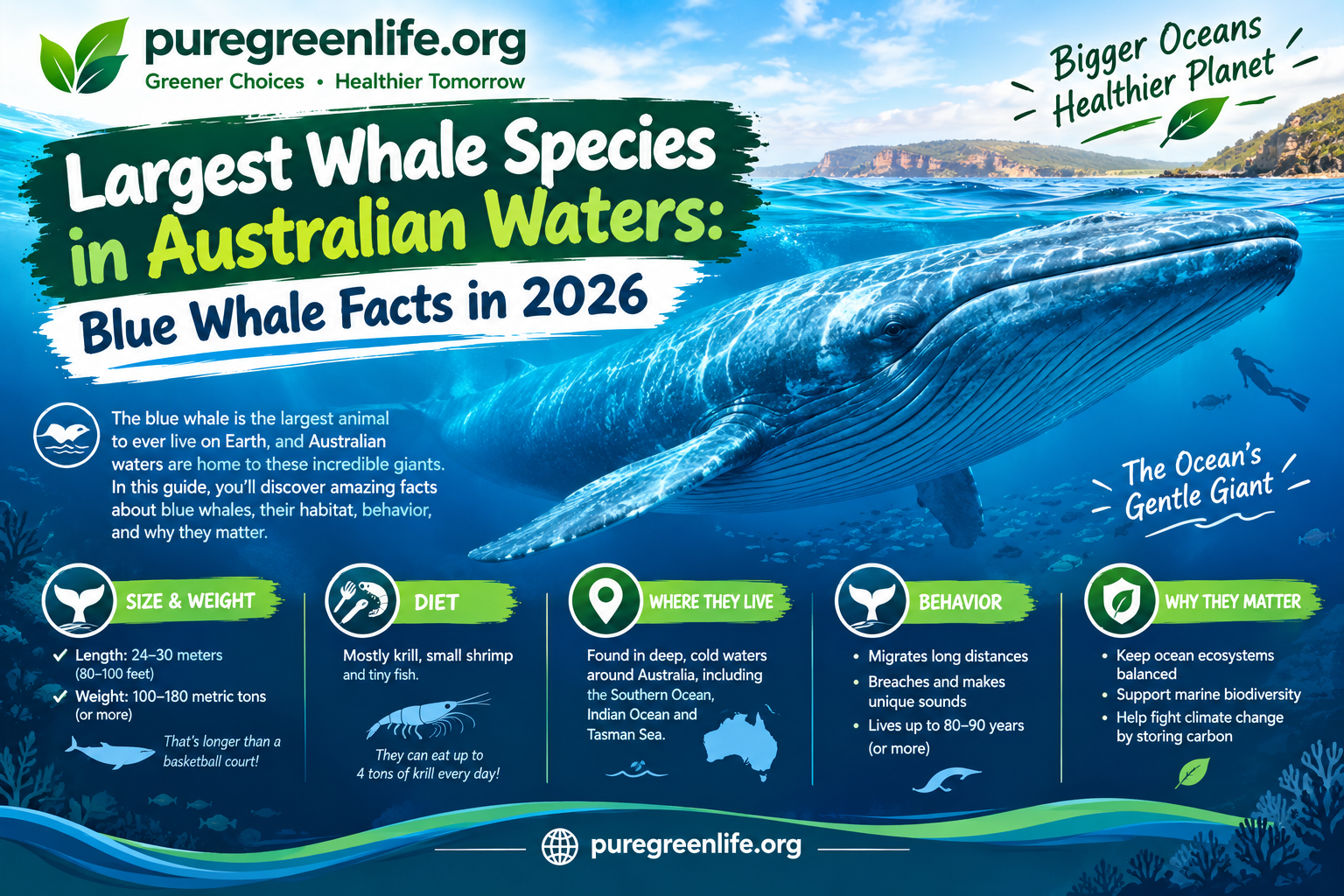
The blue whale holds the title as the largest whale species found in Australian waters, and the largest animal on the planet. Adults can reach up to 30 meters long and weigh nearly 150 tonnes. They migrate along Australia’s coastline seasonally, feeding mostly on tiny krill in nutrient-rich southern waters.
- Species: Blue whale (Balaenoptera musculus)
- Size: Up to 30 meters, roughly the length of three buses
- Diet: Almost exclusively krill
- Found: Southern Australian coastline, seasonally
Why the Blue Whale Takes the Crown
Here’s something that surprises a lot of people. Blue whales aren’t just the biggest whale in Australia.
They’re the biggest animal to ever live. Bigger than any dinosaur, even the massive ones you learned about in school.
That fact alone makes Australian blue whale sightings genuinely special events.
Blue Whale Size: Numbers That Don’t Quite Make Sense
Let’s talk actual blue whale size for a second. These numbers sound exaggerated, but they’re not.
Just How Big Are We Talking?
- Length: Up to 30 meters (about 98 feet)
- Weight: Up to 150 tonnes
- Heart: Roughly the size of a small car
- Tongue: Can weigh as much as an elephant
A single blue whale calf gains around 90 kilograms per day while nursing. Per day. That’s not a typo.
Where Do You Find Whales in Australian Waters?
Blue whales aren’t scattered randomly across the ocean. They follow specific routes, tied closely to food availability.
Key Blue Whale Habitat Zones in Australia
- Bonney Upwelling (South Australia and Victoria)
- Perth Canyon (Western Australia)
- Great Australian Bight
These spots share one thing in common. Cold, nutrient-rich water that attracts massive krill swarms.
Blue Whale Diet: Giant Animal, Tiny Food
This part genuinely surprises people every time. The largest animal alive eats almost nothing but krill.
Tiny, shrimp-like creatures barely bigger than your fingernail. That’s the entire diet, essentially.
How Much Do They Actually Eat?
- Up to 4 tonnes of krill per day during feeding season
- Filtered through baleen plates instead of teeth
- Feeding concentrated mostly in summer months
No teeth involved at all. Just massive gulps of water, filtered through comb-like plates, trapping krill by the thousands.
When to Spot Whales in Australia
Timing matters a lot here. Blue whales aren’t present year-round in most locations.
Best Viewing Windows
- Bonney Upwelling: December to May
- Perth Canyon: March to April, mainly
- Sightings become rarer outside these windows
Patience helps too, honestly. Even in peak season, sightings aren’t guaranteed every outing.
Are Blue Whales Endangered in Australian Waters?
Unfortunately, yes. Commercial whaling nearly wiped them out entirely during the 20th century.
Populations crashed by an estimated 90%, maybe more, before international protections finally kicked in.
Current Blue Whale Facts on Conservation Status
- Listed as Endangered under Australian federal law
- Protected under international whaling bans since the 1960s
- Population recovery remains slow, but steady
Ship strikes and noise pollution still pose serious threats today, even with hunting bans firmly in place.
Other Large Whale Species Found in Australia
Blue whales dominate the size category, sure. But they’re not traveling alone out there.
Notable Whales Sharing Australian Waters
- Humpback whales: Famous for breaching and migration shows
- Southern right whales: Known for calving close to shore
- Fin whales: Second-largest species globally
Each species follows its own migration pattern, though their routes occasionally overlap along the coast.
Why Protecting These Giants Matters
Whales aren’t just impressive to look at. They play a genuine role in ocean health.
Whale waste fertilizes plankton growth, which supports entire marine food chains. Lose the whales, and that balance shifts fast.
Protecting whales in Australian waters isn’t just about preserving a spectacle. It’s about keeping an entire ecosystem functioning properly.
Conclusion
The blue whale remains the undisputed largest whale species in Australia, and honestly, the largest animal anywhere on Earth. Their size, feeding habits, and fragile recovery make every sighting genuinely remarkable. Protecting their habitat means protecting far more than just one species.
So, would you brave the open water for a chance to see one up close?
Visit https://puregreenlife.org/ for more information