
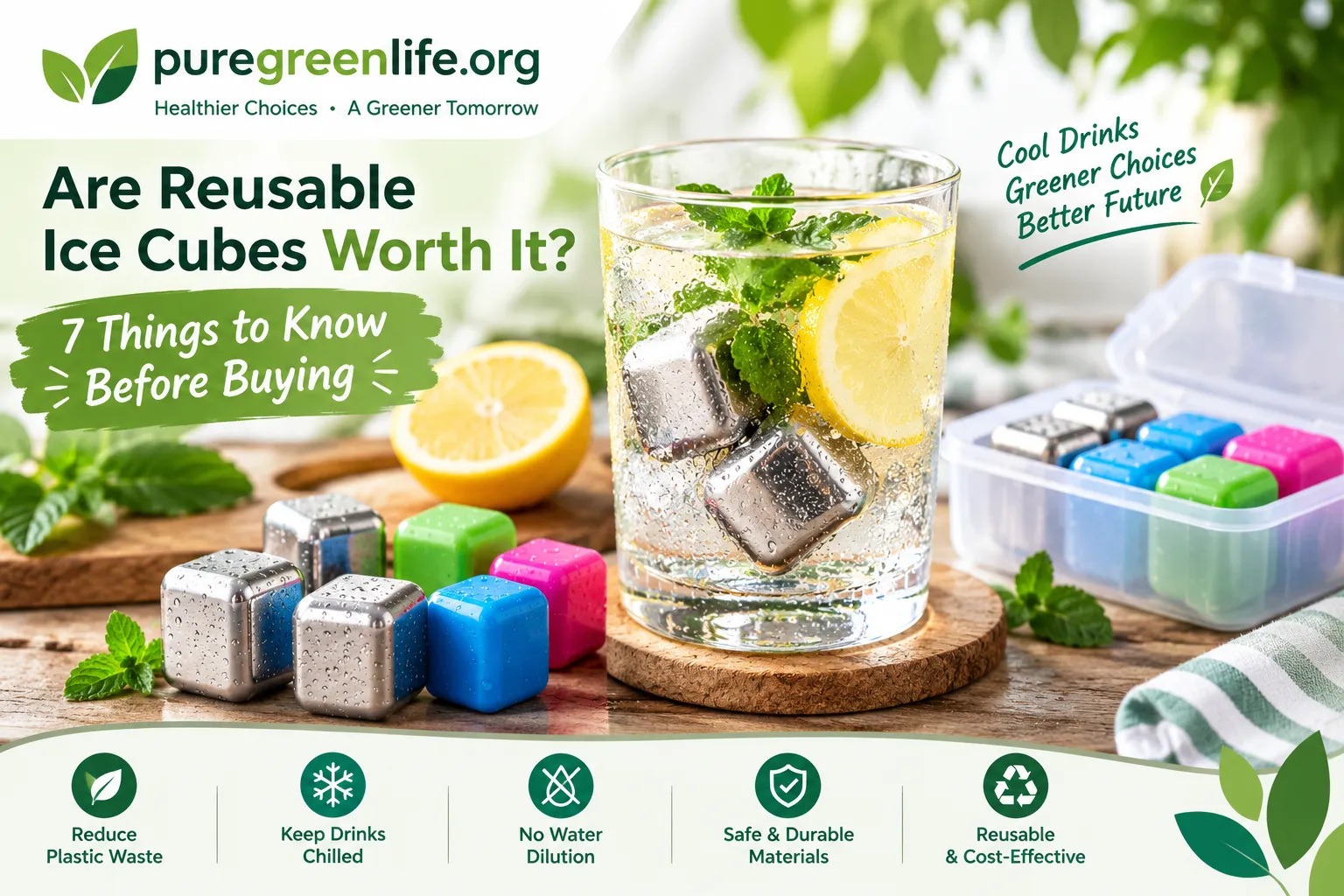
Reusable ice cubes offer a simple way to chill drinks without adding melted water. They can help keep the flavor of juice, soda, and cocktails unchanged. But they do not work exactly like regular ice. Their cooling performance depends on the material, size, and number of cubes used.
Before buying a set, consider how you drink, clean, and store them. This guide explains their benefits, limitations, safety, and environmental impact. It also covers what research says about their cooling performance.
What Are Reusable Ice Cubes?
Reusable ice cubes are small cooling products designed for repeated use. You place them in a freezer before adding them to a drink. Unlike regular ice, they usually stay sealed and do not release meltwater into the beverage.
How Do Reusable Ice Cubes Work?
Reusable cubes absorb heat from the drink as they warm up. Their stored cold helps lower the drink’s temperature. Once they become warm, they need to be frozen again before reuse.
Regular ice also absorbs heat, but it melts during the process. That melting adds water to the drink. Reusable cubes avoid this dilution when their outer shell remains intact.
Common Types of Reusable Ice Cubes
Reusable cubes come in several materials and designs. Common options include plastic-filled cubes, stainless steel cubes, and other reusable cooling products.
- Plastic cubes: Often lightweight and filled with water or cooling liquid.
- Stainless steel cubes: Durable and designed to transfer heat through their metal surface.
- Silicone products: Flexible and available in different shapes, although not every silicone product is designed for use as a drink chiller.
Always check the manufacturer’s description. Materials, fillings, and intended uses can differ between products.
Seven Things to Consider Before Buying
Cooling Performance
Reusable cubes can cool drinks, but their performance varies. A small set may not chill a large glass quickly. The drink’s starting temperature, the cube’s size, and the amount of liquid all affect the result.
A 2025 study comparing reusable ice cube products found differences between materials. Stainless steel cubes cooled drinks faster in the tested conditions, while plastic cubes reached lower minimum temperatures. These findings apply to the products and test setup studied, not every product available. <Cite refs={[“turn877624search11”]}/>
For very cold drinks, regular ice may still be the better choice. Reusable cubes are more useful when avoiding dilution matters most.
Material and Build Quality
The outer shell should be durable and properly sealed. Cracks or leaks can expose the liquid inside. Choose products that clearly identify their materials and intended use.
Do not assume every reusable cube is suitable for every drink. Look for clear food-contact information from the manufacturer. If the product’s material or filling is not explained, consider another option.
Safety and Leaks
Inspect reusable cubes before each use. Do not use a cube with cracks, swelling, leaks, or unusual growth inside. Follow the manufacturer’s instructions for freezing, handling, and disposal.
The Missouri Poison Center notes that leaking cubes may release water, preservatives, or thickening agents. Exposure can cause irritation or mild stomach upset, depending on the contents. <Cite refs={[“turn877624search0”]}/>
If a cube leaks into a drink, stop using it and discard the affected beverage. Do not taste the liquid inside to identify it. Keep damaged products away from children and pets.
Cleaning and Hygiene
Reusable cubes need regular cleaning because they are handled and stored repeatedly. Wash them according to the product instructions before first use and after each use. Use a clean container to store them in the freezer.
Do not assume that every cube is dishwasher-safe. High temperatures or harsh cleaning products may damage some materials. Avoid vinegar, bleach, or other cleaning treatments unless the manufacturer specifically approves them.
Cost Over Time
Reusable cubes cost more at the beginning than making ice with a home freezer. However, they may be useful if you often buy bagged ice or dislike watered-down drinks.
The savings depend on how often you use them and how long they last. Compare the purchase price with your usual ice costs. Include replacement costs if the cubes become damaged or lose their seal.
Environmental Impact
Reusable cubes can reduce the need to buy single-use bags of ice for some occasions. They may also be reused many times when cared for properly. However, reusable does not automatically mean environmentally friendly.
Their overall impact depends on the materials, manufacturing, lifespan, and disposal options. Plastic or metal products still require resources to produce. A durable set used regularly may offer more value than a set that breaks quickly.
For everyday drinks, ordinary ice made in a reusable tray may also be a practical option. Choose based on your needs rather than assuming one product is always the greener choice.
Size, Shape, and Storage
Check the size of the cubes before buying. Large cubes may not fit narrow glasses or bottle openings. Small cubes may be easier to use but may provide a different cooling experience.
Think about freezer space as well. A dedicated container helps keep the cubes together and away from spills. Follow the product’s storage instructions so the cubes stay clean and ready to use.
Reusable Ice Cubes vs. Regular Ice
The right choice depends on whether you value cooling power, flavor, or convenience most.
| Feature | Reusable ice cubes | Regular ice cubes |
| Drink dilution | Usually avoid adding meltwater | Add water as they melt |
| Cooling performance | Varies by material and design | Effective because ice absorbs heat while melting |
| Preparation | Must be frozen before use | Made in a tray or ice maker |
| Cleaning | Requires washing and inspection | Tray and ice-making equipment need cleaning |
| Repeated use | Designed for reuse if undamaged | Melts and must be replaced |
| Best use | Drinks where flavor dilution matters | Fast chilling and very cold drinks |
Neither option is best for every situation. Regular ice is useful when strong cooling is the priority. Reusable cubes are useful when you want to keep a drink’s original flavor.
How to Choose the Right Reusable Ice Cubes
For Water, Juice, and Soda
Choose a product intended for beverage use and made from clearly identified materials. Check that its size fits your usual glass. Try a small set first to see whether the cooling performance meets your expectations.
For Cocktails and Special Drinks
Reusable cubes can help avoid extra water in drinks where flavor balance matters. However, they may not cool as quickly as regular ice. Chill the drink and glass beforehand if you want a colder result.
For Outdoor Events
Reusable cubes can be convenient for picnics and gatherings when you have access to a freezer before leaving. Keep them in a clean, insulated container during transport. Do not assume they will keep drinks cold for a fixed number of hours unless the manufacturer provides reliable test information.
How to Clean and Store Reusable Ice Cubes
Rinse or wash reusable cubes according to their care instructions. Use a clean cloth or allow them to air-dry when the instructions recommend drying. Store them in a covered container in the freezer.
Inspect the cubes regularly for cracks, leaks, or changes in appearance. Replace damaged cubes rather than trying to repair their shells. Never place a leaking cube in a drink.
Are Reusable Ice Cubes Worth Buying?
Reusable ice cubes can be worthwhile for people who want chilled drinks without extra water. They are especially useful for beverages where flavor matters. They can also be convenient when prepared in advance.
They may be less suitable if you want very rapid cooling or need to chill a large volume of liquid. Their cost and environmental benefits also depend on how often they are used.
Before buying, compare material information, cleaning instructions, durability, and product reviews. A well-made set that suits your routine is more useful than a product chosen only for its appearance.
Frequently Asked Questions
Are reusable ice cubes safe?
They can be safe when designed for beverage use and handled as directed. Check the manufacturer’s material and care information. Do not use cubes that are cracked or leaking.
Do reusable ice cubes keep drinks as cold as regular ice?
Their performance varies by design and conditions. Regular ice can absorb substantial heat as it melts. Some reusable cubes cool drinks well, but they may not produce the same result in every glass.
How many reusable ice cubes should I use?
There is no single number for every drink. It depends on cube size, liquid volume, and the starting temperature. Follow the manufacturer’s guidance and test the amount that works for your glass.
Can reusable ice cubes go in the dishwasher?
Only if the manufacturer says they are dishwasher-safe. Some products may be damaged by high temperatures or detergents. Check the care label before cleaning them this way.
How long do reusable ice cubes last?
Their lifespan depends on the material, construction, and frequency of use. Inspect them regularly and replace them if their shells become damaged or start leaking.
Final Thoughts
Reusable ice cubes can be a useful option for chilling drinks without dilution. Their value depends on cooling performance, material quality, cleaning needs, and how often you use them. Regular ice remains a strong choice when fast cooling is the priority.
Choose products with clear safety information and follow the care instructions. Inspect every cube before use and discard damaged ones. By matching the product to your routine, you can decide whether reusable ice cubes are worth the cost.