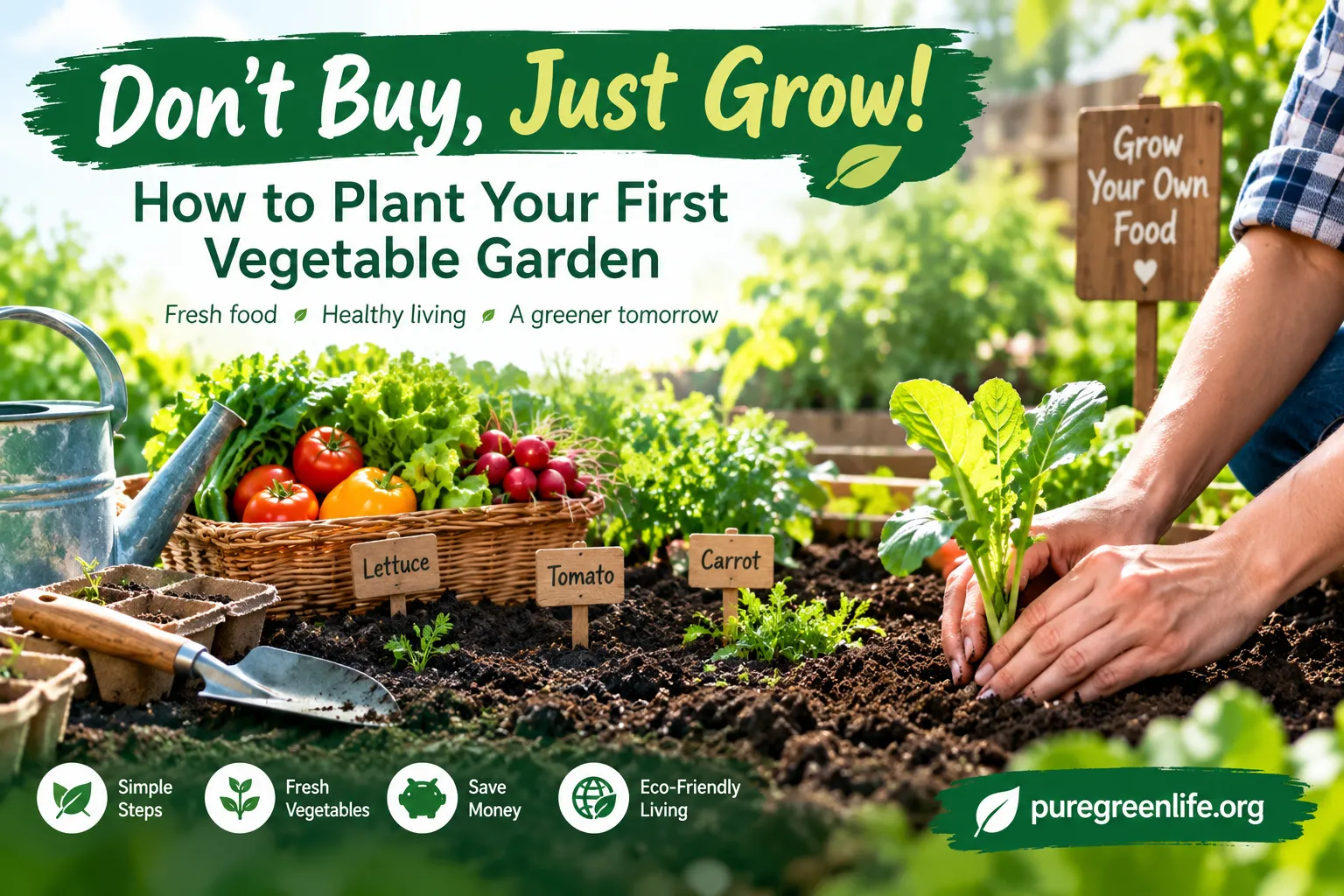
This guide is for complete beginners — people who’ve never touched a seed packet, have a small backyard or balcony, and are tired of paying grocery store prices for tomatoes that taste like cardboard.
Here’s what we’ll walk through together:
- Why starting a vegetable garden is genuinely worth your time (and your wallet will thank you)
- How to pick the right spot and the right vegetables so you’re set up to succeed from day one
- What tools you actually need — spoiler: it’s a much shorter list than you think
Just real, practical steps to get your first vegetable garden growing.
Save Money on Grocery Bills Every Season
Growing your own vegetables can seriously cut down what you spend at the grocery store. A single packet of tomato seeds costs around 3–4 and can yield dozens of tomatoes worth $30 or more at retail prices. That’s a return most savings accounts can’t touch.
Here’s a quick look at how the numbers stack up:
Why Growing Your Own Vegetables Is Worth It
| Vegetable | Seed/Seedling Cost | Estimated Harvest Value |
| Tomatoes | $3 | 30–50 |
| Zucchini | $2 | 20–40 |
| Lettuce | $2 | 15–25 |
| Green Beans | $3 | 25–35 |
Over a full growing season, even a modest backyard garden can save a family 500–1,200 annually. After your first year, costs drop even further once you start saving seeds and composting kitchen scraps.
Enjoy Fresher, Healthier Food Right From Your Backyard
- Higher nutrient density — vitamins like C and folate degrade quickly after harvest
- Better flavor — a just-picked tomato tastes nothing like a refrigerated one
- No mystery ingredients — you control exactly what goes on your plants
You also naturally eat more vegetables when they’re steps away from your kitchen. That convenience alone can shift your entire diet toward something healthier without any dramatic lifestyle overhaul.
Reduce Your Environmental Footprint Effortlessly
Commercial agriculture depends heavily on long-distance transportation, plastic packaging, and large-scale pesticide use. When you grow food at home, you sidestep most of that without even trying.
A home garden contributes to a healthier environment by:
- Cutting transportation emissions — your food travels about 20 feet, not 2,000 miles
- Reducing plastic waste — no plastic clamshells or shrink wrap required
- Supporting local pollinators — flowering vegetable plants attract bees and beneficial insects
- Building healthier soil — composting kitchen scraps feeds your garden and keeps organic waste out of landfills
Choosing the Perfect Spot for Your Garden
Find the Sunniest Area in Your Yard
Vegetables are sun-hungry plants. Most of them — tomatoes, peppers, zucchini, beans — need at least 6 to 8 hours of direct sunlight daily to thrive. Spend a day watching how light moves across your yard before you dig a single hole. Notice where shadows fall from trees, fences, or your house throughout the day. That shady corner might feel cozy, but it’ll leave your plants struggling.
Ensure Easy Access to a Water Source
Your garden needs consistent watering, especially during dry spells. Picking a spot close to an outdoor spigot or hose hookup saves you from dragging a heavy watering can across the yard every single day — and trust me, that gets old fast.
A few things to keep in mind:
- Consistency matters — vegetables need steady moisture, not feast-or-famine watering
- Soaker hoses or drip irrigation near a water source make this almost effortless
- If you’re far from a spigot, consider collecting rainwater in a barrel nearby
Start Small to Avoid Feeling Overwhelmed
A 4×8 foot bed is the sweet spot for beginners. It’s large enough to grow a satisfying variety of vegetables but small enough to manage without burning out. Many first-time gardeners go big out of excitement, then get overwhelmed by weeding, watering, and upkeep.
Consider Raised Beds for Better Control
Raised beds are a game-changer, especially if your native soil is poor, compacted, or full of clay. Here’s a quick comparison:
| Feature | In-Ground Garden | Raised Bed |
| Soil quality control | Limited | Complete |
| Drainage | Depends on soil | Excellent |
| Weed pressure | Higher | Lower |
| Startup cost | Low | Moderate |
| Accessibility | Standard | Easier on your back |
Picking the Best Vegetables for First-Time Growers
Start With Easy, Fast-Growing Crops
Some vegetables practically grow themselves, which makes them perfect for beginners. Starting with forgiving, quick-producing plants keeps you motivated and builds confidence fast.
Top beginner-friendly picks:
- Radishes – Ready in as little as 3 weeks. Great for filling gaps between slower plants.
- Lettuce – Cut-and-come-again varieties give you weeks of harvests from a single planting.
- Green beans – Low maintenance, high yield, and almost impossible to mess up.
- Zucchini – One or two plants will produce more than you can handle.
- Cherry tomatoes – More forgiving than large varieties and incredibly prolific.
Grow What Your Family Already Loves to Eat
There’s no point harvesting a bumper crop of something nobody wants to eat. Before you plan your garden, spend five minutes thinking about what your household actually puts on the plate every week.
If you cook a lot of stir-fries, grow bok choy and snap peas. If salads are a regular thing, prioritize lettuce, cucumbers, and tomatoes. Love fresh herbs? Basil, chives, and parsley take up almost no space and save you real money at the grocery store.
Match Your Plant Choices to Your Local Climate
Even the easiest vegetable will struggle if it’s planted at the wrong time or in the wrong conditions. Knowing your growing zone takes the guesswork out of planning.
Affordable Ways to Source Your Supplies
Gardening doesn’t have to drain your wallet.
- Dollar stores and discount chains often carry basic tools for a fraction of nursery prices
- Local Facebook Marketplace or Buy Nothing groups — neighbors regularly give away tools, pots, and seeds
- Seed swaps at community centers or libraries are free and surprisingly well-stocked
- https://puregreenlife.org/eco-gadgets-to-reduce-food-waste/Composting kitchen scraps cuts your soil amendment costs almost immediately
Starting small and borrowing what you can makes the first season easy on your budget while you figure out what you actually need.
Planting and Caring for Your Vegetable Garden
Timing is everything in the garden. Most vegetables fall into two camps — cool-season and warm-season crops.
| Vegetable | Best Planting Time |
| Lettuce, spinach, peas | Early spring or fall |
| Tomatoes, peppers, cucumbers | After last frost date |
| Carrots, radishes | Early spring |
| Zucchini, beans | Late spring/early summer |
Check your local frost dates (USDA Plant Hardiness Zone Map is a great free resource) and count backward or forward from there. Seed packets also spell this out clearly — don’t skip that labe
Master Proper Spacing for Healthy Growth
Crowding plants is one of the most common rookie mistakes. Plants jammed together compete for water, nutrients, and light — and everyone loses.
- Tomatoes: 18–24 inches apart
- Lettuce: 6–8 inches apart
- Zucchini: 24–36 inches apart
- Carrots: 2–3 inches apart (thin seedlings early)
Water Wisely to Avoid Common Mistakes
Most vegetables need about 1 inch of water per week. The golden rule? Water deeply and less often rather than a little every day. Deep watering pushes roots down, making plants stronger and more drought-resistant.
- Water at the base, not the leaves — wet foliage breeds disease
- Morning is the best time to water
- Stick your finger 2 inches into the soil; if it’s dry, it’s time to water
- A layer of mulch keeps moisture in and cuts watering frequency
Keep Pests Away Without Harmful Chemicals
You don’t need to spray anything toxic to protect your garden.
- Hand-pick large pests like caterpillars or beetles early in the morning
- Neem oil handles aphids, whiteflies, and mites safely
- Row covers physically block insects from reaching plants
- Plant basil near tomatoes and marigolds along borders — both naturally deter common pests
Harvesting and Making the Most of Your Produce
Store Your Harvest to Keep It Fresh Longer
Getting the storage right means less waste and better meals all week.
- Tomatoes – Keep them at room temperature, never in the fridge. Cold kills their flavor.
- Leafy greens – Wrap in a damp paper towel and store in a sealed bag in the fridge. They’ll last up to a week.
- Zucchini and cucumbers – Fridge works great; use within 5–7 days.
- Green beans – Store unwashed in the fridge for up to a week.
- Root vegetables (carrots, beets) – Remove greens, store in the fridge, and they’ll keep for weeks.
Conclusion
So grab some seeds, pick your spot, and just start. You don’t need a big backyard or years of experience — you just need the willingness to try. Your first harvest might be small, but the satisfaction of eating something you grew yourself? That never gets old.





2 thoughts on “Don’t Buy, Just Grow! How to Plant Your First Vegetable Garden”