
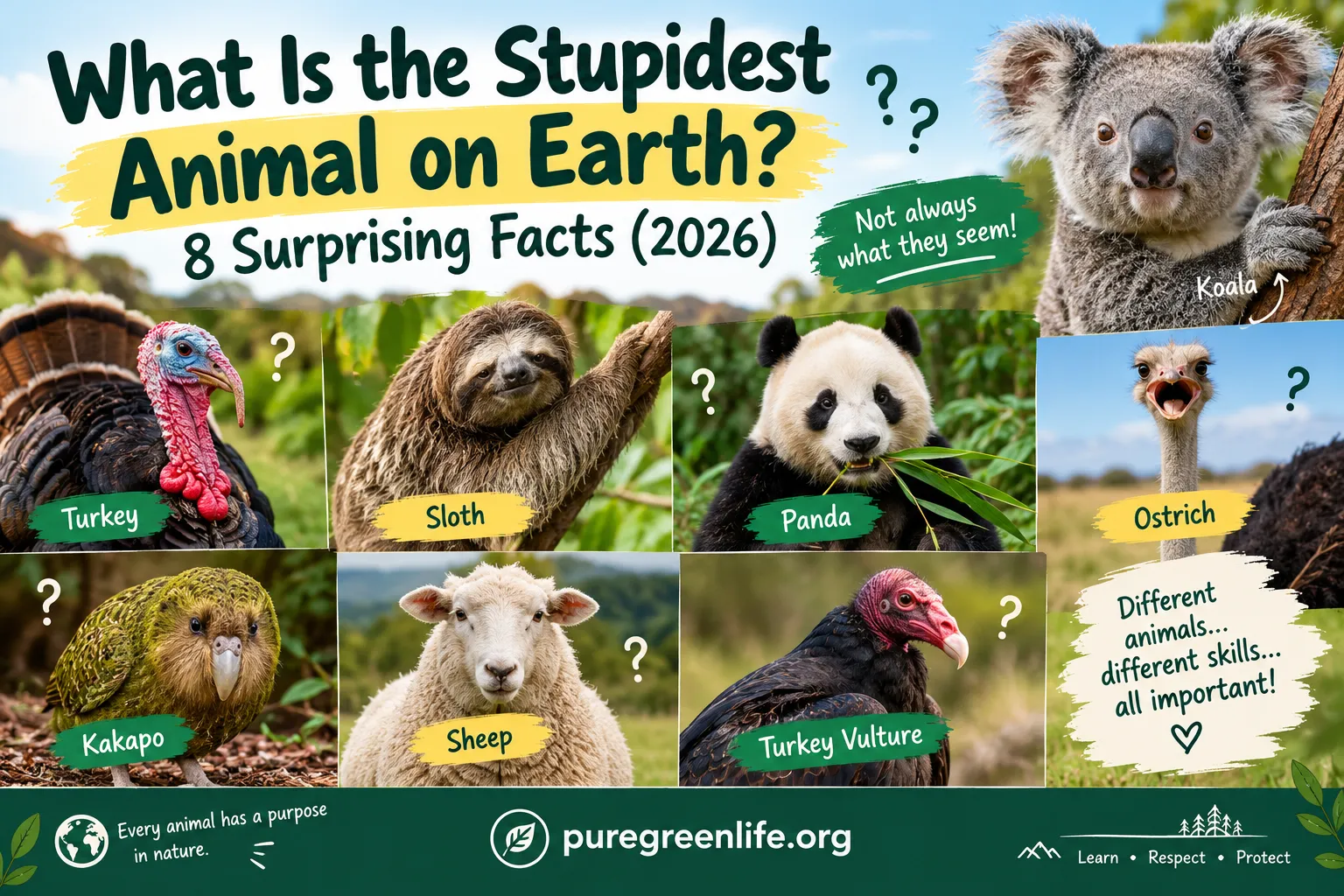
Have you ever wondered what is the stupidest animal on earth? Some animals behave in ways that look strange or even foolish. Their habits often make people question their intelligence. Turkeys, koalas, sloths, and pandas are common examples. Yet, these animals have special abilities that help them survive. There is no scientifically proven title for the world’s stupidest animal. Let’s explore eight animals that people often misunderstand.
Why Is It Difficult to Identify the Stupidest Animal?
Scientists cannot measure animal intelligence with one simple test. Different animals have different needs, senses, and survival skills. Some animals solve puzzles, while others find food using smell. Certain species also remember locations and recognize other animals.
Human intelligence tests do not work for every species. Therefore, calling an animal stupid can create a misleading picture. A creature might struggle with one task but excel at another. Its behavior often makes more sense in its natural habitat.
8 Animals Often Called the Stupidest on Earth
These animals have earned reputations for unusual behaviors. Their actions may look foolish to humans. Still, each species has adaptations that support its survival.
1. Domestic Turkey
Turkeys are often called some of the dumbest birds. Their awkward movements and unusual head positions attract attention. Some people also believe turkeys can drown while staring at the sky.
This story is misleading. Certain turkeys may hold their heads upward because of an inherited neurological condition. Their behavior does not prove that they lack intelligence. Turkeys can recognize individuals and respond to their surroundings. Their reputation is much harsher than the evidence supports.
2. Koala
Koalas spend much of their time resting in eucalyptus trees. Their low-energy lifestyle helps them survive on a specialized diet. Eucalyptus leaves provide limited energy and contain defensive chemicals.
Their slow movements can make them appear unintelligent. Yet, koalas have adaptations for finding suitable leaves and living in trees. Their diet and behavior suit their environment. They should not be judged by how active they look.
3. Sloth
Sloths are famous for their extremely slow movements. They conserve energy because their leafy diet provides relatively little energy. They also spend much of their lives hanging from branches.
Their slow behavior is not necessarily a sign of poor intelligence. Moving slowly helps them avoid wasting energy. Their camouflage can also make them harder for predators to notice. Sloths survive through specialized habits rather than speed.
4. Giant Panda
Giant pandas mainly eat bamboo, even though they belong to the bear family. Bamboo offers limited nutrition, so pandas must consume large amounts. They spend many hours feeding to meet their energy needs.
Some people consider this diet an unintelligent choice. However, pandas evolved specialized ways to process and eat bamboo. Their strong jaws and powerful teeth help them break tough plant material. Their diet reflects their evolutionary history, not simple foolishness.
5. Kakapo
The kakapo is a rare, flightless parrot native to New Zealand. It is nocturnal and usually moves around at night. When threatened, it may freeze instead of escaping quickly.
This response became dangerous when introduced predators reached its habitat. The kakapo evolved without many land-based mammalian predators. Freezing may have offered protection in its original environment. Today, conservation programs help protect this endangered bird.
6. Ostrich
Ostriches are the world’s largest living birds. Their size and unusual defensive behaviors sometimes attract unfair criticism. A popular myth claims they bury their heads in sand when frightened.
Ostriches do not bury their heads to hide from danger. They may lower their heads near the ground while tending nests. They can also run quickly and deliver powerful kicks. These abilities help them survive in open habitats.
7. Sheep
Sheep sometimes follow one another without appearing to make independent decisions. This behavior can make them seem easily confused. In reality, following a group can help protect them from danger.
Sheep can recognize familiar faces and remember individuals. They also learn from their surroundings and other sheep. Their social behavior helps them stay with the flock. What looks like blind following can serve an important purpose.
8. Turkey Vulture
Turkey vultures sometimes appear awkward while walking on the ground. Their unusual feeding habits can also seem unpleasant to people. They feed mainly on carrion, which means the remains of dead animals.
This behavior helps remove animal remains from the environment. Their powerful sense of smell helps them locate food. Their digestive systems can also handle many harmful microbes found in carrion. These traits make them valuable members of natural ecosystems.
Which Animal Is Really the Stupidest on Earth?
There is no reliable scientific ranking that identifies one animal as the stupidest. Scientists study specific abilities instead of assigning one simple intelligence score. These abilities include memory, learning, problem-solving, and social behavior.
Some animals perform poorly on tasks designed for humans. That does not mean they cannot survive successfully. A sloth does not need to run fast to find leaves. A vulture does not need to hunt live prey to find food. Each species depends on different abilities.
For this reason, it is more accurate to discuss unusual animal behaviors than to label one species the stupidest.
How Do Scientists Measure Animal Intelligence?
Researchers use different tests to study animal cognition. They may examine how animals learn, remember, communicate, and solve problems. Some studies also explore tool use and social relationships.
However, test results depend on the task and environment. An animal may struggle in captivity but behave differently in the wild. Researchers must consider these factors before drawing conclusions.
Animal intelligence is complex, and scientists continue to study it. No single test can explain every species’ mental abilities.
Why Do Animals Behave in Ways That Look Stupid?
Animals evolve behaviors that help them survive and reproduce. These behaviors do not always look sensible to humans. People often judge animals using human expectations.
For example, sloths conserve energy through slow movement. Sheep stay close to groups for protection. Vultures eat dead animals that many other creatures avoid. Each behavior has a purpose in nature.
Understanding these adaptations helps us appreciate wildlife. It also reminds us that intelligence can appear in many different forms.
Conclusion
So, what is the stupidest animal on earth? There is no scientifically confirmed answer to this question. Turkeys, koalas, sloths, and other animals often receive this label. Their unusual habits can make them seem less intelligent than they are.
Every species has abilities shaped by its environment. Some are skilled at finding food, while others avoid predators through special behaviors. Instead of judging animals by human standards, we should learn how they survive. Even animals that appear foolish can play important roles in nature.
Frequently Asked Questions
What is the stupidest animal on earth?
No animal has been scientifically confirmed as the stupidest. Turkeys, koalas, and sloths often receive this label because of their unusual behaviors.
Are turkeys really stupid?
No. Turkeys can recognize individuals and respond to their surroundings. Their unusual head movements do not prove that they lack intelligence.
Why are sloths considered unintelligent?
Sloths move slowly and spend much of their time resting. These behaviors help them conserve energy on a low-energy diet.
Do animals have IQ scores?
Human IQ tests are not suitable for ranking all animal species. Scientists usually compare specific abilities, such as memory and problem-solving.
Which animals are considered intelligent?
Chimpanzees, dolphins, elephants, crows, and parrots show impressive cognitive abilities. Their skills include learning, memory, communication, and solving certain problems.
Can an animal survive without high intelligence?
Yes. Animals survive through different combinations of instincts, physical traits, learning, and environmental adaptations. Complex human-like intelligence is not necessary for every species to thrive.