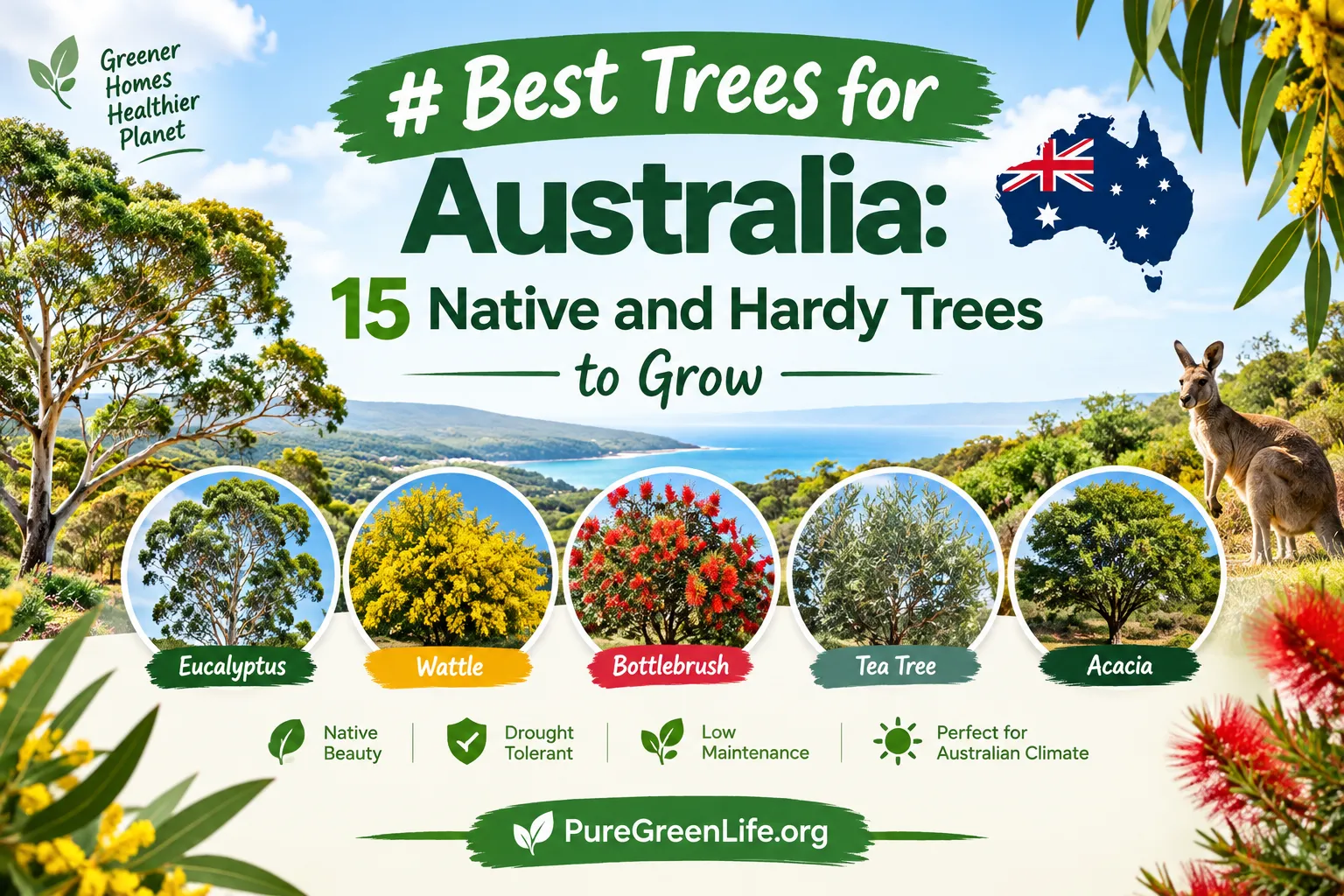
Australia has many beautiful trees for gardens, streets, parks, and large yards. Native trees suit local conditions very well, and they handle heat better than many imported trees. In one study of heat damage, nearly 80% of the exotic trees planted had over half their leaves damaged, while most of the native trees were fine. Native trees also give food, shelter, shade, and nesting spaces to wildlife. botanicgardens
Still, the right tree depends on your location and growing conditions. Australia has tropical, coastal, temperate, alpine, and dry regions. Soil type and available space also affect how a tree grows. Climate matters more each year, because researchers found that 24% of all public trees are at high risk from rising urban temperatures. That is why it helps to pick a mix of climate-ready species, not just the most common ones
What Are the Best Trees for Australia?
The best tree for Australia depends on where you live. A tree suited to Queensland may struggle in Tasmania. A coastal tree may also need different soil than an inland species.
Native trees are often a useful choice for Australian gardens. Many native plants have adapted to local soils and weather conditions. They can also provide food and shelter for local wildlife.
Eucalypts, wattles, banksias, melaleucas, and grevilleas are popular native groups. Australia has hundreds of native tree and shrub species. Eucalypts alone include more than 900 species across the broader group.
When choosing a tree, think about these factors:
- Your local climate
- Soil type and drainage
- Available garden space
- Mature tree size
- Sunlight levels
- Water needs
- Root growth
- Local wildlife value
- Maintenance needs
A small backyard needs a different tree than a large property. Therefore, always check the mature size before planting.
Best Native Trees for Australia
Native Australian trees can offer several benefits beyond their appearance. They can create shade and improve garden habitat. Flowering native trees can also attract birds, bees, and other wildlife.
The Australian Museum notes that eucalyptus, acacia, and casuarina trees provide food and shelter. Banksias and other flowering natives can support nectar-feeding animals.
Here are 15 popular native trees worth considering.
1. Eucalyptus pauciflora — Snow Gum
Eucalyptus pauciflora, commonly known as Snow Gum, is a hardy Australian eucalypt native to the cooler highlands of southeastern Australia. It is well adapted to frost, cold winters, and snowy conditions.
The tree is recognized for its attractive pale, often white-to-grey bark and can grow up to around 20 metres, although smaller forms are available for gardens. Snow Gum prefers full sun and well-drained soil and produces white flowers that provide food for native birds and insects.
Key facts: Native to Australia • Frost-tolerant • White flowers • Full sun • Well-drained soil
2. Corymbia ficifolia — Red Flowering Gum
Corymbia ficifolia, commonly known as Red Flowering Gum, is an attractive Australian tree famous for its vibrant red, pink, orange, or cream flowers. Its abundant blooms can attract nectar-feeding birds and insects, making it a valuable feature tree for wildlife-friendly gardens.
3. Banksia integrifolia — Coast Banksia
Banksia integrifolia, commonly known as Coast Banksia, is a hardy Australian native found mainly along the eastern and southeastern coast. It is well adapted to wind, salt exposure, and sandy soils.
Its distinctive yellow flower spikes provide nectar for birds, bees, and other wildlife, while its woody seed cones add year-round interest. Coast Banksia prefers full sun and well-drained soil and needs enough space for mature growth.
Key facts: Eastern Australia • Coastal-tolerant • Yellow flowers • Attracts wildlife • Full sun • Well-drained soil
4. Banksia serrata — Old Man Banksia
Banksia serrata, commonly known as Old Man Banksia, is a distinctive Australian native tree recognized by its rough, grey bark and large woody flower cones. Its yellow-green flowers provide nectar for birds, bees, and other native wildlife.
It grows well in full sun and well-drained soil and is naturally suited to many coastal and woodland environments. Allow enough space for its mature size when planting.
Key facts: Eastern & southeastern Australia • Rough bark • Woody cones • Wildlife-friendly • Full sun • Well-drained soil
5. Acacia pycnantha — Golden Wattle
Golden Wattle (Acacia pycnantha) is Australia’s national floral emblem, officially proclaimed in 1988. This attractive Australian native plant is known for its bright golden-yellow, rounded flower clusters and green, curved, leaf-like stems called phyllodes. In addition, its fragrant flowers bring a cheerful burst of colour to gardens during late winter and spring.
PM&C
+1
Golden Wattle grows naturally in South Australia, Victoria, New South Wales, and the Australian Capital Territory. It can reach around 5–8 metres tall, although its size depends on growing conditions. For best results, plant it in a sunny position with well-drained soil. It can tolerate some frost; however, it does not grow well in waterlogged ground. Therefore, check your local climate before planting. Also, take care near natural bushland, as Golden Wattle can become invasive in some areas outside its native range.
PM&C
+1
Key facts: Australia’s national floral emblem • Bright golden-yellow flowers • Green, curved phyllodes • Native to southeastern Australia • Flowers mainly in late winter and spring • Prefers sunny, well-drained sites
6. Acacia baileyana — Cootamundra Wattle
Acacia baileyana, commonly known as Cootamundra Wattle, is an Australian native admired for its silvery-grey foliage and bright yellow flowers. It grows quickly in suitable conditions and can provide attractive garden cover in a relatively short time.
It prefers full sun and well-drained soil but may need pruning because of its fast growth. Choose a location with enough space for its mature size.
Key facts: Native to southeastern Australia • Silvery foliage • Yellow flowers • Fast-growing • Full sun • Well-drained soil
7. Melaleuca quinquenervia — Broad-Leaved Paperbark
Melaleuca quinquenervia, commonly known as Broad-Leaved Paperbark, is a distinctive Australian native recognized for its soft, layered papery bark. It naturally grows in wetlands and moist areas of eastern Australia.
Its creamy-white flowers provide nectar for birds and insects, while the tree can offer useful habitat. It prefers moist soil and full sun and needs enough space for mature growth.
Key facts: Eastern Australia • Papery bark • Creamy-white flowers • Wildlife-friendly • Moist soil • Full sun
8. Callistemon viminalis — Weeping Bottlebrush
Callistemon viminalis, commonly known as Weeping Bottlebrush, is an Australian native recognized for its bright red, brush-like flower spikes. The flowers attract nectar-feeding birds and other pollinators.
It works well in gardens, hedges, and landscaped areas and generally prefers full sun and well-drained soil. Regular pruning can help maintain a compact shape, especially in smaller gardens.
Key facts: Australian native • Red flowers • Attracts birds • Full sun • Pruning-friendly • Garden suitable
9. Grevillea robusta — Silky Oak
Grevillea robusta, commonly known as Silky Oak, is a large Australian native tree with fern-like foliage and striking golden-orange flowers. Its flowers can provide nectar for birds and other wildlife.
It can grow quite large, so it is best suited to spacious gardens, parks, and open landscapes. It prefers full sun and well-drained soil.
Key facts: Eastern Australia • Large tree • Golden flowers • Wildlife-friendly • Full sun • Needs plenty of space
10. Tristaniopsis laurina — Water Gum
Tristaniopsis laurina, commonly known as Water Gum, is an Australian native tree valued for its evergreen foliage, shade, and attractive yellow flowers.It commonly grows along riverbanks and other water-rich areas but can thrive in different garden settings. With regular care and pruning, it can fit into compact garden spaces, depending on its growth and surroundings. It prefers sunny to partly shaded locations with consistently moist, well-draining soil.
Key facts: Eastern Australia • Evergreen foliage • Yellow flowers • Shade tree • Garden-friendly • Moist, well-drained soil
11. Angophora costata — Sydney Red Gum
Angophora costata, commonly known as Sydney Red Gum, is an Australian native tree admired for its smooth, mottled bark and naturally spreading canopy. As the tree matures, its bark can develop beautiful shades of pink, orange, and grey. In addition, it produces clusters of creamy-white flowers that attract native bees and other insects. These features make it a valuable addition to suitable Australian landscapes.
However, this tree can grow quite large, so it is best suited to parks, open landscapes, and spacious gardens. It grows naturally in eastern Australia and generally prefers well-drained soil and a sunny position. Therefore, before planting, check the available space and allow enough room for its mature canopy and root system. Also, keep it away from buildings, paths, and underground services to avoid future problems.
Key facts: Eastern Australia • Smooth, colourful bark • Creamy-white flowers • Attracts native wildlife • Large spreading tree • Needs plenty of space
12. Casuarina Species — She-Oaks
Casuarina species, commonly known as She-Oaks, are Australian natives recognized for their fine, needle-like branchlets and distinctive woody cones. Many species tolerate wind, coastal conditions, and dry environments.
They can provide shelter and habitat for native wildlife and are useful for windbreaks and open landscapes. Because some species develop extensive root systems, plant them with adequate space from buildings and underground services.
Key facts: Australian native • Fine foliage • Wind-tolerant • Coastal-friendly • Wildlife habitat • Needs planting space
13. Corymbia maculata — Spotted Gum
Corymbia maculata, commonly known as Spotted Gum, is a tall Australian native recognized for its smooth, spotted or mottled trunk and attractive foliage. Its flowers provide nectar for native birds and insects.
It is best suited to large properties, parks, and open landscapes, as mature trees can become very large. Plant well away from buildings, power lines, and underground services.
Key facts: Eastern Australia • Tall tree • Mottled bark • Wildlife-friendly • Large spaces • Full sun
14. Auranticarpa rhombifolia — Queensland Laurel
Auranticarpa rhombifolia, formerly known as Pittosporum rhombifolium, is an Australian native tree also called Queensland Laurel or Diamond-leaf Pittosporum. It stands out because of its glossy, diamond-shaped green leaves and bright orange fruits. In addition, it produces clusters of small, fragrant white flowers during the warmer months. The fruits often remain on the tree through autumn and winter, adding seasonal colour to gardens.
Australian Native Plants Society (Australia)
In its natural habitat, this tree can grow quite tall; however, it usually stays smaller in gardens. It grows well in warm, temperate, and subtropical areas. For best results, plant it in well-drained soil and provide enough moisture, as it does not tolerate waterlogged conditions. It can also suit sheltered gardens and some urban landscapes. Therefore, before planting, check your local climate, available space, and soil drainage to help the tree grow well.
Key facts: Eastern Australia • Glossy foliage • Orange-red fruits • Medium-sized tree • Warm climates • Sun to partial shade
15. Brachychiton populneus — Kurrajong
Brachychiton populneus, commonly known as Kurrajong, is a hardy Australian native suited to drier inland and eastern regions. Its distinctive trunk can store water, helping it tolerate periods of dryness.
It provides shade and habitat for native wildlife and produces bell-shaped flowers followed by seed pods. Kurrajong can grow into a substantial tree, so allow enough space for its mature canopy and roots.
Key facts: Eastern Australia • Drought-tolerant • Distinctive trunk • Wildlife-friendly • Shade tree • Needs space
Best Trees for Different Australian Climates
Australia has many different climate zones. Therefore, tree selection should match your local environment.
Tropical and Subtropical Areas
Warm northern areas can support many tropical and subtropical native trees. Species such as paperbarks, bottlebrushes, and some grevilleas can work well.
Rainfall and humidity vary greatly across these regions. Check local soil and water conditions before planting.
Temperate Areas
Temperate regions support many familiar Australian natives. Eucalypts, wattles, banksias, and bottlebrushes can be suitable options.
Cold winters can limit some warm-climate species. Choose plants that naturally tolerate your local temperatures.
Dry and Inland Areas
Dry regions need trees that handle lower rainfall. Some wattles, kurrajongs, and suitable eucalypts can perform well.
Water availability remains important during establishment. Young trees usually need more attention than established plants.
Coastal Areas
Coastal gardens face salt, wind, and sandy soils. Coast banksia is one native option associated with coastal environments.
Not every native tree tolerates salt exposure. Choose species based on your exact coastal conditions.
Cooler and Alpine Areas
Cold regions need frost-tolerant trees. Snow gum is a well-known example for cooler Australian environments.
Local elevation also affects plant performance. Always check species suitability for your area.
15 Best Trees to Grow in Australia
The 15 trees above cover a range of Australian gardening needs, including flowering, shade, feature, and wildlife-friendly trees.
For small gardens, choose compact native species or smaller forms that match the available space. Larger eucalypts and canopy trees are better suited to spacious properties where their mature roots and branches have room to develop.
If supporting wildlife is a priority, flowering native trees can provide nectar, seeds, shelter, and habitat for birds and insects.
The best choice depends on your climate, soil, rainfall, and available space. Check local growing conditions and ask a reputable native nursery for advice before planting.
Tip: Always consider a tree’s mature size and keep large species safely away from buildings, power lines, and underground services.
How to Choose the Right Tree for Your Area
Start by checking your local climate. Then look at your soil and available space.
Do not choose a tree only because it looks attractive. Its mature size matters just as much.
Check how tall and wide the tree can become. Also consider its root system and water needs.
Trees with vigorous roots should receive extra planning. Australian Native Plants Society warns about planting large trees near underground pipes.
You should also check sunlight levels. Some trees need full sun for healthy growth.
Local native species can offer another important benefit. They may provide better resources for local wildlife than unsuitable exotic plants.
Before buying, ask a local nursery these questions:
- Will this tree suit my climate?
- How large will it become?
- Does it need full sun?
- What soil does it prefer?
- How much water does it need?
- How far should it be from buildings?
- Does it have strong roots?
- Will it attract local wildlife?
These questions can prevent costly planting mistakes.
How to Plant Trees in Australia
Choose the planting location before buying your tree. Make sure the site has enough space.
Dig a hole wider than the root ball. Avoid making the hole much deeper than the root system.
Place the tree at the correct soil level. Do not bury the trunk below its original level.
Backfill the hole with suitable soil. Water the tree thoroughly after planting.
Add mulch around the base to help retain soil moisture. Keep mulch away from direct contact with the trunk.
Young trees need regular care while their roots develop. Watering needs depend on species, soil, rainfall, and season.
Avoid overwatering trees that prefer well-drained soil. Too much water can cause root problems.
How to Care for Australian Trees
Good care starts with choosing the right species. A suitable tree usually needs less correction later.
Water young trees during dry periods. Reduce watering as established trees become more independent.
Use mulch to protect soil moisture. Mulch can also help reduce competition from weeds.
Prune trees only when needed. Remove dead, damaged, or poorly positioned branches.
Large trees need special attention around buildings and services. Their mature roots and branches can create problems when planted too close.
Native trees can also support garden wildlife. Local flowering plants can provide food and shelter for birds and insects.
Avoid using unnecessary chemicals around wildlife-friendly gardens. A healthy native garden can provide a better habitat for local species.
Final Thoughts on Trees for Australia
Australia has a huge range of native trees for different environments. The right choice depends on your local conditions.
Eucalypts, wattles, banksias, melaleucas, and other natives offer many options. Some provide flowers and wildlife food. Others offer shade, screening, or attractive foliage.
Before planting, check the tree’s mature size and growing needs. Also consider soil, sunlight, water, roots, and local climate.
A local native nursery can help you make a better choice. Choosing the right tree from the start can save time and money.
Most importantly, plant for the conditions you actually have. A well-matched native tree can benefit both your garden and local wildlife.
Frequently Asked Questions About Trees for Australia
What are the best native trees for Australia?
Popular choices include eucalypts, wattles, banksias, melaleucas, and bottlebrushes. The best option depends on your local climate and garden conditions.
What is the easiest Australian native tree to grow?
There is no single easiest tree for every location. Choose a species naturally suited to your local climate and soil.
What trees are good for Australian gardens?
Banksias, bottlebrushes, wattles, smaller eucalypts, and suitable grevilleas can work well. Always check mature size before planting.
What are the best trees for small Australian gardens?
Smaller eucalypts, some wattles, bottlebrushes, and selected native trees can suit smaller spaces. Local nursery advice is helpful for choosing the right form.
Which Australian trees attract birds?
Flowering native trees can provide nectar and other food sources. Bottlebrushes, banksias, and some grevilleas can attract nectar-feeding birds.
What trees grow well in dry Australia?
Some wattles, kurrajongs, and drought-tolerant eucalypts can suit dry areas. Local rainfall and soil conditions still matter.
What are good Australian coastal trees?
Coast banksia is one native option associated with coastal environments. Other choices depend on wind, salt exposure, soil, and rainfall.
Should I plant a large tree near my house?
Large trees need careful placement around buildings and underground services. Check mature size and root growth before planting.