Plastic pollution in the ocean is a serious environmental problem. Plastic bags, bottles, and other waste harm marine animals and damage ocean habitats. Moreover, tiny plastic particles can spread through marine food chains. Understanding the causes and effects of this pollution can help us find better solutions.
What Is Plastic Pollution in the Ocean?
Plastic pollution in the ocean happens when plastic waste enters seas and oceans. This waste includes bottles, bags, food wrappers, fishing nets, and packaging materials. Some plastic floats on the surface, while other pieces sink to the ocean floor. Over time, larger items can break into smaller pieces.
Unlike natural materials, many plastics do not break down quickly. Instead, they can remain in the environment for many years. As a result, plastic waste can build up in marine habitats and create long-term problems for wildlife.
What Causes Plastic Pollution in the Ocean?
Several human activities contribute to ocean plastic pollution. Poor waste disposal, single-use products, and fishing activities are common sources. In addition, weak waste collection systems allow plastic to escape into the environment.
Plastic Waste from Land
A large amount of ocean plastic begins on land. People may leave rubbish in streets, parks, and public spaces. Rainwater can then carry this waste into drains, streams, and rivers. Eventually, some of it reaches the ocean.
Poor waste management makes this problem worse. When rubbish is not collected or stored properly, wind and water can spread it. Therefore, better waste collection and disposal can help stop plastic before it reaches the sea.
Single-Use Plastics
Single-use plastics are products designed for short-term use. Examples include shopping bags, straws, drink bottles, and food wrappers. People often throw these items away after using them once.
However, these products can become marine litter when they are not disposed of correctly. Some also break into smaller fragments that are difficult to collect. Choosing reusable bags, bottles, and containers can reduce the amount of plastic waste produced.
Fishing Gear and Marine Activities
Fishing and other marine activities can also add plastic waste to the ocean. Discarded fishing nets, ropes, and lines may remain in the water for long periods. These materials can trap marine animals even when no one is using them.
Boats and coastal businesses can also produce waste. If rubbish is handled carelessly, it may enter nearby waters. Proper disposal and the collection of damaged fishing gear can help reduce this pollution.
How Does Plastic Reach the Ocean?
Plastic reaches the ocean through several routes. Rivers and streams carry rubbish from inland areas toward the coast. Stormwater can also move plastic from streets and drains into waterways.
Wind may carry lightweight wrappers and bags over long distances. In coastal areas, waves can move litter from beaches into the sea. Additionally, some plastic waste enters the ocean directly from boats and fishing activities.
These different routes make prevention important. Collecting rubbish before it reaches rivers and beaches can reduce the amount entering marine environments.
Effects of Ocean Plastic Pollution on Marine Life
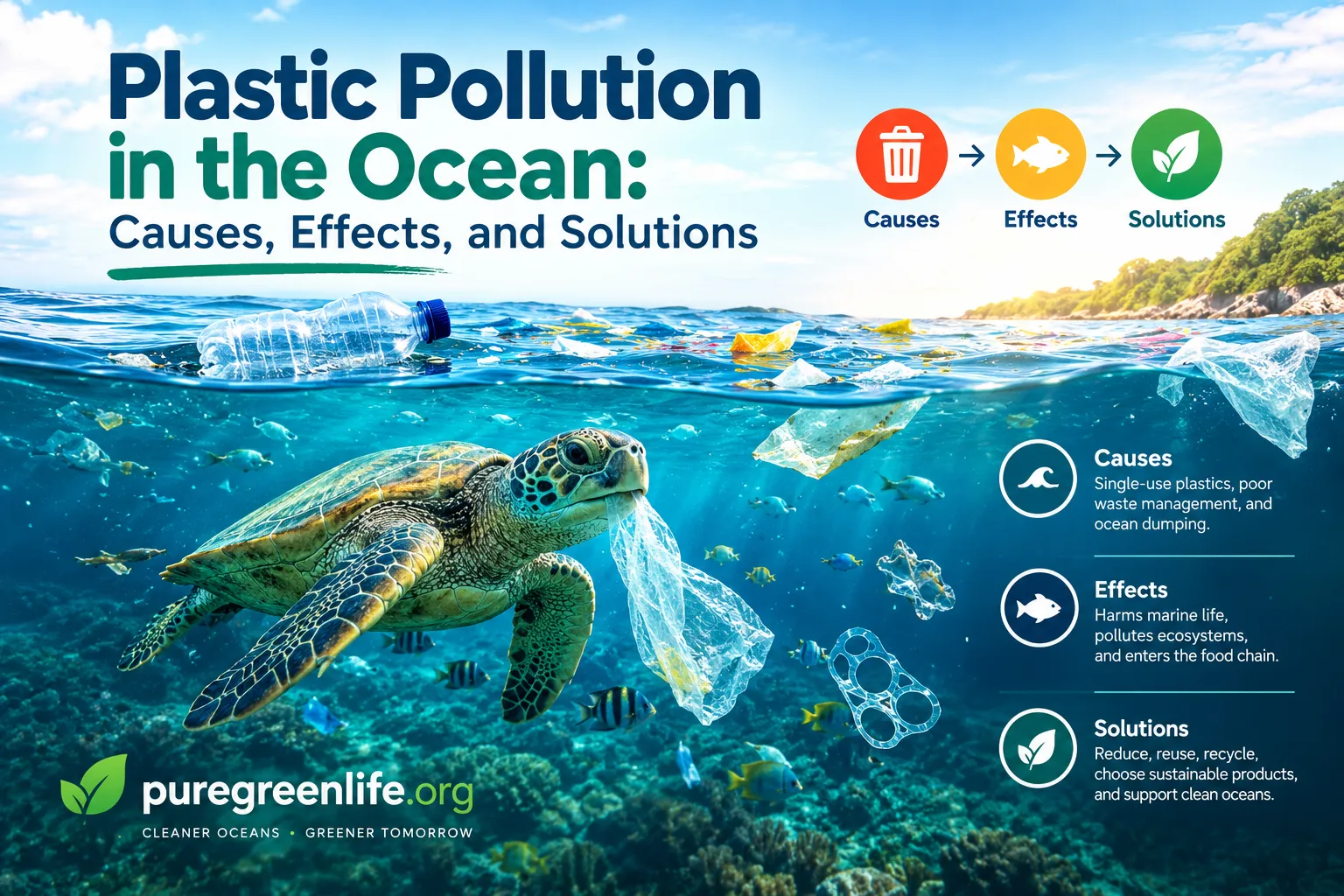
Ocean plastic pollution threatens many types of marine animals. Some animals swallow plastic because they mistake it for food. Others become trapped in nets, ropes, and plastic packaging.
These problems can cause injuries and make feeding or swimming difficult. In some cases, animals may suffer serious harm or die. The effects depend on the type of plastic and how the animal encounters it.
How Plastic Harms Sea Turtles
Sea turtles may mistake floating plastic bags for jellyfish or other prey. If they swallow plastic, it can cause digestive problems or block parts of their digestive systems. Plastic does not provide the nutrients turtles need to survive.
Turtles can also become tangled in discarded fishing nets and lines. This may restrict their movement and make it difficult to reach the surface for air. Reducing plastic litter can help protect turtles and their habitats.
Effects on Fish and Seabirds
Fish may swallow small plastic pieces while feeding. These particles can enter their digestive systems and may affect their health. Plastic can also move through marine food webs when one animal eats another.
Seabirds may mistake floating plastic for natural food. They can also become tangled in plastic strings and fishing gear. Therefore, reducing plastic waste can help protect birds, fish, and other marine wildlife.
Microplastics in Marine Animals
Microplastics are tiny plastic pieces, generally smaller than five millimetres. They form when larger plastic items break apart or come from products and materials that release small particles.
Marine animals can swallow these particles through food or water. Microplastics have been found in many marine environments and organisms. Scientists are still studying their full effects on wildlife and human health.
How Plastic Pollution Affects Ocean Ecosystems
Plastic waste can damage important marine habitats. Large pieces may cover parts of coral reefs, seagrass beds, and the ocean floor. They can also introduce hazards into areas where marine animals feed and shelter.
Plastic pollution may affect the balance of marine ecosystems. Animals that swallow plastic or become trapped in debris may struggle to survive. In addition, plastic waste can carry harmful chemicals or transport organisms to new areas.
Protecting marine habitats requires both prevention and cleanup. Removing litter and improving waste management can help reduce damage to these ecosystems.
How Does Ocean Plastic Pollution Affect Humans?
Ocean plastic pollution can affect people in several ways. Plastic waste can make beaches less attractive and harm tourism. Coastal communities may also spend money removing rubbish from public areas and shorelines.
Microplastics have been found in seafood and other parts of the environment. However, scientists are still studying the possible health effects of human exposure. More research is needed to understand the long-term risks.
Plastic pollution can also affect fishing activities. Waste may damage equipment or create hazards for boats. Reducing plastic waste can help protect coastal environments and the people who depend on them.
How Can We Reduce Plastic Pollution in the Ocean?
Reducing ocean plastic pollution requires action from individuals, businesses, and governments. Preventing waste is often better than trying to collect it after it reaches the sea.
Reduce Single-Use Plastics
People can reduce plastic waste by choosing reusable products. Cloth shopping bags, refillable water bottles, and reusable food containers are useful alternatives. Carrying these items can help reduce the need for disposable packaging.
It is also helpful to avoid unnecessary plastic products. When reusable options are not practical, choose products with less packaging where possible. Small changes can reduce waste over time.
Improve Plastic Waste Management
Proper waste collection helps stop plastic from entering rivers and oceans. Communities need suitable rubbish bins, recycling facilities, and reliable collection services. People should also avoid littering and separate recyclable materials where local services allow it.
Businesses can help by reducing unnecessary packaging and managing waste responsibly. Governments can support better collection systems and enforce rules against illegal dumping. Together, these actions can prevent plastic from escaping into waterways.
Support Ocean Cleanup Efforts
Beach and river cleanups can remove plastic before it spreads further. Volunteers can collect bottles, wrappers, and other litter from safe public areas. Cleanup activities also help people understand the scale of the problem.
However, cleanups alone cannot solve ocean plastic pollution. New waste continues to enter the environment when disposal systems fail. Therefore, cleanup projects work best alongside waste prevention and improved recycling.
New Technologies for Removing Ocean Plastic
New technologies can help collect plastic from certain waterways and ocean areas. Some systems use floating barriers to guide rubbish toward collection points. Other projects use boats or specialised equipment to gather floating debris.
River collection systems can be especially useful because they may capture waste before it reaches the sea. Researchers are also improving methods for sorting and recycling plastic materials.
Still, these technologies have limits. They may not collect tiny particles or plastic that has sunk deep underwater. For this reason, preventing plastic waste remains an important part of the solution.
What Can Individuals Do to Protect the Ocean?
Everyone can take simple steps to help protect the ocean. Use reusable products, dispose of rubbish correctly, and recycle materials according to local guidelines. Avoid leaving waste on beaches, in parks, or near rivers.
You can also join local cleanup events or support organisations working to protect marine habitats. When shopping, consider products with less unnecessary packaging. Moreover, encourage friends and family to reduce plastic waste in their daily lives.
These actions may seem small, but they can make a difference when many people take part. Consistent habits can help keep plastic out of waterways and reduce pressure on marine ecosystems.
Conclusion
Plastic pollution in the ocean threatens marine animals, damages habitats, and creates problems for coastal communities. Much of this waste comes from land-based rubbish, single-use plastics, and discarded fishing gear. Rivers, wind, and stormwater can carry it into the sea.
Fortunately, the problem can be reduced through better waste management, reusable products, recycling, and cleanup efforts. New technologies can also help collect some plastic waste. However, preventing plastic from entering the ocean is essential. By making responsible choices and supporting wider solutions, we can help protect marine life and keep our oceans cleaner.