
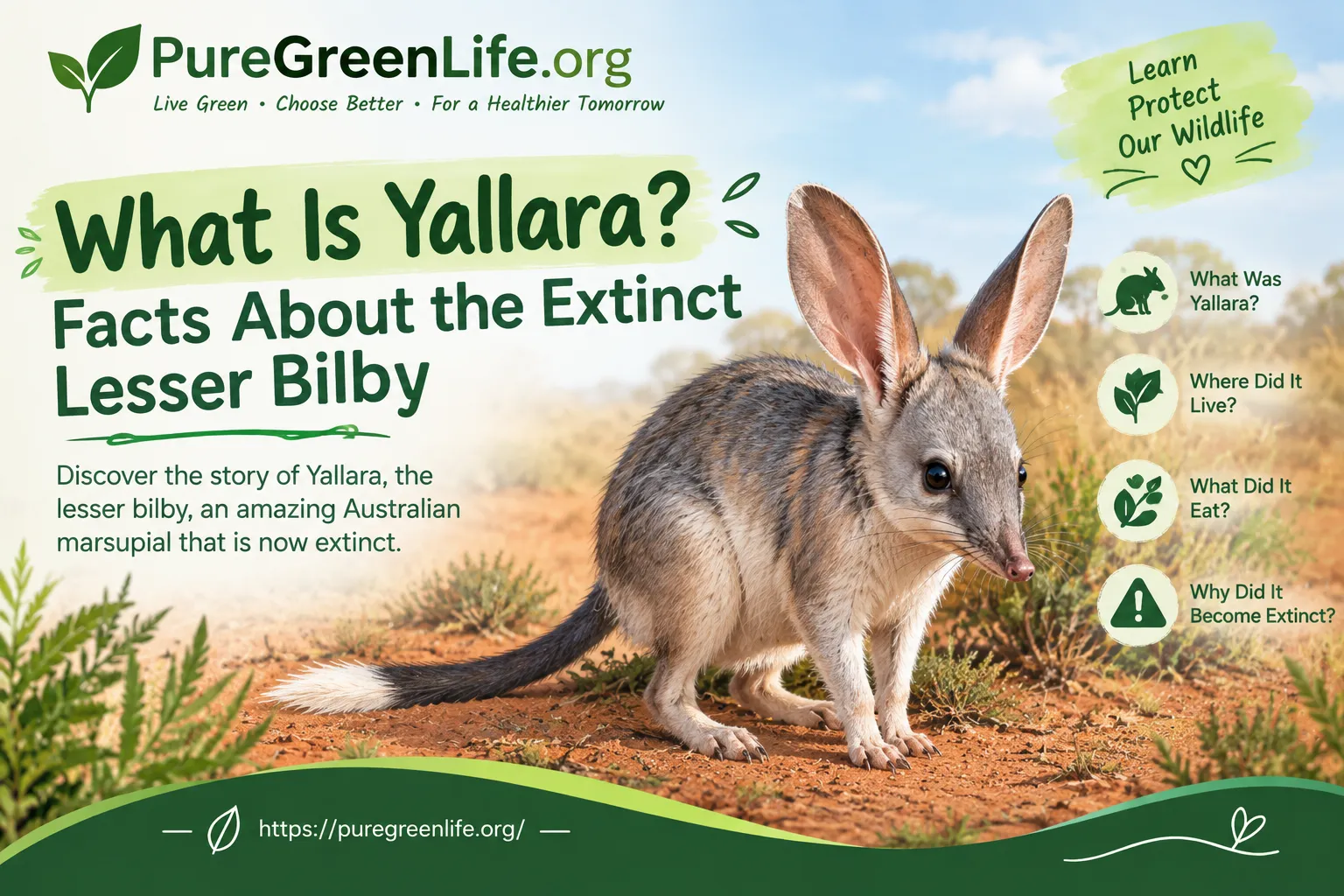
Yallara was an extinct marsupial that lived in Australia’s deserts. It is also known as the Lesser Bilby. Its scientific name was Macrotis leucura. The animal lived in dry inland regions and had large ears, a long snout, and a white tail. Today, scientists recognize the Lesser Bilby as extinct.
What Was Yallara?
Yallara was the Indigenous name used for the Lesser Bilby. It belonged to the marsupial family Thylacomyidae. At the time, it was one of two known bilby species. The other species is the Greater Bilby, which still survives today. Compared with its living relative, Yallara was smaller and had several distinct features.
Yallara’s Scientific Name
The scientific name of Yallara was Macrotis leucura. Oldfield Thomas first described the species in 1887. Initially, scientists placed it under a different classification. Over time, taxonomic research changed its classification. Modern taxonomic sources recognize Macrotis leucura as the Lesser Bilby’s scientific name.
Where Did Yallara Live?
Yallara lived in dry parts of inland Australia. Its known range included areas of South Australia and the Northern Territory. In addition, evidence connects the species with desert areas in Western Australia. It lived around sandy dunes, sandplains, and areas covered with spinifex vegetation.
What Did the Lesser Bilby Look Like?
The Lesser Bilby was smaller than the Greater Bilby. It had a compact body, large rabbit-like ears, and a long pointed snout. Its upper body had pale tan-grey fur, while the underside was lighter. Unlike the Greater Bilby, its tail was mostly white. Adults generally weighed between 310 and 435 grams.
Size and Physical Features
Yallara had a small body with strong digging limbs. Its large ears gave it a noticeable rabbit-like appearance. Meanwhile, the long snout helped it search for food in the ground. Strong legs also allowed the animal to dig burrows. These features helped it cope with Australia’s dry desert environments.
Fur and Body Structure
Across its body, Yallara had pale, silky, tan-grey fur. Its tail was completely white, unlike the Greater Bilby’s darker tail section. Large ears were another easily recognized feature. Together, these physical traits suited life in sandy and dry environments.
What Did Yallara Eat?
Yallara had a varied diet that suited its desert environment. Evidence suggests it ate insects, roots, and other available foods. In some specimens, stomach evidence also showed native rodents. This finding suggests the animal could eat small mammals when available. As a result, its flexible diet may have helped it survive when food was limited.
Main Food Sources
Yallara likely ate insects such as termites and ants. It also consumed roots and other plant materials. Additionally, evidence of small native rodents suggests animal food was part of its diet. Having several food options could help the species cope with changing desert conditions.
How Yallara Found Food
Yallara was mainly active during the night. This behavior helped it avoid Australia’s extreme daytime heat. While searching for food, it used its long snout and digging skills. Those skills allowed it to uncover food beneath the surface. During hotter periods, burrows also provided a safer place to rest.
How Did Yallara Live?
Yallara lived in sandy desert environments across inland Australia. During the day, it spent much of its time inside underground burrows. These shelters helped protect the animal from heat and possible predators. After sunset, it became active and began searching for food. Therefore, its nighttime lifestyle suited the harsh conditions of its environment.
Habitat and Burrows
Yallara lived around sand dunes, sandplains, and spinifex areas. It dug deep burrows where it could rest during daylight hours. These underground shelters helped reduce exposure to intense heat. They also offered some protection from predators. For this reason, suitable sandy habitat was important for the species.
Behavior and Activity
Yallara was mainly nocturnal, meaning it was active at night. After dark, it left its burrow to search for food. Historical accounts describe the animal as active and defensive. At the same time, its strong digging ability supported many parts of its daily behavior.
Why Did Yallara Become Extinct?
The exact cause of Yallara’s extinction is not completely known. Several factors likely affected its population over time. Introduced predators, including red foxes and feral cats, created serious pressure. Habitat changes may also have reduced suitable living areas. In addition, introduced rabbits competed for resources and changed some desert habitats. Overall, researchers believe several threats probably worked together.
Habitat Loss
Changes to Australia’s inland environments affected many native animals. Grazing and introduced species altered vegetation in some areas. Consequently, these changes could reduce available food and shelter. Yallara depended on sandy habitats with suitable vegetation. As those conditions changed, survival may have become more difficult.
Introduced Predators
Red foxes and feral cats became major threats to Australian wildlife. Both predators hunt native mammals across many parts of Australia. Small marsupials can be particularly vulnerable to these predators. Therefore, predation likely contributed to the decline of Yallara populations.
Competition With Other Animals
Introduced rabbits also changed many Australian ecosystems. They competed with native animals for food and other resources. At the same time, rabbits affected vegetation and soil conditions. These changes may have placed additional pressure on Yallara. Still, the exact effect of rabbit competition on its extinction remains uncertain.
When Did Yallara Become Extinct?
The exact date of Yallara’s extinction remains uncertain. The last confirmed live specimens were collected in 1931. Some later reports suggested that the species may have survived longer. Indigenous accounts have also suggested possible survival into the 1960s. Despite these reports, scientists now classify the Lesser Bilby as extinct.
Yallara vs. Greater Bilby
Yallara and the Greater Bilby were closely related Australian marsupials. Yallara was smaller and had a completely white tail. By comparison, the Greater Bilby is larger and has a black-and-white tail. Yallara disappeared during the twentieth century. Today, the Greater Bilby is the only bilby species still living.
Key Differences
The main differences involved size and tail appearance. Yallara was smaller than the Greater Bilby. Its completely white tail made it particularly distinctive. In contrast, the Greater Bilby has a longer body and a black-and-white tail. Despite these differences, both species shared similar habitats and lifestyles.
What Happened to the Greater Bilby?
The Greater Bilby also experienced major population declines in Australia. It faces threats from habitat changes and introduced predators. In response, conservation programs now work to protect remaining populations. These efforts aim to prevent further population losses. They also support the long-term survival of this remaining bilby species.
Why Is Yallara Important Today?
Yallara remains important to Australian wildlife research. Its extinction helps scientists understand changes in desert ecosystems. It also shows how introduced predators can affect native mammals. In addition, habitat changes can create extra pressure on vulnerable species. Yallara also has cultural importance through Indigenous knowledge and history.
Studying extinct animals can help researchers understand past ecosystems. Scientists can compare Yallara with surviving bilby populations. Such comparisons may reveal important differences between extinct and living species. They can also provide useful information for conserving Australia’s remaining native mammals.
Final Thoughts on Yallara
Yallara was a unique marsupial that lived in Australia’s desert regions. It had large ears, pale fur, and a distinctive white tail. Through burrowing and nighttime activity, the animal adapted to harsh conditions. Several environmental pressures likely contributed to its decline. Today, scientists recognize the Lesser Bilby as extinct.
Yallara’s story remains important for Australian wildlife research. It also highlights the challenges faced by native desert animals. Protecting surviving species can help reduce the risk of further extinctions. Meanwhile, the Greater Bilby’s survival shows why conservation efforts remain important today.






One thought on “What Is Yallara? Facts About the Extinct Lesser Bilby”