
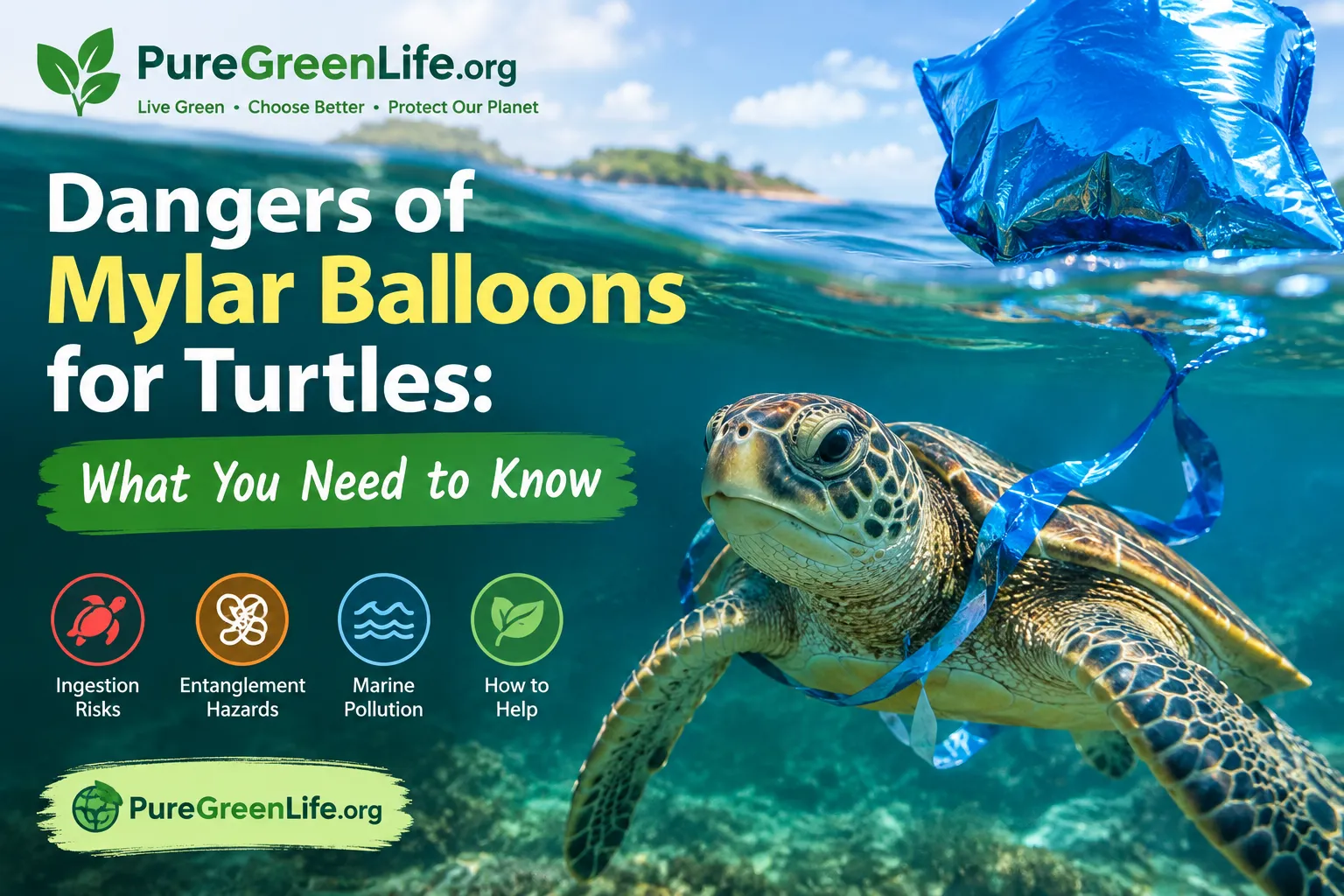
Mylar balloons may look harmless, but they can become marine debris. Once released, they can travel far from where they started. Some eventually reach beaches, rivers, lakes, and the ocean. Sea turtles may mistake balloon pieces for food or become tangled. These risks make balloon litter a serious wildlife concern.
Why Are Mylar Balloons Dangerous for Turtles?
Mylar balloons can harm turtles when they enter natural environments. Sea turtles may mistake floating balloons for prey, including jellyfish. This can lead to accidental ingestion while turtles search for food. NOAA Fisheries lists balloons among marine debris eaten by sea turtles.
The danger can continue even after a balloon loses its shape. Wind, waves, and sunlight can break balloons into smaller pieces. Those pieces can remain in the environment and become marine debris. Mylar itself does not simply disappear after reaching the ocean.
Attached ribbons and strings create another serious problem. A turtle can become caught while swimming or feeding. Entanglement may restrict movement and cause injuries or drowning.
How Mylar Balloons Harm Turtles
Balloon debris can affect turtles in several different ways. The main concerns include swallowing pieces and becoming tangled. These problems can interfere with feeding, swimming, and normal movement. NOAA identifies marine debris as a threat to all sea turtle species.
Ingestion and Blockages
Sea turtles can mistake balloons for prey while feeding in the ocean. Some turtles naturally eat jellyfish and other soft-bodied animals. A floating balloon can sometimes look similar to those food items. NOAA specifically warns that turtles may mistake balloons for prey.
After swallowing debris, a turtle may face digestive problems. Marine debris can block parts of the digestive system. It can also create a false feeling of fullness. As a result, the animal may eat less natural food.
Balloon pieces can also break into smaller fragments. These pieces may remain inside the digestive tract after being swallowed. Serious blockages can prevent normal digestion and movement through the gut. The exact outcome depends on the debris and the animal involved.
Entanglement Risks
Balloons often have ribbons, strings, or other attached parts. These materials can create dangerous loops in the water. Swimming turtles may become caught while moving through floating debris.
An entangled turtle may struggle to swim normally. The attached material can also restrict its movement or cause physical injuries. In severe cases, entanglement can contribute to drowning or death.
For this reason, balloon strings can be harmful even without ingestion. Removing loose balloon debris from beaches can reduce this risk. Still, prevention is safer than relying only on cleanup efforts.
Reduced Feeding and Movement
Swallowed debris can interfere with normal feeding. A blocked digestive tract may also stop food from moving normally. Marine debris can make animals feel full without providing useful nutrition.
Entanglement can create another problem by limiting movement. Turtles need to swim freely when feeding, traveling, and avoiding danger. Restricted movement can leave an animal weaker and more exposed to other threats.
The effects can vary between individual turtles. Some animals may suffer serious injuries, while others may avoid debris entirely. Because outcomes differ, it is best to prevent balloons from entering natural areas.
How Do Mylar Balloons Reach the Ocean?
Balloons can reach the ocean through several different routes. Some are released outdoors during celebrations or other events. Others escape accidentally or are carried away by wind. Eventually, balloons and their pieces can return to the ground or water.
Released Balloons
Some balloons are intentionally released into the air. People may release them during celebrations, memorials, festivals, or other events. Once released, the balloon is no longer under human control.
Helium-filled balloons can travel with air currents before coming back down. They may land on land, inland water, or the ocean. Their final location can be difficult to predict.
Even a single balloon can become litter after an event. Large releases can place much more debris into the environment. Avoiding outdoor balloon releases is therefore an important prevention step.
Wind and Water Movement
Wind can carry loose balloons away from their original location. Once they reach the ground, rain and water flow can move them again. Rivers and drainage systems can carry litter toward larger bodies of water.
Ocean currents can also move floating debris over long distances. A balloon released far from the coast may eventually reach marine habitats. NOAA has documented balloons and balloon pieces in ocean environments.
Mylar balloons can also remain in the environment for a long time. Sunlight, waves, and weather can cause them to break into smaller pieces. Those fragments can continue moving through natural systems.
Which Turtles Are Most at Risk?
Marine debris can affect all species of sea turtles. NOAA reports that several species may swallow balloons and other floating debris. These include loggerheads, green turtles, Kemp’s ridleys, leatherbacks, and hawksbills.
Turtles that feed near the surface may encounter floating debris more often. Younger turtles can also spend long periods drifting through open ocean areas. During these stages, they may come into contact with floating debris.
Leatherback turtles face a particular concern because jellyfish are an important part of their diet. Floating balloon material can resemble some of their natural prey. NOAA specifically lists balloons among debris that leatherbacks may ingest.
Risk is not limited to one turtle species or age group. Marine debris can appear across different habitats and regions. Therefore, reducing balloon litter can benefit sea turtles broadly.
Other Wildlife Affected by Mylar Balloons
Turtles are not the only animals affected by balloon debris. Marine debris can harm many wildlife groups through swallowing or entanglement. NOAA reports impacts across hundreds of marine and coastal species.
Seabirds
Seabirds can encounter floating balloon pieces while feeding or swimming. Some birds may mistake small debris for food. Others can become tangled in strings or other attached materials.
Marine debris has been documented in many seabird species. NOAA research records both ingestion and entanglement among seabirds.
The risk can increase when debris gathers near feeding areas. Removing litter from beaches and coastal waters can help reduce exposure. Preventing balloons from becoming litter remains the better solution.
Marine Mammals
Marine mammals can also become entangled in marine debris. Whales, dolphins, seals, and sea lions may encounter floating materials. Strings, lines, and other debris can restrict movement or cause injuries.
Mylar balloon debris can remain in marine habitats for long periods. NOAA has documented balloon-related debris in deep ocean environments. One expedition found balloon remnants during many deep-sea dives.
These examples show why balloon litter affects more than turtles. Keeping balloons out of the environment protects many different animals.
How to Prevent Balloon Pollution
The simplest solution is to prevent balloons from becoming outdoor litter. People can choose decorations that do not fly away. Proper disposal also keeps used balloons away from wildlife. NOAA recommends avoiding balloon releases to protect sea turtles and other animals.
Avoid Releasing Balloons
Never intentionally release balloons into the sky. Once released, they can travel beyond the event area. Eventually, they may fall into forests, waterways, or the ocean.
Keep balloons securely attached during outdoor events. Bring them indoors after the celebration whenever possible. This simple step can prevent balloons from becoming marine debris.
NOAA also recommends using alternatives such as bubbles or kites. These options can provide decoration or entertainment without releasing balloons.
Choose Safer Decorations
Many celebrations can use decorations that stay in place. Paper banners, fabric decorations, and reusable signs are useful options. These choices can reduce the chance of decorations reaching waterways.
Reusable decorations can also be stored for future events. That makes them useful beyond one celebration. Choosing durable items can reduce the amount of event waste produced.
If balloons are used indoors, keep them away from open doors. Secure them carefully when transporting or storing them. These steps can lower the chance of accidental releases.
Dispose of Balloons Properly
Never leave used balloons on beaches, streets, parks, or other outdoor areas. Deflated balloons should go into appropriate waste containers. Ribbons and strings should also be collected and discarded safely.
Before throwing anything away, check the surrounding area for loose pieces. Small fragments can easily remain hidden in grass or sand. Cleaning up after events helps prevent debris from reaching waterways.
NOAA also encourages people to remove trash when leaving beaches. Proper waste handling can reduce the amount of debris entering marine habitats.
What to Do If You Find a Balloon in Nature
If you find an intact balloon, prevent it from reaching nearby water. Pick it up carefully if doing so is safe. Remove attached ribbons, strings, and other loose parts before disposal. These materials can become dangerous marine debris when they reach rivers, lakes, or oceans.
Beach cleanup can help reduce marine debris before animals encounter it. Even small amounts of litter can become dangerous to wildlife. New cleanup programs now focus on identifying marine debris hotspots where sea turtles and birds face higher risks. In 2026, Gulf restoration projects reported removing more than 100,000 pounds of land and ocean debris.
Technology is also improving how teams find marine debris. AI-powered underwater robots can now detect, map, and collect debris in shallow-water environments. The SeaClear system uses computer vision and multiple robots for this purpose. These developments could make future marine cleanup efforts more targeted and efficient.Do not approach a turtle that appears trapped or injured. Trying to free a wild animal yourself can cause additional harm. Trained wildlife responders should handle serious entanglement cases whenever possible. Keep a safe distance and avoid touching the animal.If you see an entangled sea turtle, contact local wildlife responders. Give them the animal’s location and describe the situation clearly. NOAA also recommends not releasing balloons because they can harm sea turtles and other wildlife. Safer celebration options include bubbles, kites, and wish papers.Another recent development is stronger action against mass balloon releases. Louisiana’s 2026 law prohibits intentional mass outdoor releases of Mylar and latex helium balloons. The law treats these releases as intentional litter starting August 1, 2026.These changes show that prevention is becoming more important than cleanup alone. The safest balloon is one that never becomes outdoor litter. Choosing reusable decorations or balloon-free alternatives can help protect wildlife before problems begin.
Final Thoughts on Mylar Balloons and Turtles
Mylar balloons can become harmful marine debris after they enter nature. Sea turtles may mistake floating balloons for food while searching for prey. Attached ribbons and strings can also create entanglement risks.
The problem is preventable with simple choices. Avoid releasing balloons and choose safer decorations instead. Proper disposal can also keep balloon waste away from waterways.
Protecting turtles starts with keeping unnecessary debris out of their habitats. Small actions can reduce risks for turtles and other wildlife. By preventing balloon pollution, people can help keep beaches and oceans safer.