
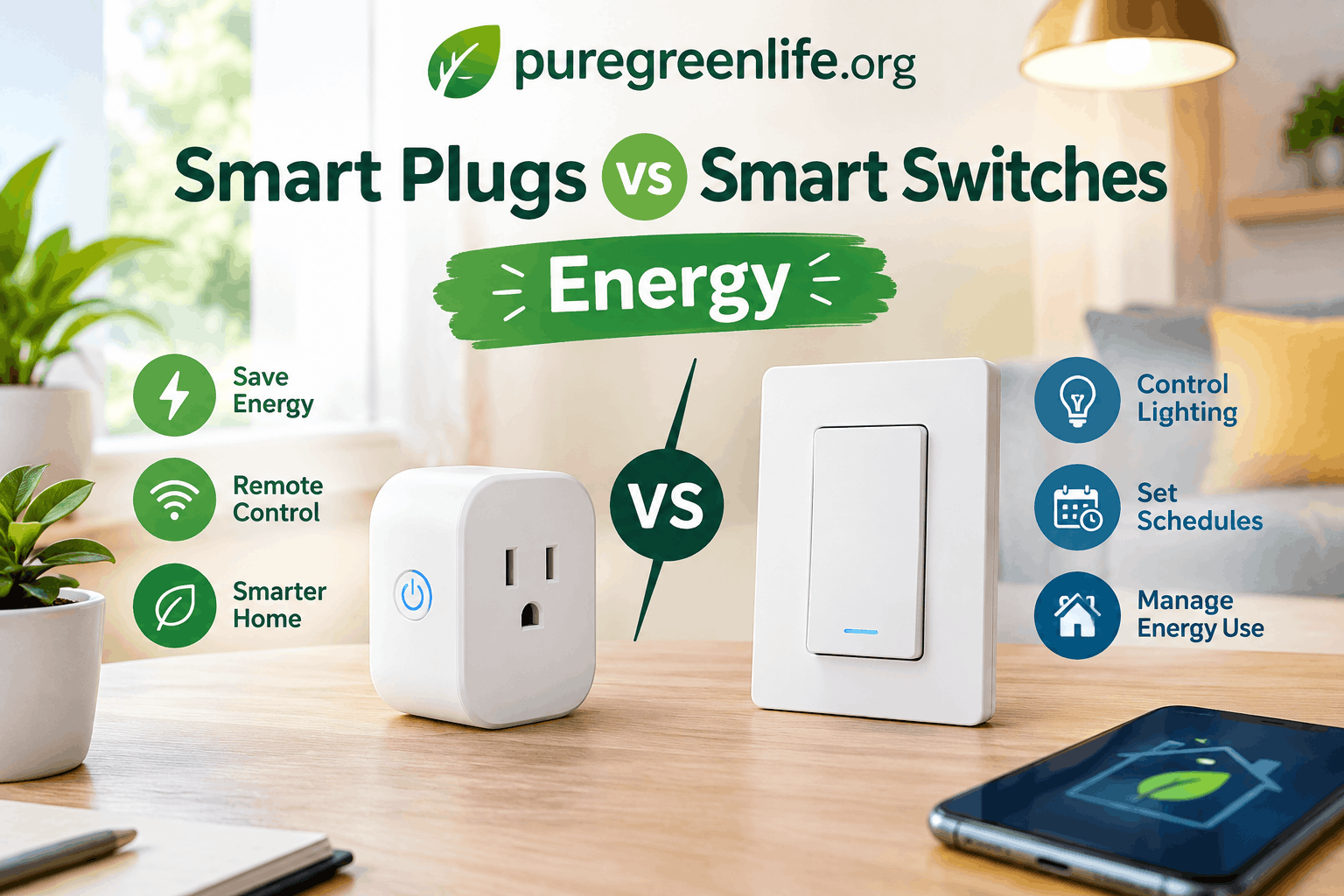
What Are Smart Plugs?
Smart plugs make regular appliances easier to control and manage. You plug them into an outlet and connect your appliance.
How Smart Plugs Work
Smart plugs connect to Wi-Fi or another smart home network. You can control connected devices using a smartphone app. Many models also support schedules, timers, and voice commands.
Main Features of Smart Plugs
- Remote on and off control
- Scheduling and timers
- Voice control on compatible systems
- Energy monitoring on some models
How They Help Manage Energy
Smart plugs can stop devices from running unnecessarily. Schedules can turn appliances off when you do not need them. Energy monitoring can also show which devices consume more electricity.
What Are Smart Switches?
Smart switches replace regular wall switches with connected controls. They let you control lights using apps, voice commands, or schedules.
How Smart Switches Work
Smart switches connect to your home network using supported wireless technology. You can then control connected lights from a smartphone app. Some switches also work with compatible voice assistants.
Main Features of Smart Switches
Smart switches offer remote control, scheduling, timers, and voice control. Some models also support dimming and lighting scenes.
How Smart Switches Control Home Lighting
You can turn lights on or off from your phone. Schedules can automatically turn lights on or off. Some systems can use sensors for automatic lighting control.
Smart Plugs vs Smart Switches
Smart plugs and smart switches both add convenient home automation. However, they differ in installation, features, and everyday use.
Installation
Smart plugs are easy to install without electrical wiring. Simply plug the device into an existing wall outlet. Smart switches require wiring into your electrical system. Some models may also require a neutral wire.
Compatibility
Smart plugs work with compatible plug-in appliances and devices. Smart switches usually control lights or other wired electrical loads. Always check the product’s load and wiring requirements first.
Energy Monitoring
Some smart plugs can measure electricity used by connected devices. Some smart switches also offer energy monitoring features. Always check the product specifications before buying.
Automation
Both devices can support schedules, timers, and remote control. Compatible models can also work with smart home systems. Automation can help reduce unnecessary device or lighting use.
Cost
Smart plugs usually cost less and need simpler installation. Smart switches can cost more because installation requires electrical work. The total cost depends on the model and installation needs.
Ease of Use
Smart plugs are usually easier for beginners to set up. Smart switches provide permanent control through a wall-mounted switch. Choose based on your home setup and the devices involved.
How Smart Plugs Save Energy
Smart plugs can help manage appliances and reduce unnecessary energy use. They work best when you control devices that often stay running.
Scheduling Devices
You can schedule devices to turn off at specific times. This helps prevent appliances from running when nobody needs them.
Reducing Standby Power
Some devices continue using electricity while they remain plugged in. A smart plug can cut power during selected periods. However, savings depend on the device and how much standby power it uses.
Remote Control
Smart plugs let you turn connected devices off remotely. This helps when you forget to switch something off before leaving.
Tracking Energy Use
Some smart plugs measure the electricity used by connected devices. You can review energy data through the companion smartphone app. This helps identify devices that use more electricity than expected.
How Smart Switches Save Energy
Smart switches can help control lights more efficiently. They reduce wasted lighting by automating when lights operate.
Automated Lighting Schedules
You can schedule lights to turn on or off automatically. This prevents lights from staying on during unnecessary hours.
Motion-Based Control
Some smart lighting systems work with occupancy or motion sensors. They can turn lights on when someone enters a room. They can also turn lights off after the room becomes empty.
Remote Switching
Smart switches let you control lights from your smartphone. You can turn off lights even when you are away.
Preventing Lights From Staying On
Smart schedules and sensors can reduce unnecessary lighting use. This helps prevent lights from running when nobody needs them. Actual savings depend on your lighting and usage habits.
Smart Plugs vs Smart Switches for Energy Saving
Smart plugs and smart switches can both help manage home energy use. The better choice depends on the device you want to control.
Which Devices Work Better With Smart Plugs?
Smart plugs work well with plug-in appliances and electronics. They can control lamps, fans, and some kitchen appliances. They can also manage entertainment devices and other compatible equipment. Some smart plugs can monitor the energy used by connected devices.
Which Devices Work Better With Smart Switches?
Smart switches work best with fixed lighting systems. They can control ceiling lights, wall lights, and outdoor lights. They provide permanent control without occupying a wall outlet. Some models support schedules, remote control, and energy monitoring.
When Should You Choose Each Option?
Choose a smart plug for portable or plug-in devices. Choose a smart switch for permanently installed lighting. Smart plugs are usually easier to install and move between devices. Smart switches work better for whole-room lighting control. Both options can support schedules and automated energy management.
Benefits of Using Smart Home Controls
Smart home controls can make energy use easier to manage. They also give you more control over connected devices.
Better Energy Management
Smart controls help you monitor and manage energy use. Some devices can show how much energy connected devices consume. This information can help you identify unnecessary energy use.
Convenient Device Control
You can control compatible devices using your smartphone. Remote control lets you manage devices even when away. This makes everyday home control more convenient.
Automated Routines
Smart devices can follow schedules and automated routines. Some systems can respond to occupancy or room activity. These features can reduce unnecessary device operation.
Potential Electricity Savings
Smart controls can reduce energy waste through better control. However, actual savings depend on devices and usage habits. Using schedules and automation can help avoid unnecessary energy use.
Things to Consider Before Buying
Check a few important things before buying smart home controls. The right choice depends on your devices and home setup.
Device Compatibility
Check whether the device supports your appliance or lighting system. Also check its voltage, load, and connection requirements.
Electrical Requirements
Smart switches may require specific wiring inside your wall. Some models also require a neutral wire for proper operation. Follow the manufacturer’s installation requirements before connecting electrical devices.
Energy Monitoring Features
Some smart plugs and switches can track energy consumption. However, energy monitoring is not available on every model. Check the product specifications before buying.
Smart Home Platform Support
Check whether the device works with your preferred smart home platform. Some devices support multiple platforms through Matter or other standards.
Safety and Installation
Choose products with suitable safety and overload protection features. Follow the manufacturer’s instructions during setup and installation. For wired switches, use a qualified electric
Smart Plugs vs Smart Switches: Which Should You Choose?
Both options can help control devices and manage home energy use. Your choice depends on the devices and wiring in your home.
Best Uses for Smart Plugs
Smart plugs work well with portable plug-in devices. They can control lamps, fans, and compatible small appliances. They are also easy to move between different devices. Some models can measure the energy used by connected devices.
Best Uses for Smart Switches
Smart switches work well with permanently installed lighting. They can control ceiling lights, wall lights, and other fixed lights. You can schedule lights and control them remotely with compatible systems.
Choosing Based on Your Home Setup
Choose smart plugs when you want simple device control. Choose smart switches when you want permanent lighting control. Check compatibility before connecting either option to your home system. Not all smart devices work together without compatible platforms or hubs.
FAQs
Do Smart Plugs Save Electricity?
Smart plugs can help reduce unnecessary electricity use. Schedules and timers can turn devices off when unused. Actual savings depend on the device and your usage habits.
Do Smart Switches Use Electricity?
Yes, smart switches usually use a small amount of electricity. They need power for their smart features and network connection. Their standby use varies between different models.
Are Smart Plugs Better Than Smart Switches?
Neither option is always better for every situation. Smart plugs work well with compatible plug-in devices. Smart switches work well with fixed lighting systems.
Can Smart Plugs Measure Energy Usage?
Some smart plugs can measure electricity used by connected devices. However, not every smart plug includes energy monitoring. Check the product specifications before buying.
Can Smart Switches Reduce Lighting Energy Use?
Yes, smart switches can help reduce unnecessary lighting use. Schedules and remote controls can prevent lights staying on unnecessarily. Some systems also use occupancy-based automatic lighting controls.
Final Thoughts on Smart Plugs vs Smart Switches
Smart plugs work best with portable plug-in devices. Smart switches work best with fixed lighting. Both can help reduce unnecessary energy use. Choose the option that fits your home setup.






2 thoughts on “Smart Plugs vs Smart Switches: Energy Saving Guide”