
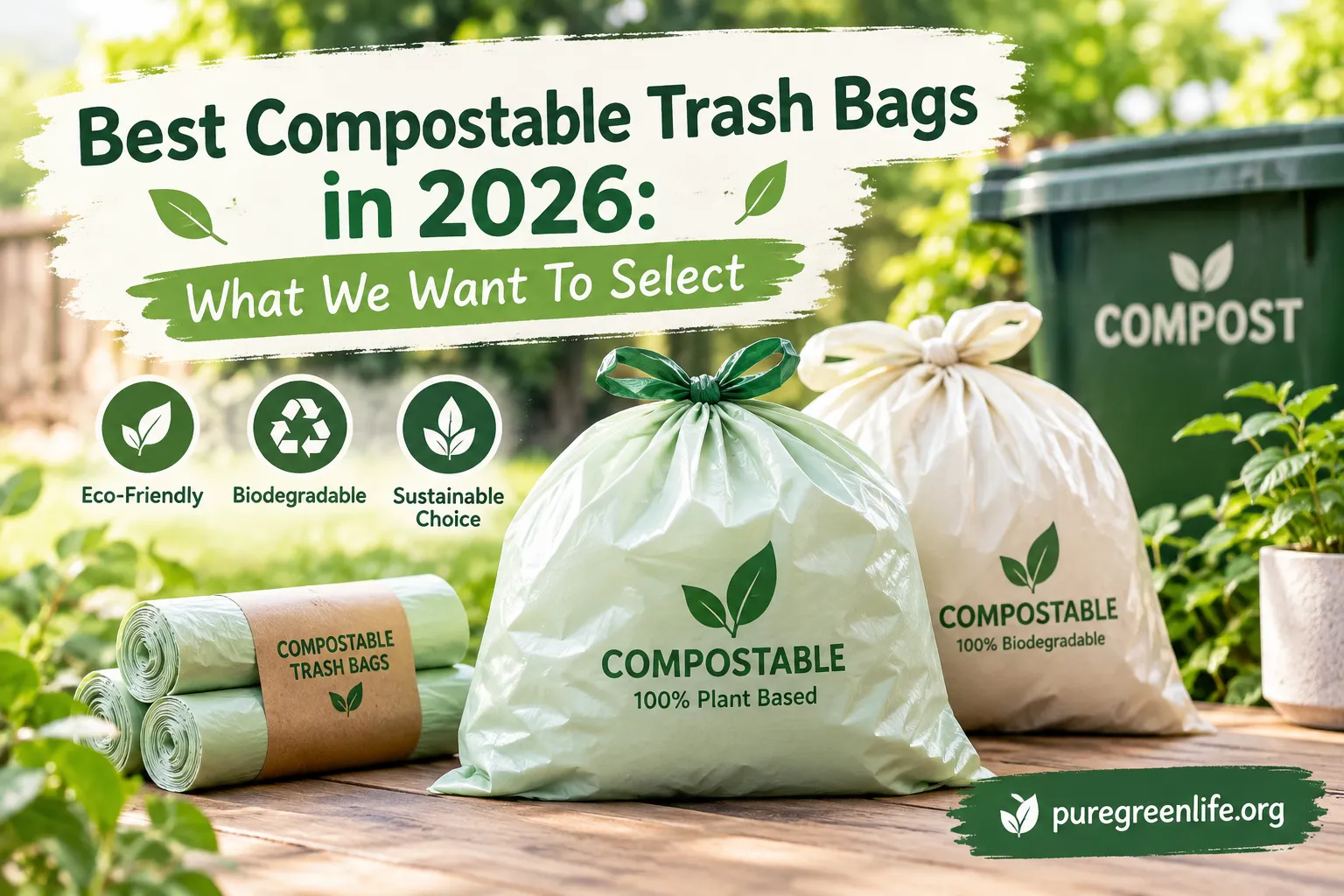
“Biodegradable” on a trash bag sounds great. Usually it isn’t. Easy mistake to make.. I did too. Turns out the label says a lot less than it seems to.. Compostable is a different story, and it’s the word worth looking for. Let’s sort out the best compostable trash bags from the ones that just look green.
So what makes a bag “compostable”?.While Regular Plastic Bottels Require Hundre Of Years For Decomposition. In a proper compost setting, it naturally turns straight into soil. Simple as that.
But here’s the catch. Not every bag with a green leaf on the box is the real deal.
Flip the box over and look for a BPI or ASTM D6400 stamp. That’s your proof the bag actually went through compost testing. Composting at home? Look for a home-compostable mark as well. And if there’s no certification, don’t bother.
The second thing is where your food scraps actually go. Many city composting programs accept certified bags, but some don’t—so it’s always best to check. Others may ask you to put food waste directly in the bin.. A quick look at your local rules saves you a lot of guessing. If you use a backyard pile, a home-compostable bag is the one you want, since industrial-only bags need higher heat than most piles ever reach.
So which bags are worth a look? Three names come up again and again.
BioBag is probably the best known.You’ll find it in sizes for everything from a countertop pail to yard cleanup, and the brand lists BPI certification. A safe first pick if you want something tried and tested.
UNNI is a popular pick for kitchen compost pails, with a reputation for being sturdy enough to hold wet scraps without tearing. It advertises ASTM D6400 certification and shows up on plenty of “best of” lists for good reason.
Primode is another widely sold option, often chosen for countertop bins. It’s easy to find and comes in a range of sizes, which makes it handy if you’re still figuring out what fits your setup.
One honest note.Brands change things without telling anyone, whether it’s the formula, the sizes, or the price. Read the current listing before you order. This list is only a place to start.
Now for the stuff nobody tells you. Compostable bags don’t love sitting around. Heat, humidity, and time all make them weaker, so buy what you’ll use in a year or so and store the box somewhere cool and dry. Overfilling is the other classic mistake. A bag full of wet food scraps and a pointy chicken bone will split every time.
A few small habits help a lot:
Line the bin, but don’t stuff it.Empty the bin often, since summer heat makes it turn quickly. Drain or blot anything soggy with a paper towel first. When the bag’s full, tie it off and take it right out to your compost bin or cart.
What about the landfill? This is where people get tripped up. A compostable bag tossed in a regular trash can doesn’t do much good. Landfills are packed tight, with little oxygen, so the bag won’t break down the way it’s meant to. The benefit only shows up when the bag ends up in a real composting system.
Cost is worth a mention too. Compostable bags usually run higher per bag than basic plastic liners. For many households that’s a fair trade, especially since food scraps are heavy and smelly, and diverting them from the trash keeps your regular bin lighter and cleaner. Still, if your city doesn’t collect food waste and you don’t compost at home, these bags may not be the right move yet.
Pick the bag to fit the bin. Small pail, small bag. Big outdoor bin, big bag. It saves you from wasting bags and from overstretching a thin one until it rips.
Honestly, the best compostable trash bags aren’t hard to spot. Look for a certified one, and pick it based on where your scraps end up, a city program or your own backyard pile.







3 thoughts on “Best Compostable Trash Bags in 2026: What We Want To Buy And Skip ”