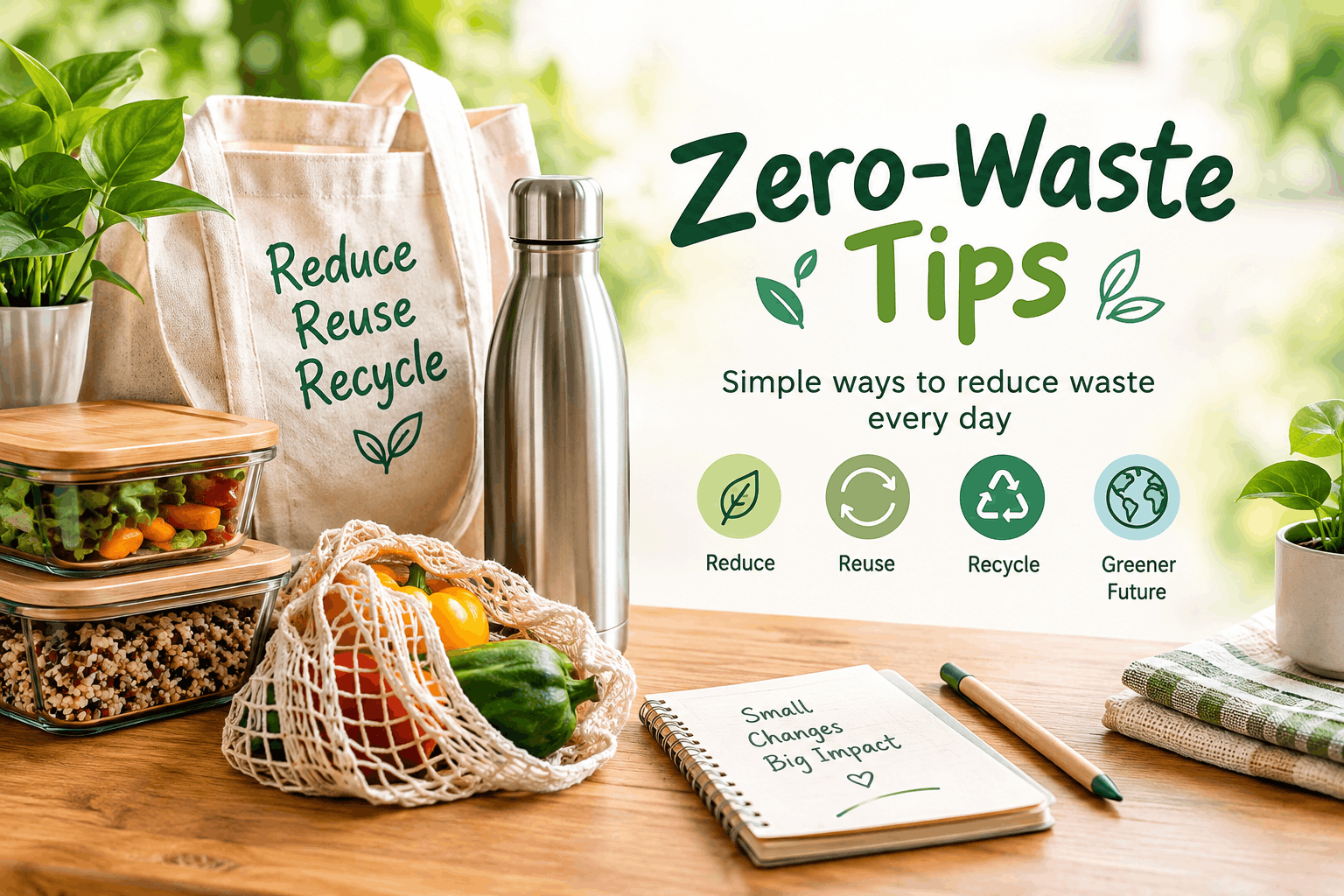
Reducing waste does not have to be difficult. Small changes, such as carrying a reusable bottle, planning meals, and repairing old items, can make a difference. You do not need to change your entire lifestyle at once. Start with simple habits and build them into your daily routine.
What Is Zero-Waste Living?
Zero-waste living means trying to send less waste to landfills by using fewer disposable products, reusing items, and recycling properly. The goal is not to produce absolutely no waste. It is to avoid unnecessary waste whenever possible.
Why Is Reducing Waste Important?
Everyday waste uses valuable resources and creates environmental problems. Plastic packaging, leftover food, and unwanted products can end up in landfills or pollute the environment.
Reducing waste helps conserve natural resources, save money, and keep our surroundings cleaner. Even small actions can make a difference when many people follow them.
15 Simple Zero-Waste Tips for Everyday Life
You can reduce waste at home, while shopping, and when travelling. Here are some easy ways to get started.
1. Carry Reusable Shopping Bags
Keep reusable bags in your car, backpack, or near your front door. They help reduce the need for disposable shopping bags.
2. Use a Refillable Water Bottle
Carry a reusable water bottle instead of buying bottled water whenever safe drinking water is available. This reduces plastic waste and can save money.
3. Avoid Single-Use Plastics
Choose reusable cups, cutlery, and food containers when practical. Avoid disposable products when you can use something you already own.
4. Buy Products With Less Packaging
Choose products with simple or minimal packaging. Refill shops and bulk stores can also help reduce packaging waste when they are available.
5. Plan Your Meals
Make a meal plan before shopping. Check your kitchen first and buy only what you need. This helps prevent food from being forgotten and thrown away.
6. Store Food Properly
Keep food in suitable containers and store it at the correct temperature. Label leftovers with dates so you can use them before they spoil.
7. Use Leftovers Creatively
Turn leftover vegetables into soup, add cooked food to salads, or use extra ingredients in another meal. Refrigerate leftovers promptly and follow food safety guidance.
8. Compost Suitable Food Scraps
Fruit peels, vegetable scraps, and other suitable organic materials can be composted. Composting turns these materials into useful soil improver instead of sending them to landfill.
Choose a composting method that suits your home, garden, or local collection service.
9. Choose Refillable Products
Refillable soap, cleaning products, and other household items can reduce packaging waste. Check whether refills are available and suitable for the product.
10. Repair Items Before Replacing Them
Fix damaged clothes, furniture, and household items when possible. Simple repairs can extend a product’s life and reduce the need to buy replacements.
11. Buy Secondhand When Possible
Look for used clothes, books, furniture, and other items before purchasing new ones. Buying secondhand can save money and reduce demand for new resources.
12. Choose Durable Products
Buy products that are designed to last and can be repaired. A reusable item is most useful when you use it regularly instead of replacing it unnecessarily.
13. Reduce Paper Use
Use digital documents when they are practical. Print only when necessary, use both sides of paper, and reuse blank sheets for notes.
14. Donate or Share Unwanted Items
Give usable clothes, books, furniture, and household goods to people who need them. You can also sell items, exchange them with friends, or donate them to local organisations.
15. Recycle Correctly
Check your local recycling rules before putting items in the recycling bin. Separate accepted materials and keep them clean when required. Recycling symbols do not always mean that an item is accepted by your local programme.
Zero-Waste Habits for the Kitchen
The kitchen is a useful place to begin reducing household waste because food scraps and packaging can add up quickly.
Try these simple habits:
- Keep a shopping list to avoid buying extra food.
- Use older food first when it is still safe to eat.
- Freeze suitable food before it spoils.
- Choose reusable containers instead of disposable food bags.
- Compost suitable fruit and vegetable scraps.
- Use washable cloths instead of disposable paper towels when practical.
These steps can help reduce food waste, save money, and keep your kitchen organised.
How to Reduce Waste in the Bathroom
Bathroom products often come with plastic packaging and disposable accessories. A few simple changes can help reduce this waste.
- Choose refillable soap and shampoo when available.
- Use washable towels instead of disposable wipes when suitable.
- Buy only the personal-care products you need.
- Finish products before opening new ones.
- Choose durable products that can be used for a long time.
Remember that reusable products should be cleaned properly and replaced when they are no longer safe to use.
How to Make Shopping More Sustainable
Your shopping habits can affect how much waste you create. Before buying something, ask yourself whether you really need it.
Choose quality products that last, consider secondhand options, and avoid unnecessary packaging. Buy in bulk only when you can use the products before they expire or spoil.
You can also borrow or share items that you use only occasionally, such as tools or special equipment.
Benefits of Following Zero-Waste Tips
Zero-waste habits offer several practical benefits for your home and the environment.
Less Household Waste
Reusing, repairing, and recycling can reduce the amount of rubbish you throw away.
Lower Everyday Costs
Reusable products and careful shopping can help reduce spending over time. Planning meals can also prevent money from being wasted on spoiled food.
Conservation of Natural Resources
Using products for longer reduces the need for new materials. Recycling suitable materials can also help conserve resources.
A Cleaner Environment
Reducing litter and disposable waste can help protect natural areas, waterways, and wildlife.
Better Daily Habits
Planning purchases, organising food, and repairing items can make everyday life more efficient.
Common Zero-Waste Mistakes to Avoid
Zero-waste living should be practical and affordable. Avoid these common mistakes when starting out.
Trying to Change Everything at Once
Start with one or two habits, such as carrying a reusable bag or planning your meals. Add more changes when you feel comfortable.
Buying Too Many Eco-Friendly Products
You do not need to replace everything you own with new sustainable products. Using existing items for longer is often a better starting point.
Forgetting About Reuse and Repair
Recycling is useful, but reusing and repairing products can help avoid waste in the first place. Consider these options before throwing something away.
Recycling Without Checking Local Rules
Different areas accept different materials. Check your local recycling programme instead of assuming every plastic, paper, or glass item belongs in the recycling bin.
Wasting Food While Buying in Bulk
Bulk buying is helpful only when you use what you purchase. Buy amounts that suit your household and storage space.
How to Start a Zero-Waste Lifestyle
You do not need expensive products or major lifestyle changes to reduce waste. Start by carrying a reusable bag, planning meals, avoiding unnecessary purchases, and repairing items when possible.
Choose habits that fit your budget and daily routine. Focus on using what you already own before buying replacements, and make gradual changes that you can maintain.
Final Thoughts
Reducing waste starts with everyday choices. Reuse what you can, buy only what you need, plan your meals, and recycle according to local rules.
You do not have to live a perfect zero-waste lifestyle to make a positive difference. Start small, stay consistent, and encourage others to follow practical habits. Over time, these simple actions can help reduce waste, save money, and protect the environment.