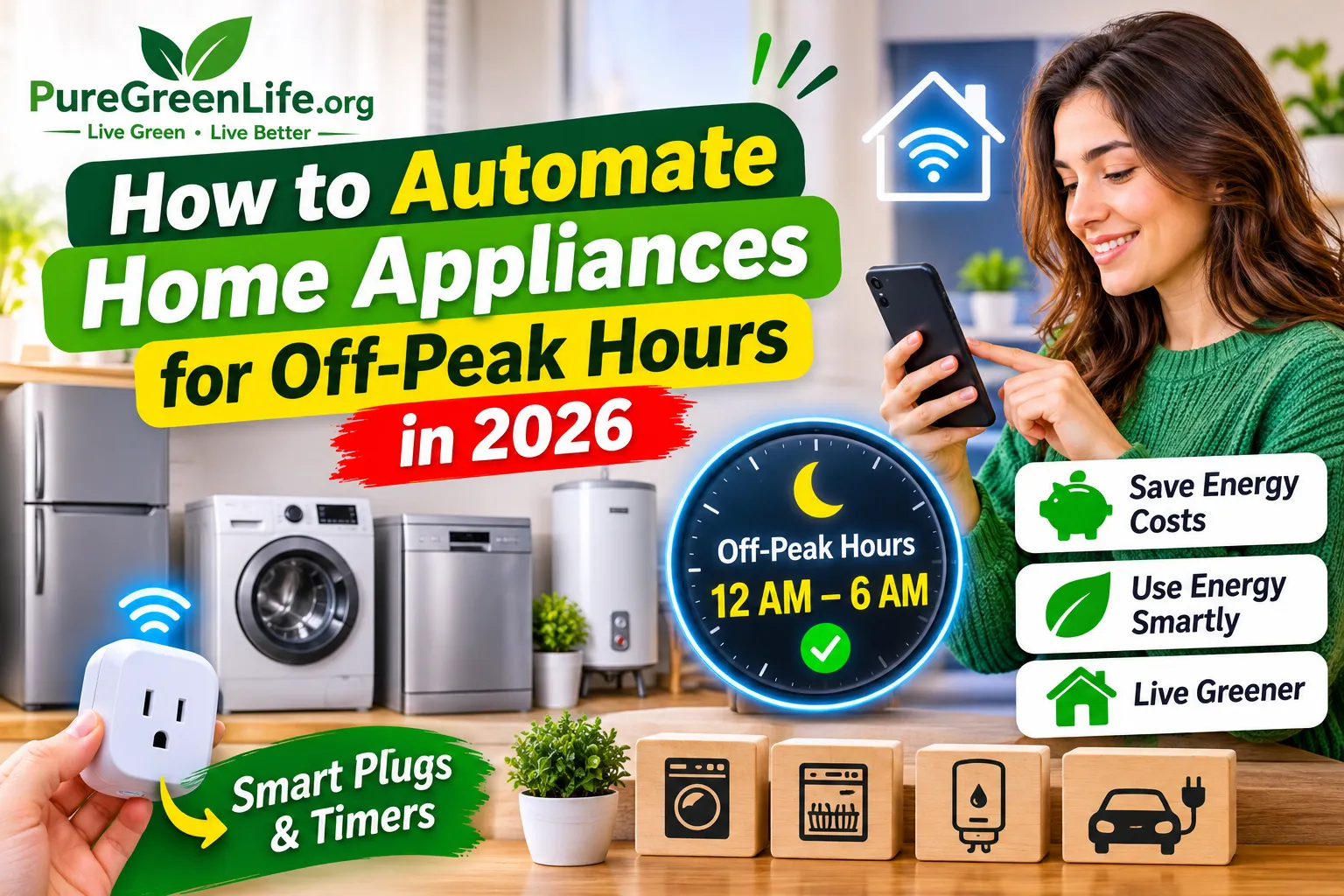
Electricity bills can become expensive when appliances run during peak hours. Many households use several electrical devices throughout the day. However, some appliances do not need to run immediately.
Home automation can help you schedule electricity use during cheaper hours. Smart plugs, timers, and energy management systems make this possible. They can control suitable appliances without constant manual effort.
This guide explains how to automate home appliances for off-peak hours. You will also learn which devices to schedule and how to avoid common mistakes.
What Are Off-Peak Hours?
Off-peak hours are periods when electricity demand is usually lower. Some electricity providers offer cheaper rates during these periods. These prices depend on your local time-of-use tariff.
Peak hours usually have higher electricity rates. They often occur when households use more appliances. Off-peak periods can provide an opportunity to reduce electricity costs.
However, schedules vary between electricity providers and locations. Check your latest electricity tariff before creating automation schedules.
Why Automate Home Appliances During Off-Peak Hours?
Automating appliances helps move flexible electricity use to cheaper periods. You do not need to remember every appliance’s operating time. Your smart devices can follow automatic schedules instead.
This approach can also reduce pressure during peak demand periods. It may help households use electricity more efficiently. However, savings depend on your tariff and appliance usage.
Some systems can also monitor electricity consumption. This helps you identify devices that use the most power. You can then create better schedules for those appliances.
Smart Devices You Need for Home Appliance Automation
You do not need a complete smart home to begin. A few suitable devices can automate many everyday tasks.
Smart Plugs
Smart plugs connect ordinary appliances to a controlled power outlet. You can manage them through a mobile app. Most supported models offer timers and schedules for automatic operation.
Some smart plugs also monitor electricity consumption. This helps you understand how much power individual appliances use. Always check the plug’s electrical rating before connecting an appliance.
Smart Switches
Smart switches replace or control traditional electrical switches. They can automate lights, fans, and compatible household equipment. Many models support remote control through mobile applications.
You can create schedules for different rooms and devices. Some smart switches also work with voice assistants. Professional installation may be necessary for certain electrical systems.
Smart Thermostats
Smart thermostats control heating and cooling systems automatically. They can adjust temperatures according to your daily routine. This helps avoid unnecessary heating and cooling during expensive periods.
Some models support energy-saving schedules and remote control. However, check compatibility with your existing heating or cooling equipment before installation.
Home Energy Management Systems
A home energy management system monitors household electricity use. It can track consumption and control compatible devices. Some systems also manage solar generation and battery storage.
These systems help shift flexible appliances away from expensive periods. They can also improve energy management across your home. Advanced systems may require professional installation and configuration.
How to Automate Home Appliances for Off-Peak Hours
Setting up automation becomes easier when you follow a clear process. Start with your electricity tariff and choose suitable appliances.
Check Your Electricity Tariff
First, identify the off-peak hours offered by your electricity provider. Check your latest bill or official tariff information. Look for the peak and off-peak rates.
Do not use another household’s schedule without checking your own tariff. Electricity providers may have different timing rules. Your rates may also change over time.
Choose Appliances for Automation
Next, identify appliances that can safely operate at different times. Washing machines, dishwashers, and some water heaters may offer flexible schedules.
Check each appliance’s built-in timer and automation options. Avoid scheduling equipment that requires constant supervision. Also, consider noise and household convenience.
Install Compatible Smart Plugs or Switches
Choose smart devices that match your appliances’ electrical requirements. Check their voltage, current, and maximum power ratings. An unsuitable smart plug can create overheating risks.
Connect the device according to its manufacturer’s instructions. Some switches require installation by a qualified electrician. Never modify electrical wiring yourself.
Connect Devices to Their Mobile Apps
Most smart plugs and switches use a mobile application. Download the official app for your device. Follow its instructions to connect your equipment.
Some products require Wi-Fi or an additional hub. Make sure the connection works before creating schedules. Test manual control first to confirm everything operates correctly.
Create Automatic Schedules
Open the device’s app and find its scheduling feature. Select the appliance and choose the desired operating time. Set the start and stop times according to your tariff.
For example, you could schedule a dishwasher after midnight. You could also charge an electric vehicle during cheaper hours. Make sure each schedule matches the appliance’s operating requirements.
Test Your Automation Settings
Test each appliance before relying on automatic operation. Confirm that it starts and stops at the correct times. Check whether the appliance resumes its cycle after power interruption.
Some washing machines and dishwashers need a manual start button. A smart plug cannot always start these appliances automatically. Check the manufacturer’s instructions before using scheduled power control.
Best Home Appliances to Automate During Off-Peak Hours
Some appliances offer more scheduling flexibility than others. Focus on devices that do not need immediate operation.
Washing Machines
Washing machines can often operate during cheaper electricity periods. Many modern models include built-in delay-start features. Set the cycle to begin during your off-peak window.
Check the manufacturer’s instructions before leaving a machine unattended. Make sure the selected cycle finishes at a suitable time. Avoid scheduling noisy cycles when they may disturb others.
Dishwashers
Dishwashers are another useful option for automation. Many models include delayed-start settings. You can load the dishwasher earlier and schedule its cycle later.
Choose a suitable time when electricity rates are lower. Check that the appliance has enough ventilation and proper installation. Follow its safety instructions when scheduling unattended operation.
Electric Water Heaters
Electric water heaters can use significant electricity. Some models support timers or programmable controls. These features let you heat water during lower-rate periods.
Set the heating schedule according to your household’s needs. Avoid unnecessary heating when hot water is not required. Use a properly installed control system suitable for your heater.
Electric Vehicle Chargers
Electric vehicle charging can often be scheduled automatically. Many chargers include built-in charging timers. Some vehicles also support schedules through their mobile apps.
Set charging to begin during your cheaper electricity window. Check the vehicle’s charging needs before selecting a time. Use a compatible charger and follow electrical safety requirements.
Pool Pumps and Water Pumps
Pool pumps and water pumps may offer flexible operating schedules. Their running times depend on household needs and equipment requirements.
Use a suitable timer or automation controller. Set the operating period according to the manufacturer’s recommendations. Avoid reducing necessary filtration or water supply.
Example of a Home Appliance Automation Schedule
A simple schedule can help organize household electricity use. The following example assumes your electricity provider offers cheaper rates overnight.
| Appliance | Example schedule | Automation method |
|---|---|---|
| Washing machine | 12:30 AM | Built-in delay timer |
| Dishwasher | 1:00 AM | Smart appliance schedule |
| Electric vehicle | 12:00 AM–6:00 AM | Charger scheduling |
| Water heater | 2:00 AM–4:00 AM | Compatible timer |
| Pool pump | Early morning | Programmable controller |
These are example schedules, not universal off-peak times. Adjust them according to your electricity tariff and appliance requirements.
Common Mistakes to Avoid When Automating Appliances
Home automation can make electricity management easier. However, incorrect settings may create problems or waste energy.
Using Incompatible Smart Plugs
Not every smart plug supports high-power appliances. Some devices require more current than ordinary smart plugs can handle.
Check the manufacturer’s maximum load rating before connecting equipment. Use properly rated controls for heavy electrical loads. Ask an electrician when you are unsure.
Ignoring Appliance Start-Up Requirements
Some appliances do not start automatically when power returns. They may require a physical button or a specific operating mode.
Check the appliance’s instructions before creating a schedule. Test its behavior during normal operation. Choose built-in scheduling when available.
Scheduling Appliances at Inconvenient Times
An automatic schedule should match your household routine. Running noisy appliances late at night may disturb family members or neighbors.
Choose suitable operating times whenever possible. Consider appliance noise, safety, and daily convenience. Adjust schedules when your routine changes.
Automating Essential Appliances Incorrectly
Some appliances need continuous electricity. Refrigerators, medical equipment, security systems, and essential network devices require special care.
Do not switch them off simply to avoid peak rates. Use their built-in energy-saving settings instead. Always prioritize safety and reliability over small savings.
How to Save More Electricity With Smart Home Automation
Scheduling is only one part of energy management. You can also use monitoring features to understand household consumption.
Smart plugs with energy monitoring can identify power-hungry devices. Use these readings to find unnecessary electricity use. Turn off equipment when it is not needed.
You can also combine automation with solar power. For example, run flexible appliances when your solar panels produce enough electricity. This can improve solar energy use and reduce reliance on grid electricity.
Review your schedules regularly. Electricity tariffs, household routines, and seasonal energy needs can change.
Frequently Asked Questions
Can Smart Plugs Automatically Turn Appliances On During Off-Peak Hours?
Yes, compatible smart plugs can follow automatic schedules. You can choose specific start and stop times through their apps. However, some appliances still need a manual start command.
Do Smart Plugs Reduce Electricity Bills?
Smart plugs can help shift electricity use to cheaper periods. Some models also monitor appliance consumption. Actual savings depend on your electricity tariff and usage habits.
Can I Automate Appliances Without Wi-Fi?
Some timers work without an internet connection. Certain programmable switches also operate independently. However, remote control and app-based features may require Wi-Fi or another supported connection.
Which Appliances Should I Automate First?
Start with flexible appliances such as washing machines and dishwashers. Electric vehicle chargers and compatible water heaters are also suitable. Always check their scheduling features and safety requirements.
Are Smart Plugs Safe for High-Power Appliances?
Only when the smart plug is specifically rated for the appliance’s electrical load. Check its maximum current and power limits. For heavy equipment, use a properly rated controller installed by a qualified electrician.
Final Thoughts
Automating home appliances can make electricity management easier. Smart plugs, timers, and energy systems help shift flexible tasks to cheaper hours.
Start by checking your electricity tariff. Then choose suitable appliances and create practical schedules. Always check equipment ratings and follow manufacturer safety instructions.
With proper planning, smart home automation can help reduce electricity costs. It can also improve energy efficiency and make everyday routines more convenient.
For more helpful guides on renewable technology, smart homes, and sustainable living, visit Pure Green Life.