
What Is an Off-Grid Solar Power System?
An off-grid solar power system produces electricity without using the utility grid. Solar panels generate power from sunlight during the day. Batteries store extra energy for use at night or later. An inverter converts solar power into electricity for household appliances. These systems are useful for homes in remote areas.
How Does an Off-Grid Solar Power System Work?
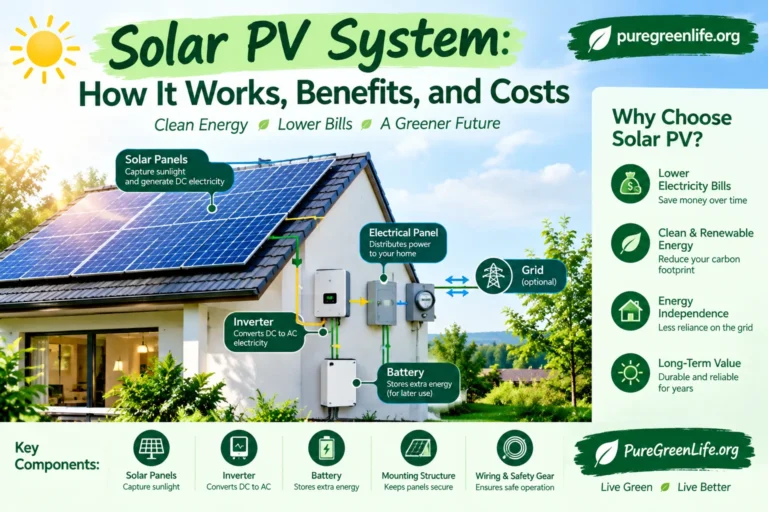
Solar panels convert sunlight into electricity during the day. A charge controller manages power sent to the batteries. The batteries store energy for nighttime or cloudy periods. An inverter converts stored DC power into usable AC electricity. The system then powers your home appliances and devices.
Main Components of an Off-Grid Solar System
An off-grid solar system uses several parts to generate and store electricity.
Solar Panels
Sunlight is captured and converted into DC electricity by solar panels.
Solar Charge Controller
A charge controller manages electricity flowing into the batteries. It also helps prevent battery overcharging.
Solar Batteries
Batteries store solar energy for later use. They provide power when sunlight is unavailable.
Inverter
An inverter changes DC electricity into AC electricity. This lets you run common household appliances.
Mounting System and Wiring
Mounting systems hold solar panels securely in place. Wiring connects the panels with other system components.
How to Size an Off-Grid Solar Power System
First, calculate your home’s daily electricity use. List your appliances and check their wattage and usage time. Choose enough solar panels to meet your daily energy needs. Size your batteries based on nighttime and backup power needs. Choose an inverter that handles your appliances’ highest power demand.
How Much Solar Power Do You Need?
Start by checking how much electricity your appliances use each day. Add their daily energy use to find your total consumption. Then consider your location and available sunlight throughout the year. You also need extra capacity for cloudy days and system losses. A professional can calculate the exact system size for your home.
Choosing the Right Solar Panels
Choose solar panels based on your energy needs and available space. Check the panel’s power rating before buying. Higher-wattage panels can produce more power from each panel. Also check the panel’s efficiency and warranty period. Choose panels designed for your local weather conditions. Good installation and regular cleaning can help maintain their performance.
Choosing a Battery for Off-Grid Solar
Choose a battery based on your daily energy needs. Check its storage capacity, measured in kilowatt-hours (kWh). Also check how much power the battery can deliver at once. Lithium-ion and lead-acid batteries are common choices for solar systems. Lithium batteries usually offer higher usable capacity and longer cycle life. Lead-acid batteries can cost less but need more care. Always follow the battery maker’s charging and maintenance instructions.
What Is Battery Storage Capacity?
Battery storage capacity shows how much energy a battery can store. It is usually measured in kilowatt-hours (kWh). A larger capacity lets you store more solar energy. This stored energy can power your home after sunset. It can also provide power during cloudy periods. Your battery size should match your daily energy needs. Remember that usable capacity can differ from the rated capacity.
How Long Can an Off-Grid Solar System Run?
An off-grid solar system can run for several hours or several days. The exact runtime depends on battery size and daily energy use. Larger batteries can store more energy for longer periods. Lower energy use also helps the battery last longer. Solar panels recharge the batteries when enough sunlight is available. Cloudy weather can reduce solar production and slow battery charging. A properly sized system can provide power through periods without sunlight.
Benefits of an Off-Grid Solar Power System
Off-grid solar systems can provide several useful benefits for homeowners. They can produce electricity without relying on the utility grid.
Energy Independence
Solar panels let you produce your own electricity. Batteries store energy for use when sunlight is unavailable. This reduces your dependence on the utility grid.
Lower Electricity Costs
Solar energy can reduce the amount of electricity you need to buy. After installation, sunlight provides energy without fuel costs. However, installation and battery costs can be significant.
Backup Power During Outages
Batteries can provide power when the grid goes down. Solar panels can recharge batteries when sunlight is available. This helps keep essential devices running during longer outages.
Useful for Remote Locations
Off-grid solar works well where grid connections are unavailable. It can provide local electricity without extending utility power lines. This makes solar useful for remote homes and other locations.
Disadvantages of Off-Grid Solar Power Systems
Off-grid solar systems offer useful benefits, but they also have some drawbacks. You need enough panels and batteries to meet your energy needs. This can increase the system’s overall cost.
Higher Upfront Cost
Off-grid systems need solar panels, batteries, inverters, and other equipment. Buying and installing these components can cost a lot initially. Battery storage can add significantly to the total system cost.
Limited Power During Poor Weather
Clouds, rain, and other conditions can reduce solar energy production. Your batteries must store enough energy for periods with less sunlight. A larger battery bank can provide power for longer periods.
Battery Replacement Costs
Solar batteries do not last forever and eventually need replacement. Battery lifespan depends on the battery type and how you use it. Replacement costs can add to long-term system expenses.
Off-Grid Solar vs. Grid-Tied Solar
Off-grid and grid-tied solar systems work differently. The main difference is their connection to the utility grid.
| Feature | Off-Grid Solar | Grid-Tied Solar |
| Grid Connection | It does not connect to the utility grid. | It connects directly to the utility grid. |
| Battery Storage | Batteries usually store energy for later use. | Batteries are optional, depending on system design. |
| Main Power Source | Solar power and stored battery energy provide electricity. | Solar power and the utility grid provide electricity. |
| During Outages | It can keep supplying power when properly sized. | Standard systems usually stop during grid outages. |
| Best For | Remote locations without reliable grid access. | Homes and buildings with grid access. |
| Extra Equipment | It needs batteries and off-grid equipment. | It can work without batteries. |
| Energy Use | You must manage available stored energy carefully. | The grid provides power when solar output is low. |
Off-grid systems offer greater independence from the utility grid. Grid-tied systems can rely on the grid when solar output falls.
How to Install an Off-Grid Solar Power System
First, calculate your energy needs and choose the right system size. Install solar panels on a strong, suitable mounting structure. Connect the panels to the charge controller and batteries. Then connect the batteries to a suitable off-grid inverter. Finally, connect the inverter to your electrical loads. Use proper safety equipment and professional help for electrical connections.
How to Maintain an Off-Grid Solar System
Clean solar panels regularly to remove dust and leaves. Check batteries, cables, and connections for damage. Monitor battery levels and system performance regularly. Follow the manufacturer’s maintenance instructions for all components.
Common Mistakes Beginners Should Avoid
Avoid these common mistakes when planning an off-grid solar system.
- Undersizing the System: Match panels and batteries to your actual energy needs.
- Ignoring Cloudy Weather: Plan enough battery storage for periods with less sunlight.
- Choosing the Wrong Inverter: Check both running power and startup power needs.
- Ignoring System Losses: Allow for normal energy losses during charging and conversion.
- Using Batteries Incorrectly: Follow the battery manufacturer’s charging and discharge limits.
Is an Off-Grid Solar Power System Worth It?
An off-grid solar system can work well for remote homes. It provides electricity without relying on the utility grid. However, batteries and installation can increase the upfront cost. Your energy needs, location, and sunlight affect the overall value.
Final Thoughts on Off-Grid Solar Power Systems
Off-grid solar can provide reliable power without a utility connection. It uses solar panels, batteries, and an inverter to supply electricity. Proper system sizing helps meet your daily energy needs. Consider your energy use, sunlight, battery needs, and installation costs. With good planning, off-grid solar can suit many remote locations.