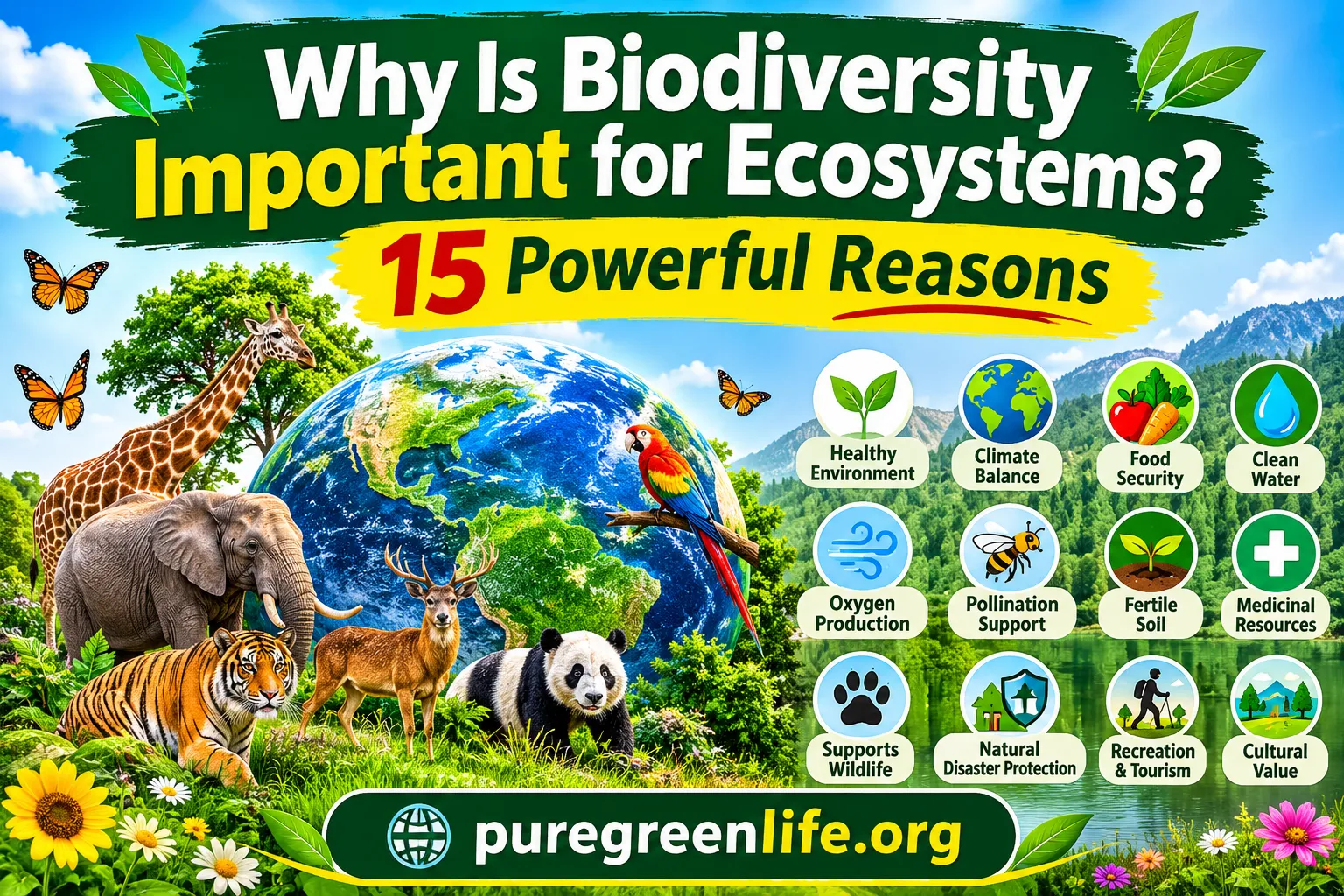
Biodiversity means the variety of life on Earth. It includes plants, animals, fungi, and tiny microorganisms. Each living thing has a role in nature. Some provide food, while others help plants reproduce. Together, they keep ecosystems working properly. Without biodiversity, natural environments can become less stable and healthy.
1. What Is Biodiversity?
Biodiversity refers to the variety of living organisms in an area. It includes different species, their genes, and their ecosystems. A forest, for example, contains trees, birds, insects, fungi, and many other organisms. Each species interacts with its surroundings in different ways.
Biodiversity exists in forests, oceans, rivers, grasslands, deserts, and wetlands. Some areas contain many species, while others support fewer. These differences depend on climate, soil, water, and habitat conditions.
2. Why Is Biodiversity Important for Ecosystems?
Biodiversity helps ecosystems remain balanced and productive. Different species perform different jobs in nature. Plants produce food, insects pollinate flowers, and decomposers break down dead material. These activities support natural cycles and provide resources for other organisms.
When species disappear, the effects can spread through an ecosystem. Some animals may lose their food sources. Certain plants may receive less pollination. This can affect many other living things.
3. 15 Reasons Biodiversity Is Important for Ecosystems
1. It Maintains the Balance of Nature
Every species contributes to its ecosystem in some way. Predators help control prey populations. Herbivores feed on plants and influence vegetation growth. Plants also provide food and shelter for many animals.
These relationships help keep populations within natural limits. When one species becomes too common or disappears, other populations may change. Biodiversity supports a healthier balance between living organisms.
2. It Supports Food Chains and Food Webs
Food chains show how energy moves between organisms. Plants usually form the starting point because they produce food through photosynthesis. Herbivores eat plants, while predators eat other animals.
Many food chains connect to form food webs. Biodiversity provides different food sources and feeding relationships. If one species disappears, animals that depend on it may struggle to survive.
3. It Helps Pollinate Plants
Pollination allows many plants to produce seeds and fruit. Bees, butterflies, birds, bats, and other animals can carry pollen between flowers. This supports plant reproduction.
Pollinators also help maintain natural habitats. Many wild plants depend on animal pollination. A decline in pollinator populations can reduce reproduction in some plant species.
4. It Improves Soil Health
Soil contains many living organisms. Earthworms, fungi, bacteria, and other microorganisms help maintain healthy soil. They break down organic material and release nutrients.
These activities support plant growth and improve soil structure. Healthy soil can also hold water more effectively. This makes biodiversity important for forests, grasslands, and farming areas.
5. It Helps Recycle Nutrients
Nutrient recycling keeps important materials moving through ecosystems. Decomposers such as fungi and bacteria break down dead plants and animals. This process returns nutrients to the soil and water.
Plants can then absorb these nutrients and use them to grow. Without decomposers, dead organic material would build up. Nutrient cycles would also become less effective.
6. It Helps Keep Water Clean
Wetlands, forests, and other natural habitats support water quality. Plants can trap sediment and absorb some excess nutrients. Wetland organisms also help process organic material.
These natural processes can reduce certain pollutants before they move downstream. Healthy ecosystems also protect water sources from erosion. Biodiversity therefore supports cleaner rivers, lakes, and wetlands.
7. It Supports Climate Regulation
Forests, grasslands, oceans, and wetlands store carbon. Plants absorb carbon dioxide during photosynthesis. Some carbon remains stored in vegetation and soil.
Different species help maintain these natural systems. Healthy ecosystems can support carbon storage and influence local climate conditions. Protecting biodiversity also helps protect habitats that store carbon.
8. It Makes Ecosystems More Resilient
Ecosystems face natural pressures such as storms, droughts, and disease. Biodiversity can help some ecosystems respond to these challenges. Different species may perform similar functions in different ways.
If one species declines, another may partly support the same ecological process. This does not prevent every disturbance. It can still help ecosystems recover and continue functioning.
9. It Provides Food for Humans and Wildlife
Humans depend on biodiversity for many food sources. Crops, fruits, vegetables, fish, and livestock all connect to natural systems. Wild animals also depend on plants and other organisms for food.
Different species support food production in different ways. Pollinators help many crops reproduce. Soil organisms support plant growth. Protecting biodiversity helps maintain these important natural resources.
10. It Provides Medicines and Useful Materials
Many medicines come from compounds found in plants, fungi, and microorganisms. Scientists study living organisms to discover useful substances. Some species may also offer future medical possibilities.
Biodiversity provides other resources too. People use plants for food, clothing materials, building products, and traditional remedies. Losing species can mean losing valuable resources before they are studied.
11. It Controls Pests and Diseases Naturally
Some animals help control pests by feeding on insects and rodents. Birds, bats, spiders, and other predators can reduce certain pest populations. This helps maintain natural relationships between species.
A diverse ecosystem may also contain organisms that limit the spread of some pests. These natural controls do not replace every pest-management method. They can still reduce pressure on crops and habitats.
12. It Protects Natural Habitats
Different species help shape the places where they live. Trees provide shelter, while grasses protect soil. Coral reefs create habitats for many marine organisms.
Animals also influence their surroundings. Some spread seeds, dig burrows, or create spaces used by other species. These activities help habitats remain suitable for many forms of life.
13. It Supports Economic Activities
Many industries depend on healthy ecosystems. Agriculture needs fertile soil and pollination. Fisheries depend on healthy aquatic habitats. Tourism also benefits from forests, coral reefs, and wildlife.
Biodiversity supports these activities by maintaining natural resources. When habitats become damaged, local communities may lose income. Protecting ecosystems can support jobs and long-term livelihoods.
14. It Supports Cultural and Recreational Value
Nature has cultural meaning for many communities. People connect with forests, rivers, mountains, and wildlife in different ways. These places can support traditions and local identities.
Natural areas also provide opportunities for recreation. People visit parks, watch birds, hike, and explore wildlife habitats. Biodiversity makes these experiences richer and more varied.
15. It Supports Future Generations
Biodiversity is a natural resource that future generations will also need. Healthy ecosystems provide food, water, materials, and other benefits. Protecting species helps preserve these resources.
Conservation also gives future scientists more opportunities to study nature. Some species may contain useful traits or compounds that are not yet understood. Protecting biodiversity helps keep these possibilities available.
4. What Happens When Biodiversity Decreases?
A decline in biodiversity can weaken ecosystems. When species disappear, food webs may change. Some animals lose food, while certain plants may lose important pollinators. These changes can affect several parts of an environment.
Habitat destruction, pollution, climate change, invasive species, and overexploitation can all threaten biodiversity. The effects vary between ecosystems. Some habitats may recover, while others can suffer long-term damage.
5. How Can We Protect Biodiversity?
Protecting biodiversity requires action from communities, governments, and individuals. People can help by protecting natural habitats and reducing pollution. Supporting conservation projects also makes a difference.
Planting native species can provide food and shelter for local wildlife. Saving water and reducing waste can lower pressure on natural resources. People can also avoid buying products linked to illegal wildlife trade.
Governments and conservation groups can protect important habitats. They can restore damaged forests, wetlands, and grasslands. Strong conservation laws can also reduce harmful activities.
6. Biodiversity and Ecosystem Services
Ecosystem services are the benefits people receive from nature. Biodiversity supports many of these services through natural processes. These benefits can be grouped into four main types.
| Ecosystem Service | Examples |
|---|---|
| Provisioning | Food, fresh water, timber, and medicines |
| Regulating | Climate regulation, pollination, and water purification |
| Supporting | Soil formation, nutrient cycling, and primary production |
| Cultural | Recreation, education, and spiritual value |
These services show how closely human life connects with healthy ecosystems. Protecting biodiversity helps maintain the natural processes behind them.
7. Frequently Asked Questions
Why is biodiversity important in simple words?
Biodiversity keeps nature healthy and balanced. It supports food chains, pollination, clean water, and soil health. It also helps ecosystems respond to environmental changes.
What are the main benefits of biodiversity?
The main benefits include food production, nutrient recycling, pollination, and climate regulation. Biodiversity also supports medicines, natural habitats, and human livelihoods.
What causes biodiversity loss?
Major causes include habitat destruction, pollution, climate change, invasive species, and overexploitation. These pressures can reduce wildlife populations and damage natural habitats.
Can an ecosystem survive with low biodiversity?
Some ecosystems naturally have fewer species than others. They can still function under suitable conditions. A major loss of species, though, can weaken important ecological processes.
How can people help protect biodiversity?
People can protect local habitats, plant native species, reduce waste, and avoid wildlife products from illegal trade. Supporting conservation efforts can also help protect species.
Final Thoughts
Biodiversity is essential for healthy and functioning ecosystems. Different species support food chains, pollination, soil health, and nutrient recycling. They also help regulate water and climate processes.
When biodiversity declines, ecosystems can become more vulnerable. Protecting natural habitats helps preserve the relationships between living organisms. Every species has a role in maintaining the natural world. By protecting biodiversity, we also protect the resources that people need.