
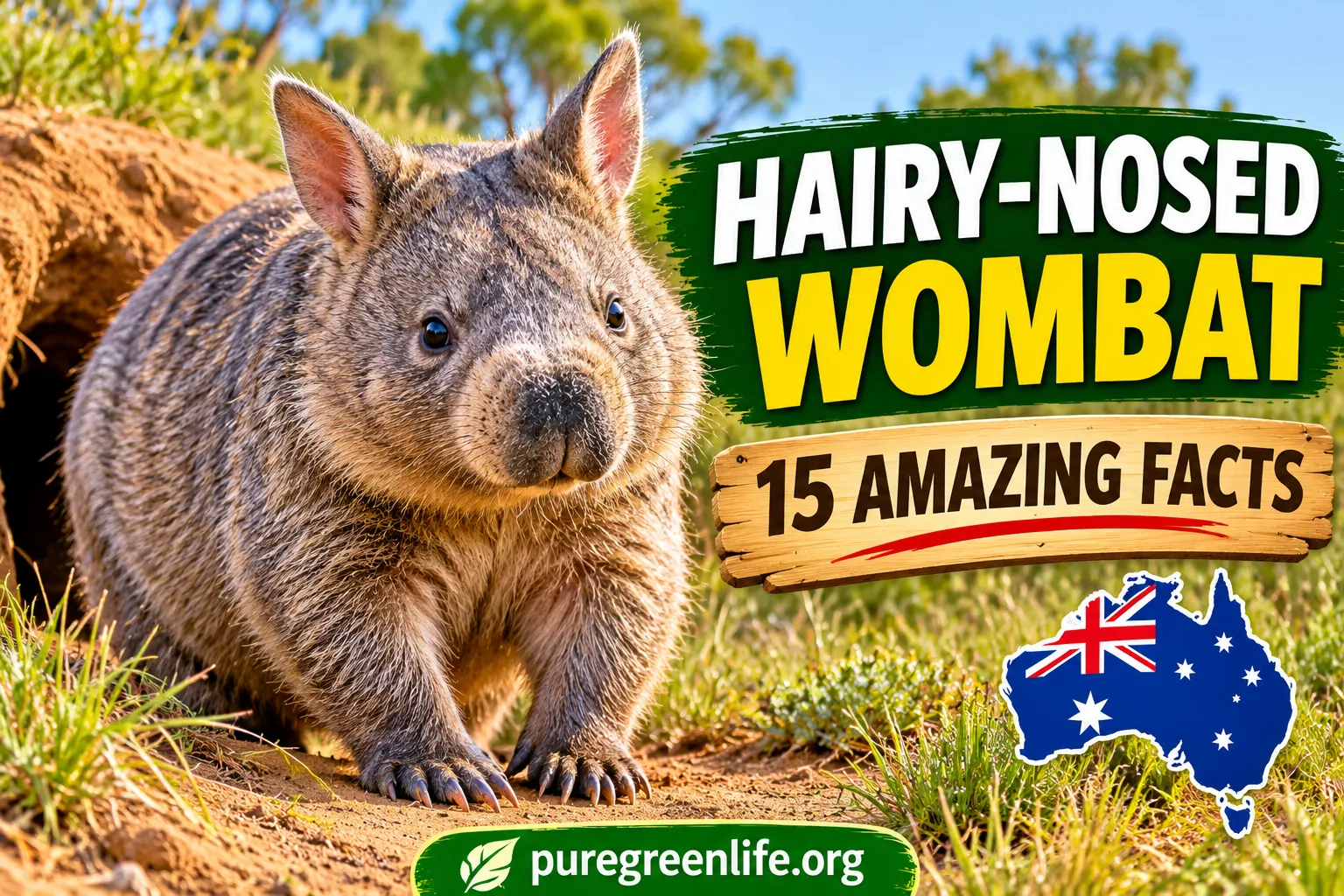
The hairy-nosed wombat is one of Australia’s most unusual native animals. It has a strong body, powerful claws, and a special hairy nose. This animal spends much of its life underground in large burrow systems. It is also known for its quiet nature and excellent digging skills.
There are two hairy-nosed wombat species in Australia. These are the Northern Hairy-Nosed Wombat and the Southern Hairy-Nosed Wombat. Both have unique features and different conservation challenges. The northern species is especially rare and faces a serious risk of extinction.
This guide explores 15 interesting facts about hairy-nosed wombats, including their appearance, diet, habitat, behavior, and survival. It also explains why protecting these animals is important.
What Is a Hairy-Nosed Wombat?
A hairy-nosed wombat is a burrowing marsupial native to Australia. It belongs to the wombat family, Vombatidae. Its scientific genus is Lasiorhinus. The animal has a broad nose covered with fine hairs, strong legs, and powerful claws.
Australia has two hairy-nosed wombat species. The northern species is called Lasiorhinus krefftii. The southern species is called Lasiorhinus latifrons. Both species are adapted to digging underground homes and feeding on grasses.
Hairy-nosed wombats are herbivores. They mainly eat grasses and other plant material. Their strong teeth help them chew tough vegetation. They usually rest underground during the day and search for food at night.
15 Amazing Facts About Hairy-Nosed Wombats
Hairy-nosed wombats have several unusual features. Their digging skills, underground homes, and survival habits make them fascinating animals. Here are 15 facts that explain what makes them special.
1. Australia Has Two Hairy-Nosed Wombat Species
There are two living species of hairy-nosed wombats. The Northern Hairy-Nosed Wombat lives in Queensland. The Southern Hairy-Nosed Wombat lives mainly in southern Australia.
They share some physical features but have different distributions. The northern species is larger and much rarer. The southern species is more widely distributed across suitable dry regions.
Both species are different from the Bare-Nosed Wombat, which is Australia’s third living wombat species.
2. They Have a Special Hairy Nose
The hairy nose is one of their most recognizable features. Fine hairs cover the broad muzzle and give these animals their name. Their noses also help distinguish them from bare-nosed wombats.
Southern hairy-nosed wombats have long ears and a broad hairy muzzle. Northern hairy-nosed wombats also have a wide muzzle with fine whiskers. Their hairy noses are an important feature used to identify these species.
3. The Northern Species Is Australia’s Largest Wombat
The Northern Hairy-Nosed Wombat is the largest of Australia’s three wombat species. Adults average around 32 kilograms. They can grow to more than one metre long.
Its strong body and powerful legs support its digging lifestyle. It is also considered the largest living wombat species. These physical features help it create and maintain underground burrows.
4. They Are Excellent Underground Digging Experts
Hairy-nosed wombats have strong claws and muscular legs. These features help them dig through soil and create underground tunnels. Their burrows provide protection from heat, cold, and predators.
Some wombat burrow systems contain several connected tunnels and entrances. Southern hairy-nosed wombats can use large underground warrens. These underground homes can be expanded and reused over many years.
5. They Mainly Eat Grass
Hairy-nosed wombats are herbivores. Grass makes up most of their natural diet. They also eat other suitable plant material when it is available.
Their strong front teeth help them cut and chew vegetation. They usually feed during cooler hours, especially at night. Grass provides the main food source for the Northern Hairy-Nosed Wombat.
6. They Usually Become Active at Night
Hairy-nosed wombats spend much of the day inside their burrows. They often emerge after sunset to search for food. Nighttime activity helps them avoid the hottest daytime temperatures.
They may also appear during cooler winter periods. Northern hairy-nosed wombats sometimes come outside to sun themselves. Their activity changes with weather and environmental conditions.
7. They Live in Dry Australian Environments
The two hairy-nosed species prefer different parts of Australia. Northern hairy-nosed wombats live in Queensland. Their habitat includes open woodland with suitable grasses and deep soil.
Southern hairy-nosed wombats live mainly in semi-arid and arid parts of southern Australia. They prefer open country with suitable vegetation and soils. Their habitats provide both food and ground that is suitable for digging.
8. The Northern Hairy-Nosed Wombat Is Critically Endangered
The Northern Hairy-Nosed Wombat is one of Australia’s most threatened mammals. It is listed as Critically Endangered nationally. Its population once fell to only around 35 animals in the early 1980s.
Conservation programs have helped the species recover. Recent reporting in 2026 estimated around 450 individuals across three protected sites in Queensland. Despite this progress, its population remains small and vulnerable.
9. Southern Hairy-Nosed Wombats Live in Larger Areas
The Southern Hairy-Nosed Wombat has a wider distribution than its northern relative. It occurs in parts of South Australia and Western Australia. Its populations are not evenly spread across these regions.
Some areas contain large groups of burrows, while nearby areas may have very few. Its distribution depends on rainfall, soil conditions, vegetation, and land use. This makes habitat protection important for its long-term survival.
10. Their Burrows Help Them Handle Extreme Weather
Australian environments can experience very hot and dry conditions. Underground burrows provide a cooler and more stable place to rest. They also offer shelter from cold weather and other environmental dangers.
Wombats spend much of the daytime inside these shelters. They can leave their burrows when temperatures become more suitable. Their underground lifestyle helps them survive in challenging Australian environments.
11. They Have Slow Reproduction
Hairy-nosed wombats reproduce more slowly than many smaller mammals. Females usually give birth to one young at a time. Southern hairy-nosed wombats may produce a single joey about every two years.
The young wombat develops inside its mother’s pouch. It later leaves the pouch and continues growing. Slow reproduction makes population recovery more difficult when numbers become very low.
12. Their Food Supply Can Change During Drought
Drought can reduce the amount of grass available to hairy-nosed wombats. Dry conditions also affect the quality of vegetation. This can make it harder for animals to find enough food.
Northern hairy-nosed wombats face additional pressure from grazing animals. Cattle, sheep, and rabbits can compete for food. Protecting grassland and managing grazing pressure are important conservation steps.
13. They Face Several Natural and Human-Related Threats
Hairy-nosed wombats face threats from habitat loss and environmental changes. Land clearing and intensive agriculture can damage suitable living areas. Livestock and rabbits can also compete with them for food.
Predators create additional risks, especially for young animals. Northern hairy-nosed wombats face threats from dingoes and wild dogs. Small population size also increases their risk from disease, drought, and fire.
14. Conservation Teams Are Helping Them Recover
Conservation teams protect wombat habitats and monitor population changes. They also use fencing to reduce the risk of attacks from predators. Some programs establish additional populations in suitable protected areas.
Queensland conservation projects have helped the northern species recover from its historic low numbers. Creating new populations reduces the danger of relying on one main location. Research also helps identify suitable places for future recovery work.
15. Hairy-Nosed Wombats Are Important to Their Ecosystems
Hairy-nosed wombats help shape their surroundings through digging. Their burrows create underground spaces used by other animals. These tunnels can also change soil structure and allow water to move through the ground.
Their feeding habits connect them to grassland ecosystems. They also form part of the natural food web. Protecting hairy-nosed wombats helps preserve the wider habitats and wildlife communities around them.
Northern vs. Southern Hairy-Nosed Wombat
Both species share a similar body shape and digging lifestyle. However, they differ in size, distribution, and conservation status.
| Feature | Northern Hairy-Nosed Wombat | Southern Hairy-Nosed Wombat |
|---|---|---|
| Scientific name | Lasiorhinus krefftii | Lasiorhinus latifrons |
| Main range | Queensland | South Australia and Western Australia |
| Average adult weight | Around 32 kg | Around 26 kg |
| Size | Largest wombat species | Smallest wombat species |
| Habitat | Open woodland and grassy areas | Dry and semi-arid open country |
| Diet | Mainly grass | Mainly grass |
| Conservation status | Critically Endangered | Near Threatened globally in the 2021 research cited below |
The northern species is larger and much more threatened. The southern species has a wider distribution, although some of its populations are fragmented.
Why Is the Northern Hairy-Nosed Wombat Endangered?
The Northern Hairy-Nosed Wombat experienced a major population decline after European settlement. Habitat destruction and competition for food contributed to its decline. Farmers also destroyed some burrows during rabbit control activities.
By the early 1980s, only around 35 animals remained in the wild. Conservation teams then began intensive recovery work. Their efforts helped increase the population and establish additional protected groups.
Today, the species still faces habitat loss, invasive grasses, predators, and drought. Its small population makes it vulnerable to disease, fire, and other sudden environmental changes. Continued conservation work remains essential.
Frequently Asked Questions
1. How Many Hairy-Nosed Wombat Species Are There?
There are two living hairy-nosed wombat species. They are the Northern Hairy-Nosed Wombat and the Southern Hairy-Nosed Wombat.
2. Where Do Hairy-Nosed Wombats Live?
Northern hairy-nosed wombats live in Queensland. Southern hairy-nosed wombats live mainly in South Australia and Western Australia.
3. What Do Hairy-Nosed Wombats Eat?
They mainly eat grass and other plant material. Their diet depends on the vegetation available in their habitat.
4. Are Hairy-Nosed Wombats Endangered?
The Northern Hairy-Nosed Wombat is Critically Endangered. The Southern Hairy-Nosed Wombat has a different conservation status and is more widely distributed.
5. Which Hairy-Nosed Wombat Is Bigger?
The Northern Hairy-Nosed Wombat is bigger. It is the largest of Australia’s three living wombat species.
6. Why Do Hairy-Nosed Wombats Dig Burrows?
They dig burrows for shelter and protection. Underground homes help them avoid extreme temperatures and provide safe resting places.
7. How Can People Help Protect Hairy-Nosed Wombats?
People can support habitat conservation and responsible land management. Protecting grasslands, reducing grazing pressure, and supporting wildlife programs can help these animals.
Final Thoughts
Hairy-nosed wombats are fascinating Australian marsupials with unique noses and powerful digging skills. The two species live in different regions and face different conservation challenges. Their underground homes and grass-based diets help them survive in dry environments.
The Northern Hairy-Nosed Wombat remains one of Australia’s most threatened mammals. Conservation programs have improved its population, but its future still needs protection. Supporting habitat recovery can help these rare animals survive for generations.






One thought on “Hairy-Nosed Wombat: 15 Amazing Facts About Australia’s Rare”