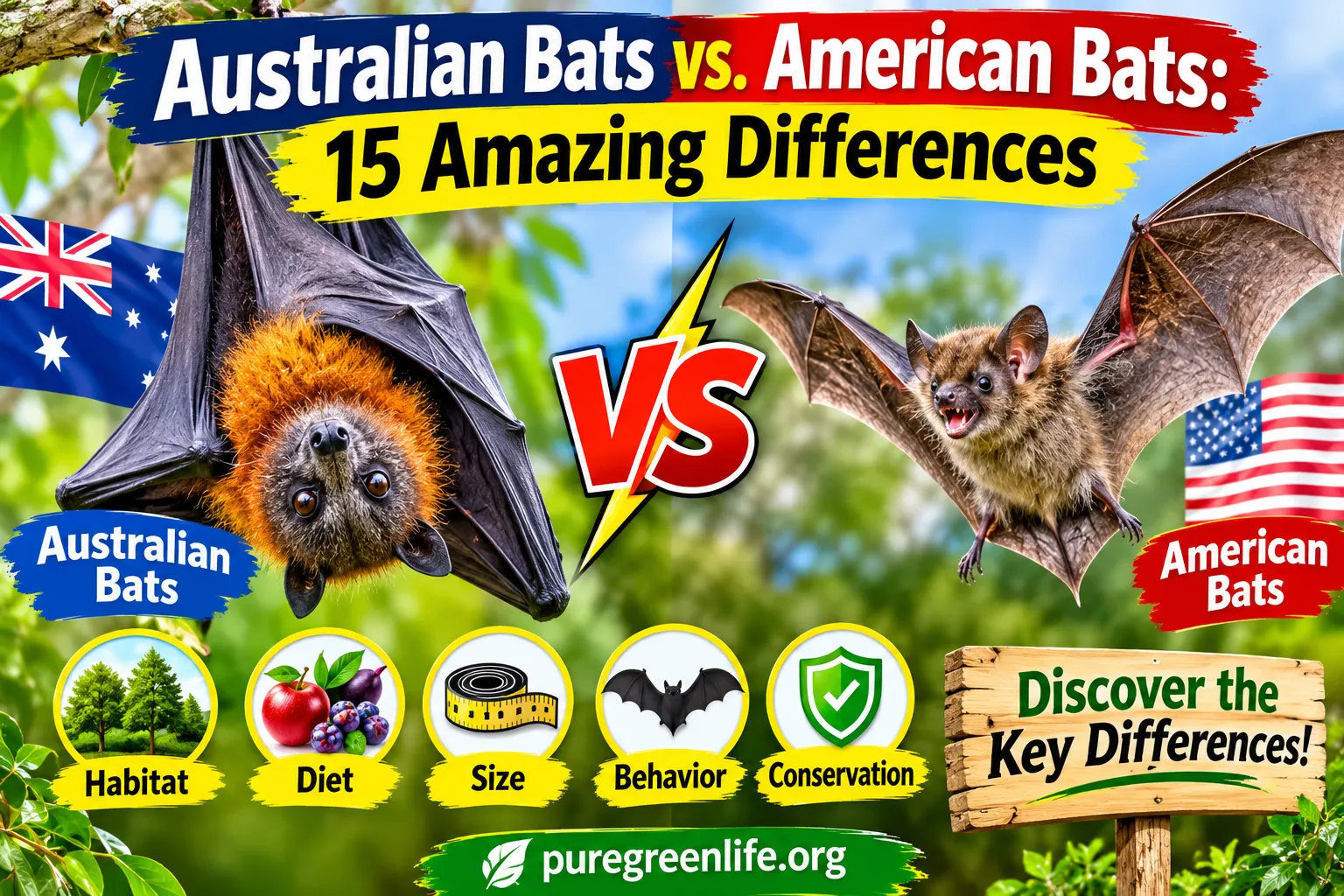
Bats live across many parts of the world, including Australia and the United States. However, these countries have different bat species and habitats. Australian bats include famous flying foxes with large wings and fox-like faces. American bats are widely known for catching insects during nighttime flights.
Although both groups belong to the same mammal order, they have different feeding habits and physical features. Some Australian bats mainly eat fruit, nectar, and pollen, while most American bat species eat insects. Their habitats, movement patterns, and environmental roles also show interesting differences.
This article explores 15 important differences between Australian bats and American bats. It also explains their similarities and why both groups matter to nature.
What Are Australian Bats?
Australian bats are flying mammals found across mainland Australia and nearby islands. They live in forests, woodlands, rainforests, deserts, and urban areas. The Australian Museum reports that the country has more than 90 bat species. These include small insect-eating bats and larger fruit-eating flying foxes.
Flying foxes are among Australia’s most recognizable bats. They have large eyes, fox-like faces, and long wings. Their diet mainly includes fruit, nectar, and pollen. Other Australian bats are much smaller and hunt insects at night.
Most Australian bats rest during the day and become active after sunset. Some live in caves, while others sleep in trees or rock crevices. Their different feeding habits help them survive in many environments.
What Are American Bats?
American bats are species that naturally live in the United States. They include small insect-eating bats found in forests, caves, deserts, and cities. Many species use echolocation to find insects while flying at night.
Most bat species in the United States are insect eaters. They catch mosquitoes, moths, beetles, and other insects. Some species migrate during colder months, while others hibernate in caves or other sheltered places.
The Mexican free-tailed bat is one well-known American species. Large colonies gather in caves and other roosting places. These bats can travel long distances while searching for food.
Australian Bats vs. American Bats: 15 Key Differences
Australia and the United States have different bat species and natural environments. Their physical features, diets, and behaviors reflect these differences. The following comparisons explain what makes each group unique.
1. Species Diversity
Australia has a wide variety of bat species. The Australian Museum reports more than 90 species across the country. These include flying foxes, blossom bats, and several types of microbats. Their different sizes and diets allow them to use many habitats.
The United States also has many native bat species. They include little brown bats, big brown bats, Mexican free-tailed bats, and others. Most American species belong to insect-eating groups.
Both countries have diverse bat populations, but their species are not the same. Their wildlife developed in different regions and environmental conditions.
2. Body Size and Weight
Australian flying foxes are generally much larger than many familiar American insect-eating bats. Some flying foxes weigh close to one kilogram. Their large bodies help support their broad wings during flight.
Most American bats are relatively small. Many weigh only a few grams or several dozen grams. Their smaller bodies help them move quickly while catching insects.
However, size varies between species in both countries. Not every Australian bat is large, and not every American bat is small. A fair comparison should consider individual species.
3. Wingspan
Flying foxes have some of the broadest wings among bats. Certain Australian species can reach wingspans of around one metre or more. Their long wings help them travel between feeding areas.
Many American insect-eating bats have much shorter wingspans. Their wings support quick turns and controlled movements. These features help them catch insects while flying.
Australian flying foxes generally have larger wingspans than many common American microbats. The exact difference depends on the species being compared.
4. Appearance and Fur
Australian flying foxes have noticeable fox-like faces and large eyes. Their fur colors vary between species. Some have black bodies, while others show grey, reddish, or golden-brown fur around the neck.
American bats usually have smaller faces and different ear shapes. Their fur can appear brown, grey, black, or reddish. Some species have large ears that help them detect sounds.
These differences make identification easier for researchers. Face shape, fur color, body size, and ear structure help distinguish bat species.
5. Natural Habitat
Australian bats live in many different environments. These include tropical rainforests, eucalyptus forests, mangroves, deserts, and urban parks. Flying foxes often rest in large tree colonies called camps.
American bats also use several habitats. Many live in caves, forests, mines, buildings, and tree hollows. Some species prefer warm regions, while others survive in colder areas.
Both groups depend on safe places to rest and nearby food sources. Habitat loss can affect their populations in either country.
6. Diet and Feeding Habits
Australian bats have different diets depending on their species. Flying foxes mainly eat fruit, nectar, and pollen. Smaller microbats usually catch insects during nighttime flights.
American bats mostly eat insects. Their food includes moths, beetles, mosquitoes, and other flying insects. Some American species also feed on nectar or fruit.
This difference affects their environmental roles. Fruit-eating Australian bats help spread seeds and pollinate plants, while many American bats control insect populations.
7. Fruit Bats and Insect-Eating Bats
Fruit bats are especially familiar in Australia because of its flying foxes. These bats feed on native fruits and flowers. They use their eyesight and sense of smell to locate food.
Insect-eating bats are common in both countries. Australian microbats and American bats catch insects using flight and echolocation. Their small bodies help them move through trees and other spaces.
The biggest feeding difference is not simply Australia versus America. It is the difference between fruit-eating and insect-eating species. Both countries have bats with different diets.
8. Flying Foxes vs. American Bat Species
Flying foxes are large fruit-eating bats found in Australia and other parts of the world. Their faces look somewhat like foxes, which explains their common name. They usually gather in large groups during the day.
The United States has many smaller bat species. Mexican free-tailed bats and little brown bats are familiar examples. These species mainly catch insects rather than feeding on large amounts of fruit.
Flying foxes do not use the same echolocation system as many microbats. They rely mainly on eyesight and smell. Flying foxes are not native American wildlife, although the United States has its own diverse bat species.
9. Echolocation Abilities
Echolocation helps many bats navigate and locate food in darkness. They produce high-frequency sounds and listen to returning echoes. This natural system helps them detect obstacles and flying insects.
Australian microbats commonly use echolocation. American insect-eating bats also depend heavily on this ability. It allows them to hunt even when visibility is very low.
Flying foxes are different because they rely on their eyesight and smell. Not all bats use echolocation in the same way. Their navigation methods depend on their species and feeding habits.
10. Nighttime Behavior
Most Australian bats become active around sunset. Flying foxes leave their daytime camps to search for fruit and flowers. Some travel many kilometres before returning to their resting places.
American bats also become active after sunset. Many leave caves, trees, or buildings to hunt insects. Their feeding activity often increases when insects are abundant.
Both groups usually rest during daylight hours. Nighttime activity helps bats avoid many daytime predators and find food when their preferred resources are available.
11. Roosting and Sleeping Habits
Australian flying foxes often rest in large groups called camps. They hang from tree branches in forests, mangroves, and other wooded areas. Some camps contain thousands of bats.
American bats use several types of roosts. Many species sleep in caves, mines, tree hollows, and buildings. Some gather in large colonies, while others rest in smaller groups.
Roosting habits depend on species, climate, and available shelter. Safe resting places are important for breeding and survival in both countries.
12. Migration and Seasonal Movement
Some Australian flying foxes move between regions as food availability changes. They follow flowering and fruiting trees across different landscapes. Their movements can cover long distances.
American bats also show seasonal movement. Some migrate toward warmer regions during colder months. Others remain in sheltered locations and hibernate when temperatures fall.
These movements help bats find suitable conditions. Food availability and seasonal weather are major reasons for bat movement in both countries.
13. Pollination and Seed Dispersal
Australian flying foxes play an important role in forest ecosystems. Pollen sticks to their bodies while they visit flowers. They carry it between plants during nighttime feeding.
They also spread seeds after eating fruit. These seeds may reach new areas through their movements. This process supports forest growth and plant diversity.
Some American bats also pollinate plants and disperse seeds. However, most American bat species mainly eat insects. Australian flying foxes are especially important pollinators and seed dispersers in many native forests.
14. Natural Predators
Australian bats face threats from several natural predators. These may include snakes, large birds, and some mammals. Young bats can face additional risks while learning to fly.
American bats also have natural predators. Owls, hawks, snakes, and other animals may hunt them. Their greatest risks often depend on their habitat and roosting location.
Both groups also face human-related threats
. Habitat destruction, extreme weather, and human disturbance can create serious risks for bat populations.
15. Conservation and Threats
Australian bats face several conservation challenges. Habitat clearing reduces their feeding and resting areas. Heatwaves can also cause serious stress and mortality among flying foxes. Some species have additional risks from changes to native forests.
American bats face different but sometimes similar problems. Habitat loss, disease, pesticides, and wind turbines can affect their populations. White-nose syndrome has caused major losses among several North American bat species.
Conservation efforts include protecting habitats and monitoring bat populations. Researchers also study disease and breeding patterns. Protecting roosting sites and natural food sources is important for bats in both countries.
Are Australian Bats Found in the USA?
Australian bat species are not naturally established as native wildlife in the United States. Australia and America have their own native bat populations. These species developed in different geographical regions.
Flying foxes are native to Australia and several other regions outside the United States. American bats include species such as little brown bats and Mexican free-tailed bats. Their habitats and feeding habits differ from those of Australian flying foxes.
The title compares Australian and American bats; it does not mean Australian bats naturally live in America. This distinction is important when discussing their distribution and conservation.
Why Are Bats Important in Both Countries?
Bats provide several environmental benefits. Many Australian flying foxes pollinate flowers and spread seeds. These activities help native forests grow and reproduce.
American insect-eating bats help control insect populations. They consume mosquitoes, moths, beetles, and agricultural pests. This natural feeding behavior supports healthy ecosystems.
Both countries benefit from healthy bat populations. Bats help maintain ecological balance through pollination, seed dispersal, and insect control. Protecting their habitats supports many other plants and animals.
Frequently Asked Questions
1. Are Australian Bats Bigger Than American Bats?
Some Australian flying foxes are larger than many American microbats. However, size varies between species. A comparison must consider the specific bats involved.
2. What Is the Biggest Bat in Australia?
Australia has several large flying fox species. The black and grey-headed flying foxes can reach substantial body sizes. Their wingspans can exceed one metre.
3. What Is the Biggest Bat in the USA?
The United States has several relatively large bat species. The greater mastiff bat is among the largest native bats in the country. Its size and wingspan vary between individuals.
4. Do Australian Bats Eat Insects?
Yes, many Australian microbats eat insects. Flying foxes mainly eat fruit, nectar, and pollen. Their diets depend on their species.
5. Do American Bats Eat Fruit?
Most American bats eat insects. However, some bat species in the Americas feed on fruit or nectar. Their diets vary across different regions.
6. Do Australian Bats Use Echolocation?
Many Australian microbats use echolocation to find insects and avoid obstacles. Flying foxes mainly rely on eyesight and smell instead.
7. Are Australian Flying Foxes Found Naturally in the USA?
No, Australian flying foxes are not native to the United States. American bat species belong to their own native populations.
Final Thoughts
Australian bats and American bats share many basic features. Both are flying mammals that usually become active at night. However, their species, sizes, diets, and habitats show important differences.
Australian flying foxes are known for their large wings and fruit-based diets. Many American bats are smaller and mainly feed on insects. Both groups provide valuable benefits to their natural environments.
Protecting bat habitats helps maintain healthy ecosystems. Conservation also supports the plants and animals that depend on bats. Understanding their differences is an important step toward protecting these fascinating mammals.