Electricity bills, solar systems, and portable power stations often use the term kilowatt-hour. However, many people confuse it with a kilowatt. Understanding this measurement makes it easier to track electricity use, compare energy costs, and choose the right battery.
A kilowatt-hour, written as kWh, measures how much energy an appliance uses over time. It also helps explain how much electricity a solar system produces or a battery stores. Here is how it works, with simple examples and calculations.
What Is a Kilowatt Hour?
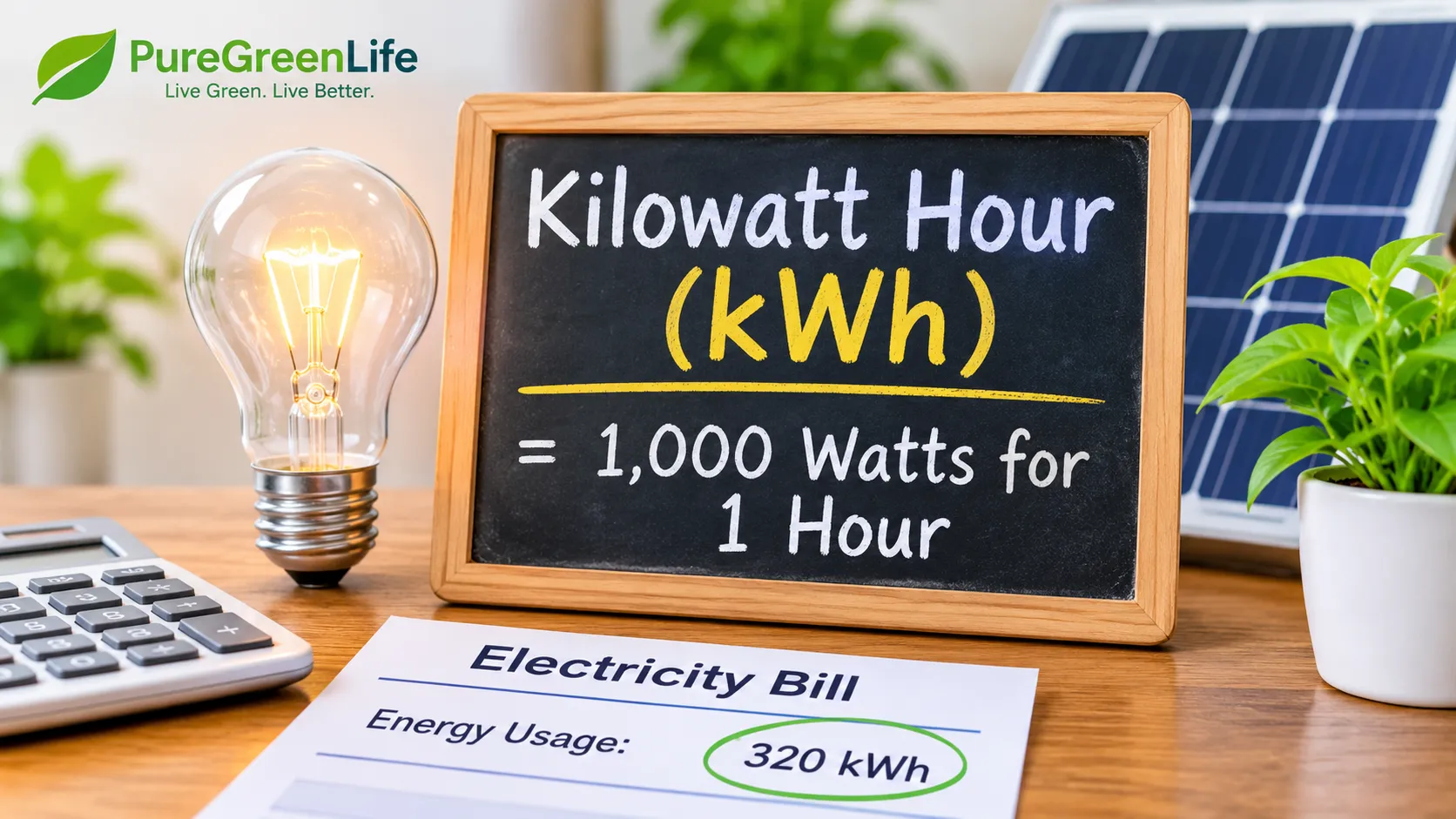
A kilowatt-hour is a unit used to measure electrical energy. It represents the amount of energy used by a 1,000-watt appliance running for one hour.
For example, a 1,000-watt heater running for one hour uses 1 kWh of electricity. A 500-watt appliance running for two hours also uses 1 kWh.
Electric companies use kilowatt-hours to measure household electricity consumption. Solar systems and energy storage products also use kWh to describe energy production and battery capacity.
According to the U.S. Energy Information Administration, one kWh equals 3,412 British thermal units (Btu). It is also equal to 3.6 million joules.
What Is the Difference Between kW and kWh?
Kilowatts (kW) and kilowatt-hours (kWh) measure different things. A kilowatt measures power, while a kilowatt-hour measures energy used or produced over time.
Think of a water tank. The flow rate represents power, while the total amount of water collected represents energy. This simple comparison makes the difference easier to understand.
| Measurement | Meaning | Example |
|---|---|---|
| Watt (W) | A unit of power | 100W light bulb |
| Kilowatt (kW) | 1,000 watts of power | 2 kW heater |
| Kilowatt-hour (kWh) | Energy used over time | 2 kW heater running for one hour |
For example, a 2 kW heater uses 2 kWh when it runs for one hour. If it runs for three hours, its energy consumption becomes 6 kWh.
This difference also matters when choosing a battery. Its kWh rating describes stored energy, while its kW rating describes how much power it can deliver at once.
How to Calculate Kilowatt Hours
Calculating electricity consumption is simple. You only need the appliance’s power rating and its operating time.
Use this formula:
kWh = (Watts × Hours) ÷ 1,000
For example, imagine a 1,500-watt heater runs for two hours.
1,500 × 2 = 3,000 watt-hours
3,000 ÷ 1,000 = 3 kWh
Therefore, the heater uses 3 kWh of energy during those two hours.
For appliances rated in kilowatts, use an even simpler formula:
kWh = Kilowatts × Hours
A 2 kW appliance running for four hours uses 8 kWh. Remember that actual electricity use can change when appliances cycle on and off or operate at different power levels.
How Many Kilowatt Hours Do Common Appliances Use?
Electricity consumption depends on an appliance’s wattage and how long it operates. The following examples show estimated usage at their listed power ratings.
| Appliance | Example Power | Usage Time | Energy Used |
|---|---|---|---|
| LED bulb | 10W | 10 hours | 0.1 kWh |
| Laptop | 60W | 5 hours | 0.3 kWh |
| Television | 100W | 5 hours | 0.5 kWh |
| Refrigerator | 150W | 8 hours | 1.2 kWh |
| Space heater | 1,500W | 2 hours | 3 kWh |
These figures are examples, not fixed consumption rates. A refrigerator, for instance, does not usually run its compressor continuously. Its daily energy use depends on its size, temperature settings, insulation, and room conditions.
Check the appliance label or manufacturer information for a more accurate estimate.
How Does a Kilowatt Hour Relate to Electricity Bills?
Your electricity bill usually records energy consumption in kilowatt-hours. In many places, one kWh is also called one electricity unit.
To estimate your energy charge, multiply the number of kWh used by your electricity rate.
Electricity cost = kWh used × Price per kWh
For example, suppose your home uses 300 kWh in one month and your energy rate is $0.15 per kWh.
300 × $0.15 = $45
This gives an estimated energy charge of $45. Your final bill may be higher because utilities can add delivery fees, taxes, fixed charges, and other costs.
You can reduce electricity use by switching off unused appliances, improving insulation, and choosing efficient equipment.
How Are Kilowatt Hours Used in Solar Energy?
Kilowatt-hours help homeowners understand how much electricity their solar panels produce. Solar system output is often reported in kWh per day, month, or year.
For example, a solar system producing 5 kWh in one day generates that amount of electrical energy during the day. Its actual output depends on sunlight, weather, panel direction, shading, and system conditions.
The same measurement helps compare solar batteries and portable power stations. A battery rated at 5 kWh has a stated energy capacity of 5 kilowatt-hours.
However, the usable energy may be lower because of battery limits, inverter losses, and system settings. Always check the usable capacity rather than relying only on the advertised rating.
How Many Kilowatt Hours Do You Need in a Battery?
The right battery capacity depends on which appliances you want to run and for how long. Start by calculating their energy needs.
For example, imagine you want to run these appliances:
| Appliance | Energy Needed |
|---|---|
| LED lights | 0.2 kWh |
| Laptop | 0.3 kWh |
| Television | 0.5 kWh |
| Small refrigerator | 1.2 kWh |
| Total | 2.2 kWh |
This example gives a total requirement of 2.2 kWh. However, you should not choose a battery based only on this number.
Allow extra capacity for conversion losses and backup needs. Also, check the battery’s maximum power output in kW. A battery may have enough stored energy but still be unable to run several high-power appliances together.
Frequently Asked Questions About Kilowatt Hours
Is one kilowatt hour the same as one unit of electricity?
Yes. In many electricity billing systems, one unit represents one kilowatt-hour. It measures the amount of electrical energy consumed.
How many watts are in one kilowatt hour?
A kilowatt-hour is not a power rating, so it cannot be converted directly into watts. It represents 1,000 watts of power used continuously for one hour.
How many kWh does a 1,000-watt appliance use in one hour?
A 1,000-watt appliance uses 1 kWh when it operates at full power for one hour. Running it for two hours uses 2 kWh.
Can solar panels produce kilowatt-hours?
Yes. Solar panels generate electricity, and their energy production is measured in kilowatt-hours. Daily output depends on sunlight and system conditions.
Is a higher kWh battery better?
A higher kWh rating generally means more stored energy and longer possible backup time. However, you should also compare power output, usable capacity, efficiency, warranty, and price.
What does kWh mean on a power station?
It describes the power station’s stored energy capacity. A larger capacity can run appliances longer, but actual runtime depends on appliance consumption and conversion losses.
Conclusion
A kilowatt-hour measures how much electrical energy is used, produced, or stored over time. It helps you understand electricity bills, compare appliance consumption, and estimate solar battery requirements.
Remember the basic formula: multiply power in kilowatts by operating hours. This simple calculation makes it easier to plan energy use and choose suitable backup equipment.
Disclaimer: Appliance consumption, electricity rates, and battery performance vary by model and location. Always check manufacturer specifications and your local utility rates before making energy decisions.
For more helpful guides on solar energy, power stations, and efficient technology, visit Pure Green Life.