
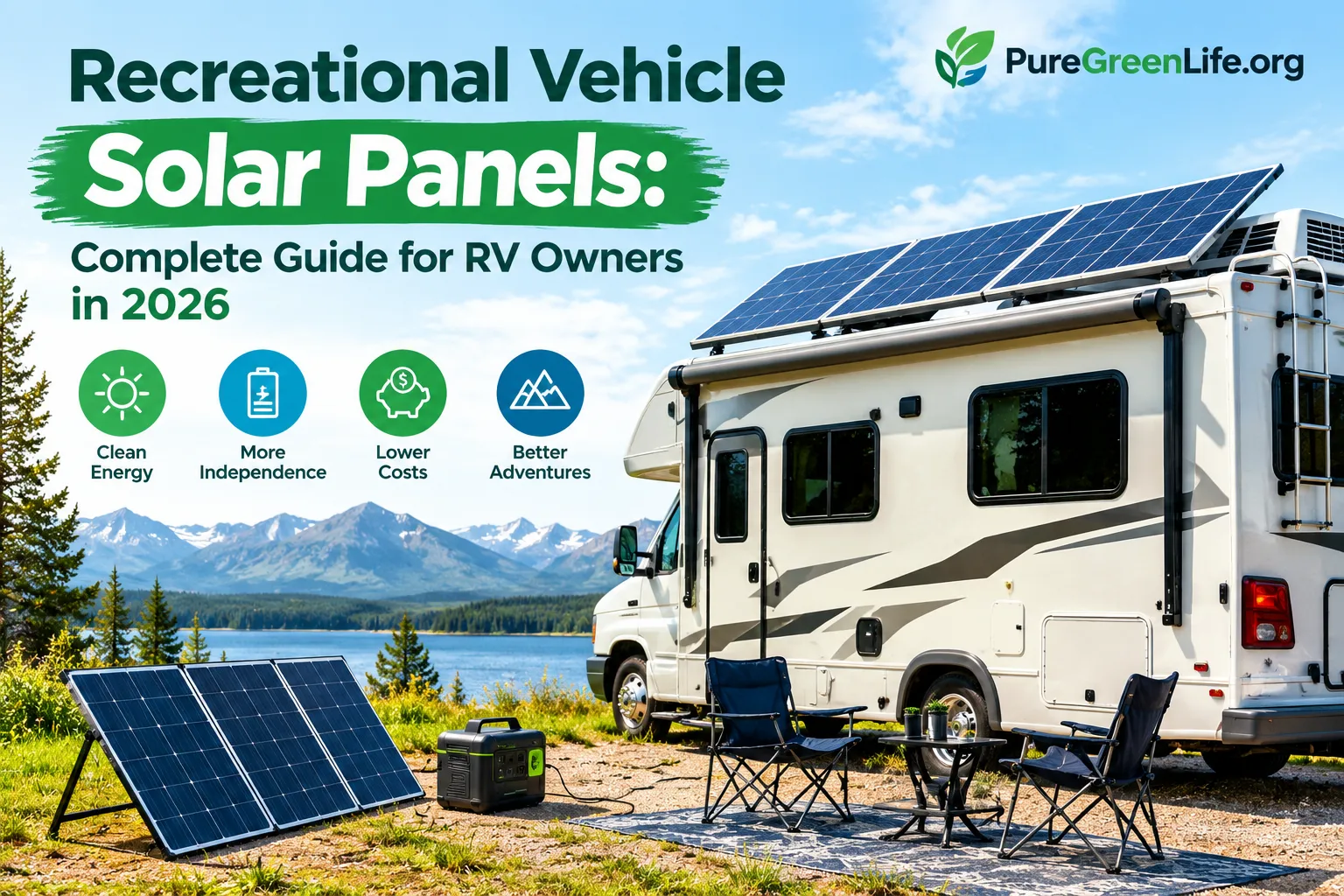
Traveling in an RV gives you freedom to explore many places. Solar panels can make that freedom even better. They produce electricity from sunlight while you travel or camp. This can reduce your need for electrical hookups and generators. The right system can power many everyday devices inside your RV. Your ideal setup depends on your energy use, battery size, and available roof space.
What Are Recreational Vehicle Solar Panels?
Recreational vehicle solar panels are photovoltaic panels made for mobile power systems. They capture sunlight and convert it into direct current electricity. A solar charge controller then manages this electricity before battery storage. The battery stores power for use during cloudy periods or nighttime. An inverter can convert stored DC power into AC electricity. This allows you to run compatible household-style devices inside your RV.
RV solar panels can work with motorhomes, travel trailers, campervans, and similar vehicles. Some systems use fixed roof panels for regular energy production. Other systems use portable panels for flexible camping needs. Your travel style can help determine the better option. Roof space also affects how much solar capacity you can install.
How Do RV Solar Panels Work?
RV solar panels produce electricity when sunlight reaches their photovoltaic cells. The panels send that electricity toward a solar charge controller. The controller regulates charging before energy reaches the battery bank. This helps the batteries receive power within their designed charging limits.The battery stores energy for later use. You can use stored power when sunlight is unavailable. Twelve-volt RV appliances can often use battery power directly. Larger household appliances may require an inverter for AC power. The inverter must match the power requirements of your appliances.Your system works best when every component matches correctly. Panel wattage should match your energy needs and battery capacity. The controller must also support your panel voltage and power. Proper sizing helps prevent poor performance and unnecessary equipment costs.
Main Parts of an RV Solar System
A complete RV solar system needs several connected components. Each part performs a different job within the system. Choosing compatible parts helps the system operate safely and reliably.
Solar Panels
Solar panels are the main electricity-producing part of the system. They collect sunlight and produce DC electricity. Panels come in different sizes, designs, and power ratings. Your available roof space limits how many panels you can install.
Charge Controller
The charge controller sits between the panels and batteries. It controls the electricity flowing into the battery bank. Common controller types include PWM and MPPT models. MPPT controllers can be useful for larger or more demanding systems.
RV Solar Batteries
Batteries store electricity for use after sunset or during cloudy weather. Common RV options include lithium and AGM batteries. Lithium batteries can offer high usable capacity and lower weight. Your choice should match your budget and energy requirements.
Inverter
An inverter changes battery DC electricity into AC electricity. Many household devices require AC power to operate. The inverter should match the highest expected power demand. A pure sine wave inverter is commonly used for sensitive electronic equipment.
Types of Solar Panels for RVs
RV owners can choose from several solar panel designs. Rigid, flexible, and portable panels are common options today. Each type has different installation and space requirements.
Monocrystalline Solar Panels
Monocrystalline panels use solar cells made from high-purity silicon. They usually offer strong efficiency for their physical size. This makes them useful when RV roof space is limited. They are available in many rigid and flexible designs.For many RV owners, monocrystalline panels are a practical choice. They can provide good output without requiring excessive roof space. Their performance still depends on sunlight, temperature, shading, and installation.
Polycrystalline Solar Panels
Polycrystalline panels use multiple silicon crystal structures. They have traditionally offered a lower-cost alternative to monocrystalline panels. Their efficiency is generally lower than comparable monocrystalline panels. They can also require more space for similar output.Modern RV buyers often compare polycrystalline panels with newer alternatives. Availability also varies between manufacturers and markets. Check current specifications before choosing a panel type.
Flexible Solar Panels
Flexible panels are thin and lightweight compared with many rigid panels. They can fit some curved RV surfaces more easily. Their lower weight can also help with certain installation requirements.Flexible panels still need careful installation and proper cable protection. The roof surface must support the installation method. Waterproof cable entry is also important for preventing roof leaks. Always follow the panel manufacturer’s installation instructions.
How Many Solar Panels Does an RV Need?
There is no single panel count for every RV. Your daily electricity use should guide the system size. Start by estimating how much energy your appliances use each day. Then consider your available sunlight and roof space.A simple estimate uses daily watt-hours divided by peak sun hours. This gives an approximate solar array size in watts. Real output can vary because sunlight changes throughout the day. Shade, weather, panel direction, and temperature can also affect production.For example, a smaller RV may need only a modest solar array. A larger RV with a refrigerator and electronics may need more capacity. Long off-grid trips can also require larger battery storage. Do not choose panels based only on their wattage.Your battery bank matters just as much as panel capacity. Solar panels produce energy, while batteries store that energy. A larger array cannot solve every storage problem. Both parts should be designed around your daily energy needs.
Benefits of Solar Panels for Recreational Vehicles
RV solar panels can reduce dependence on electrical hookups. They can also reduce generator use during suitable conditions. This makes solar useful for remote camping and off-grid travel.Solar systems can keep important devices running during travel stops. These devices may include lights, phones, laptops, fans, and refrigerators. The actual appliances supported depend on system size and battery capacity. High-power appliances usually require much larger systems.Solar power can also make camping quieter. Generators produce engine noise while operating. Solar panels generate electricity silently during sunlight hours. This can create a more peaceful camping experience.Maintenance is another benefit for many RV owners. Solar panels have no moving parts during normal operation. They still need inspection and cleaning when dirt affects performance. Connections and cables should also remain secure and protected.
RV Solar Panels vs. Generator
Solar panels and generators provide power in very different ways. Solar systems use sunlight instead of burning fuel. Generators can produce power regardless of sunlight conditions. Each option has advantages for different travel situations.Solar works especially well during sunny off-grid trips. A properly sized battery lets you use stored energy at night. Generators can provide large amounts of power when needed. They can also work during extended periods of poor sunlight.Solar systems usually have higher upfront equipment costs. Generators may have lower initial costs in some cases. Fuel, maintenance, and operating noise add ongoing generator considerations. Solar systems also need batteries and electrical equipment.Many RV owners choose a combination of technologies. Solar can handle regular daily electrical needs. A generator can provide backup power during difficult conditions. Your travel habits should determine which setup makes sense.
How to Install Solar Panels on an RV
RV solar installation starts with careful system planning. First, check your roof space and existing electrical equipment. Make sure the roof can safely support the installation. You should also plan cable routes before drilling anything.Rigid panels normally require suitable mounting hardware. Flexible panels may use approved adhesives or other mounting methods. The correct method depends on the panel and RV roof material.Solar cables need protection from sharp edges and movement. Roof cable entries must remain properly sealed against water. Wiring should also stay away from hot or moving components.Electrical connections require careful attention to polarity and component ratings. The charge controller must match the solar array and battery. Fuses and suitable cable sizes may also be required. Incorrect wiring can damage equipment or create safety risks.If the system includes complex AC wiring, professional help is recommended. This is especially important for mains connections and inverter systems. Always follow the equipment manufacturer’s instructions during installation.
RV Solar Panel Costs in 2026
RV solar costs depend heavily on system size and equipment quality. Small systems cost much less than complete high-capacity setups. Current U.S. guidance puts basic RV solar equipment around $300 to $2,000. Professional installation can add roughly $500 to $3,000.These figures are general ranges rather than fixed prices. Battery capacity can significantly change the total system cost. Lithium batteries often cost more than basic lead-acid alternatives. Larger inverters and MPPT controllers can also increase costs.Portable systems may have different costs than permanent roof systems. Installation complexity can also affect labor prices. Always compare complete system costs rather than panel prices alone.
How to Maintain RV Solar Panels
Regular maintenance helps your RV solar system perform properly. Keep panels reasonably clean when dirt reduces sunlight exposure. Dust, leaves, bird droppings, and other debris can block sunlight.Check cables and connectors for visible damage during inspections. Look for loose connections, cracked components, or damaged insulation. Roof cable entries should also remain properly sealed.Battery maintenance depends on the battery type you choose. Follow the manufacturer’s charging and storage instructions. Lithium batteries often require compatible charging settings and protection systems. Never ignore unusual battery heating, swelling, or damage.Monitor your solar controller when possible. Many modern controllers provide useful system information. This can help identify charging or battery problems early.
Are Recreational Vehicle Solar Panels Worth It?
RV solar panels can be worth it for frequent off-grid travelers. They are especially useful when you spend time away from hookups. Solar can provide quiet energy during suitable sunlight conditions.The value depends on your electricity needs and travel habits. Weekend travelers may need only a small system. Full-time RV users may need more panels and larger batteries. Your budget should also influence the final system design.Solar is not automatically the best solution for every RV. Heavy appliance use can require substantial battery and solar capacity. Limited roof space can also restrict your system size.A well-planned system can make off-grid travel much easier. It can reduce generator use and provide useful energy independence. Start with your actual daily power needs before buying equipment.
Final Thoughts on RV Solar Panels
Recreational vehicle solar panels can provide useful power while traveling. They work by turning sunlight into electricity for your RV system. Batteries store that energy for use when sunlight disappears.The best setup depends on your daily electricity use and travel style. Panel space, battery capacity, and controller type all matter. Your inverter also needs to match your appliances and power demands.Rigid, flexible, and portable panels each have useful applications. Monocrystalline panels are often attractive when roof space is limited. Flexible panels can help when weight or curved surfaces matter.Good planning matters more than simply buying the biggest panels. Estimate your energy needs before choosing system components. Match every part according to its electrical specifications. When installed correctly, RV solar can support quieter and more independent travel.









One thought on “Recreational Vehicle Solar Panels: Complete Guide for RV Owners in 2026”