A solar PV system turns sunlight into electricity for homes and businesses. It uses solar panels to capture energy from the sun. This electricity can power lights, appliances, computers, and other devices. Many people choose solar power to reduce their electricity bills. It can also help reduce dependence on fossil fuels.
Solar technology has improved over the years. Today, solar PV systems come in different sizes and designs. Some connect to the electricity grid, while others work independently. The right system depends on your energy needs, budget, and location. Understanding the basics can help you make a better decision.
What Is a Solar PV System?
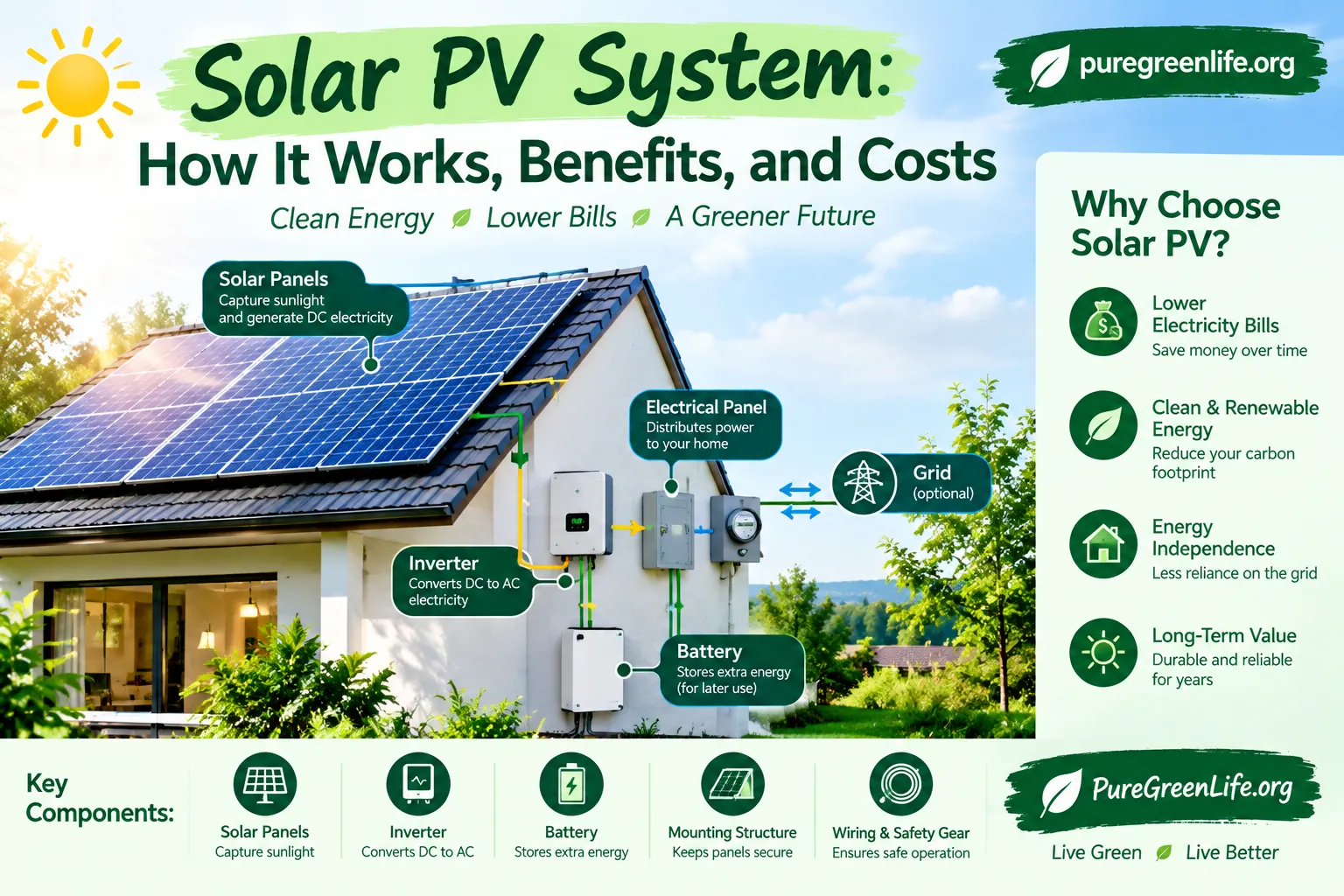
A solar PV system is a setup that converts sunlight into electrical energy. The term PV means photovoltaic. This process happens when sunlight reaches solar cells inside the panels. These cells generate direct current, also called DC electricity.
Most household appliances use alternating current, known as AC electricity. An inverter changes the DC electricity into AC power. The system can then supply electricity to your home or building.
Some systems connect to the public electricity grid. Others use batteries to store extra electricity for later. A solar PV system can also combine grid power and battery storage.
How Does a Solar PV System Work?
A solar PV system follows several steps to produce usable electricity. Each component has a specific job.
Sunlight Reaches the Solar Panels
Solar panels contain many photovoltaic cells. When sunlight reaches these cells, they generate DC electricity. Strong sunlight usually helps panels produce more power. Clouds and shade can reduce their output.
The Inverter Converts Electricity
The panels produce DC electricity, but most home appliances use AC electricity. An inverter converts the electricity into the form your appliances need. Some inverters also monitor the system’s performance.
Electricity Powers Your Home
The converted electricity supplies power to connected appliances. Your home uses solar electricity when it is available. If production is lower than demand, the system may draw electricity from the grid or a battery.
Extra Electricity Can Be Stored or Exported
Some systems include batteries to store extra solar power. You can use this stored electricity when sunlight is limited. Grid-connected systems may also export unused electricity, depending on local rules and utility arrangements.
Main Components of a Solar PV System
Every solar PV system needs equipment to generate and manage electricity. The exact components depend on the system design.
Solar Panels
Solar panels capture sunlight and generate DC electricity. Their output depends on panel efficiency, sunlight, temperature, and shading. The number of panels needed depends on your energy use and available space.
Inverter
The inverter converts DC electricity into AC electricity. It also helps manage the system’s output. Different systems may use string inverters, microinverters, or other inverter designs.
Mounting Structure
Mounting structures hold solar panels securely in place. They may be installed on rooftops or ground-mounted frames. A suitable structure helps panels face the right direction and withstand local weather.
Wiring and Safety Equipment
Cables connect the panels, inverter, and other components. Safety equipment can include disconnect switches, circuit breakers, grounding, and surge protection. Proper installation helps reduce electrical risks.
Solar Battery
A battery stores electricity for later use. It can provide power when panels produce little or no electricity. Batteries add to the system’s cost, so not every household needs one.
Monitoring System
Monitoring tools show how much electricity the system produces. Some systems also track energy use and battery levels. This information can help owners notice unusual changes in performance.
Types of Solar PV Systems
Solar PV systems generally fall into three main categories. Each type suits different needs and locations.
Grid-Tied Solar PV System
A grid-tied system connects to the public electricity network. It can supply solar power during the day and draw grid electricity when needed. Depending on local policies, extra electricity may be exported to the grid.
These systems often cost less than battery-based setups. They usually do not provide backup power during a grid outage unless they have suitable backup equipment.
Off-Grid Solar PV System
An off-grid system operates without a public electricity connection. It often uses batteries to supply electricity when sunlight is unavailable. A generator may provide extra backup in some installations.
This option can suit remote homes, farms, and sites far from power lines. The system must be designed carefully to meet demand during cloudy weather and at night.
Hybrid Solar PV System
A hybrid system combines solar panels with grid access and battery storage. It can store extra electricity for later use. Some designs can also provide backup power during outages.
Hybrid systems offer more flexibility, but they usually cost more. Backup operation depends on the inverter, battery, wiring, and system design.
Benefits of a Solar PV System
Solar PV systems offer several benefits when properly designed and installed. The actual results depend on your location, electricity use, and equipment.
Lower Electricity Bills
Solar panels can supply part of your daily electricity needs. This can reduce the amount of power you buy from your utility. Your savings depend on system size, sunlight, electricity rates, and export policies.
Use Renewable Energy
Sunlight is a renewable source of energy. Generating electricity from sunlight can reduce the need for fossil-fuel-based power. The overall environmental impact also depends on manufacturing, transport, and disposal.
Reduce Grid Dependence
Solar power can reduce your reliance on grid electricity during sunny hours. Adding a suitable battery can provide more flexibility after sunset. Still, a small system may not cover all your energy needs.
Support Long-Term Energy Planning
Solar panels can generate electricity for many years when properly maintained. Planning for energy needs can help households manage future electricity expenses. However, savings and payback periods are not guaranteed.
How Much Does a Solar PV System Cost?
The cost of a solar PV system varies by country and installation. System size, panel quality, inverter type, and labor all affect the final price.
Battery storage can increase the total cost significantly. Roof repairs, electrical upgrades, mounting equipment, and permits may add expenses. Local taxes and utility requirements can also affect the price.
To compare quotations, check the equipment models, system capacity, warranties, and installation work. Ask whether the price includes wiring, safety devices, monitoring, and after-sales support. Compare expected electricity production rather than choosing only by the lowest price.
A professional installer can estimate the system size based on your electricity bills. They should also assess the roof, shading, and local weather conditions.
How to Choose the Right Solar PV System
Choosing the right system starts with understanding your electricity needs. A suitable design should match your budget and property.
Review Your Electricity Use
Check your recent electricity bills to understand your monthly consumption. Note when you use the most electricity during the day. This helps the installer estimate the system capacity you need.
Check Roof Space and Sunlight
Solar panels need a suitable location with limited shading. Roof direction, angle, strength, and available space can affect production. Ground-mounted panels may be an option when the roof is unsuitable.
Decide Whether You Need a Battery
A battery may be useful if you need backup power or want to use stored solar energy later. If your main goal is daytime electricity savings, a grid-tied system may be enough. Compare the additional cost with the benefits you expect.
Choose a Qualified Installer
Look for an installer with relevant experience and a clear service agreement. Ask about product warranties, workmanship guarantees, maintenance, and support. Make sure the design follows local electrical and building requirements.
Solar PV System Maintenance
Solar PV systems generally need limited routine maintenance. Still, regular checks can help keep them working safely and efficiently.
Keep Panels Clear of Heavy Dirt
Dust, leaves, and bird droppings can reduce panel output. Check the panels from a safe location. Follow the manufacturer’s cleaning guidance and avoid walking on the roof or panels.
Monitor System Performance
Review the system’s production through its monitoring app or display. A sudden unexplained drop may indicate shading, a fault, or an equipment issue. Contact a qualified technician when needed.
Inspect Equipment Safely
Ask a qualified professional to inspect wiring, mounting structures, and electrical protection when appropriate. Do not open electrical equipment or handle damaged cables yourself. Follow the manufacturer’s maintenance schedule.
Solar PV System vs. Solar Thermal System
Solar PV and solar thermal systems use sunlight in different ways. A PV system generates electricity through photovoltaic cells. A solar thermal system captures heat for uses such as water heating.
A PV system can power many electrical devices. A solar thermal system is designed mainly to provide heat. Some properties use both technologies to meet different energy needs.
The better option depends on your goal. Choose solar PV when you want to generate electricity. Consider solar thermal when your main need is hot water or another heating application.
Is a Solar PV System Worth It in 2026?
A solar PV system can be a good investment for many homes and businesses. Its value depends on the amount of sunlight available, electricity prices, installation costs, and how much solar power you use.
Before buying, compare multiple quotations and review the expected energy output. Check local rules for grid connections and exporting excess electricity. Also consider the system’s warranty, maintenance needs, and any battery replacement costs.
Avoid relying only on promised savings or payback periods. Ask for estimates based on your actual electricity use and local conditions. A well-designed system can help reduce grid consumption over the long term.
Conclusion
A solar PV system converts sunlight into electricity for homes and businesses. Its main components include solar panels, an inverter, mounting equipment, and safety devices. Some systems also include batteries for energy storage.
Grid-tied, off-grid, and hybrid systems serve different needs. The best choice depends on your energy use, location, budget, and backup requirements. With careful planning and proper maintenance, solar PV can provide a useful source of renewable electricity for years.






One thought on “Solar PV System in 2026: How It Works, Benefits, and Costs”