
What Is a Carbon Footprint?
A carbon footprint is the total greenhouse gases released by our daily activities. It includes emissions from transportation, electricity, food, and everyday products. Reducing your carbon footprint helps limit climate change and protect the environment.
How Is a Carbon Footprint Measured?
A carbon footprint measures greenhouse gas emissions in carbon dioxide equivalents (CO₂e). Experts calculate emissions using data about electricity, fuel, transportation, and other activities. Online calculators can also help estimate your personal carbon footprint.
What Causes a High Carbon Footprint?
What Causes a High Carbon Footprint?
Many everyday activities release greenhouse gases into the atmosphere. Transportation, energy use, food production, and waste all contribute to emissions. Here are five common causes of a high carbon footprint.
1. Transportation and Vehicle Emissions
Cars, trucks, and airplanes often burn fossil fuels for energy. This releases carbon dioxide and other greenhouse gases. Frequent driving and air travel can increase your carbon footprint.
2. Electricity and Energy Use
Many power plants burn coal, oil, or natural gas to generate electricity. Using more electricity can increase emissions when fossil fuels supply that power. Heating, cooling, and household appliances also contribute to energy consumption.
3. Food Production and Consumption
Growing, processing, and transporting food can release greenhouse gases. Livestock farming produces methane, while fertilizers can release nitrous oxide. Food waste also increases emissions through production losses and landfill disposal.
4. Household Waste and Plastic Use
Throwing away food and other materials increases waste-related emissions. Organic waste can produce methane when it breaks down in landfills. Making plastic also requires energy, often from fossil fuels.
5. Industrial Production
Industrial production is a major source of greenhouse gas emissions because factories require large amounts of energy and raw materials. Emissions come from burning fossil fuels for heat and electricity, as well as from chemical reactions during manufacturing. Industries such as cement, steel, chemicals, plastics, and aluminum can have particularly high emissions. Cleaner electricity, energy-efficient equipment, recycled materials, and low-carbon manufacturing technologies are helping reduce the environmental impact of industrial production.
Why Is It Important to Reduce Your Carbon Footprint?
Reducing your carbon footprint helps protect the planet from climate change. It also supports cleaner air, healthier communities, and a better future. Here are some important reasons to reduce your emissions.
1. Helps Slow Climate Change
Lower emissions reduce the buildup of greenhouse gases in the atmosphere. This helps limit global warming and its harmful effects.
2. Protects Human Health
Reducing fossil fuel use can also lower harmful air pollution. Cleaner air supports healthier communities and improves quality of life.
3. Protects Wildlife and Natural Habitats
Climate change affects forests, oceans, and natural habitats. Lower emissions help reduce pressure on wildlife and ecosystems.
4. Saves Energy and Money
Using less electricity and fuel can lower household energy bills. Energy-efficient choices also help reduce unnecessary waste.
5. Creates a Better Future
Small actions today can help reduce future climate risks. Every effort to cut emissions supports a more sustainable world.
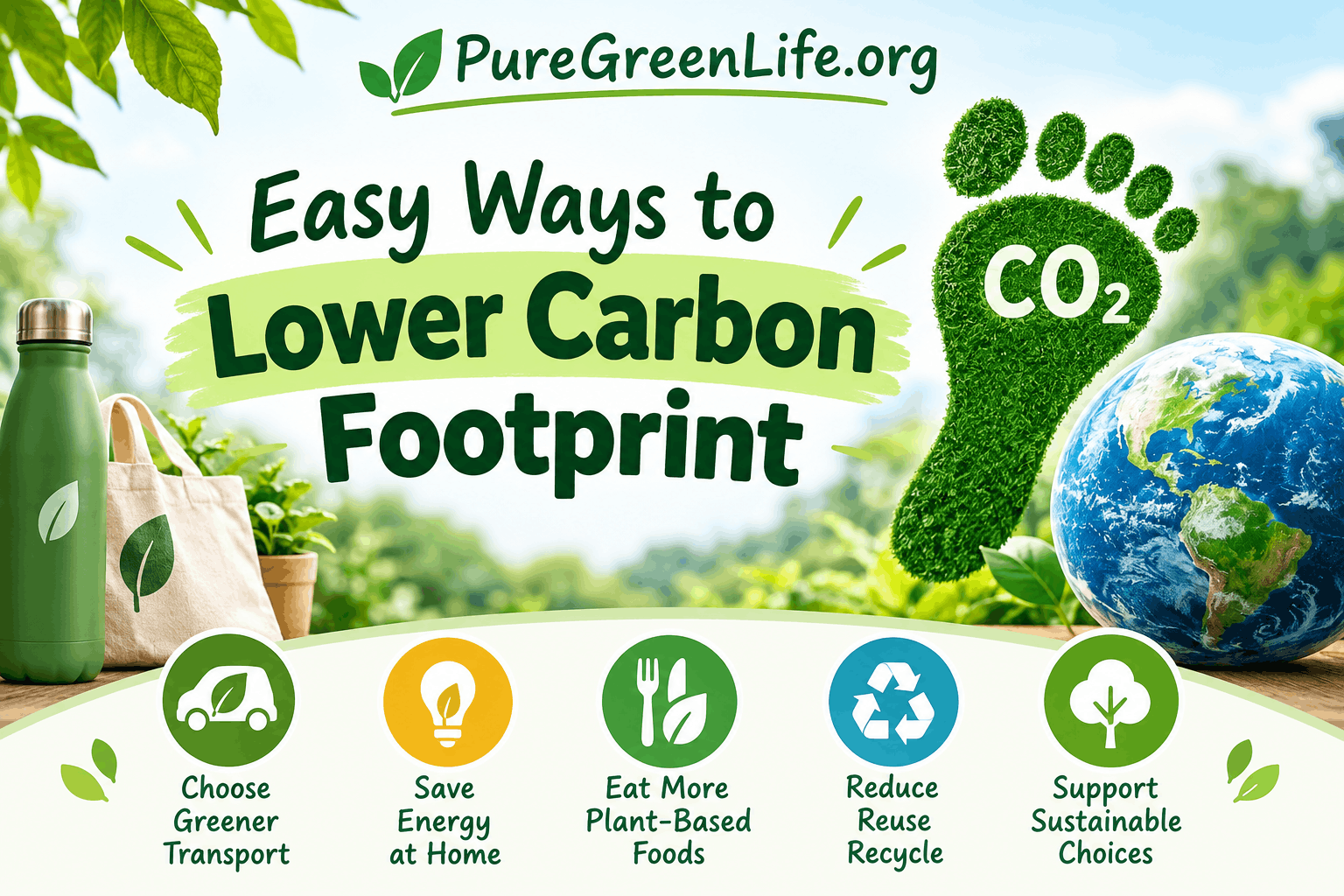
Easy Ways to Lower Carbon Footprint
You can reduce your carbon footprint through simple daily habits. Small changes at home, work, and school can help lower emissions. Here are ten easy ways to make a positive difference.
1. Use Energy-Efficient Appliances
Choose appliances that use less electricity to perform everyday tasks. Replace traditional bulbs with energy-saving LED lights. Turn off lights and electronics when you don’t need them. These habits can lower energy use and reduce electricity bills.
2. Switch to Renewable Energy
Renewable energy comes from sources like sunlight, wind, and water. Solar panels can generate electricity without burning fossil fuels. If possible, choose renewable electricity for your home. This helps reduce emissions from traditional energy sources.
3. Walk, Cycle, or Use Public Transport
Choose walking or cycling for short trips whenever possible. Use buses or trains instead of driving alone. These options can reduce fuel use and transportation emissions. They also help improve air quality in busy areas.
4. Reduce Food Waste
Plan your meals before shopping for groceries. Buy only what you need and store food properly. Use leftovers instead of throwing them away. Compost suitable food scraps when possible. These steps save resources and reduce waste-related emissions.
5. Eat More Plant-Based Foods
Include more vegetables, fruits, beans, and lentils in your meals. Plant-based foods generally produce fewer emissions than many animal-based foods. You don’t need to change your diet overnight. Start by choosing a few more plant-based meals each week.
6. Reduce, Reuse, and Recycle
Buy fewer unnecessary items and reuse things whenever possible. Repair broken products instead of replacing them immediately. Separate recyclable materials according to local recycling rules. These habits conserve resources and reduce waste.
7. Avoid Single-Use Plastics
Carry reusable shopping bags when visiting stores. Use refillable water bottles instead of disposable ones. Choose products with less unnecessary packaging. These choices help reduce plastic waste and its environmental impact.
8. Save Water at Home
Turn off taps while brushing your teeth. Fix leaking faucets and take shorter showers. Use water carefully when washing dishes or clothes. Saving water also reduces the energy needed for pumping and treatment.
9. Plant Trees and Protect Green Spaces
Trees absorb carbon dioxide as they grow. They also provide shade and support local wildlife. Plant suitable native trees where conditions allow. Protect existing trees and green spaces in your community.
10. Choose Sustainable Products
Choose durable products that last longer and need fewer replacements. Buy secondhand items when they suit your needs. Support products made with recycled or responsibly sourced materials. These choices can reduce emissions linked to manufacturing and transportation.
How to Reduce Your Carbon Footprint at Home
Small changes at home can reduce your carbon footprint and save energy.
- Use LED bulbs to reduce electricity consumption.
- Turn off unused lights and appliances.
- Save water by fixing leaks and taking shorter showers.
- Reduce food waste and recycle household materials.
- Use energy-efficient appliances whenever possible.
- Consider solar panels to lower reliance on fossil fuels.
How to Reduce Your Carbon Footprint at Work
- Turn off lights and computers when not needed.
- Use less paper and recycle office waste.
- Walk, cycle, or use public transport.
- Bring reusable bottles and lunch containers.
- Choose energy-efficient office equipment.
- Avoid wasting food and electricity.
Benefits of Reducing Your Carbon Footprint
- Slows Climate Change: Reduces greenhouse gas emissions.
- Improves Air Quality: Helps create cleaner, healthier communities.
- Saves Money: Lowers energy and fuel costs.
- Protects Wildlife: Preserves natural habitats and ecosystems.
- Conserves Resources: Reduces unnecessary energy and water use.
- Supports Better Health: Limits exposure to harmful pollution.
- Protects Future Generations: Helps create a cleaner, sustainable planet.
Common Mistakes to Avoid When Trying to Reduce Your Carbon Footprint
- Turn off unused lights and appliances.
- Wasting Foodc: Plan meals and store food properly.
- Using Too Much Plastic: Choose reusable products whenever possible.
- Ignoring Transportation: Walk, cycle, or use public transport.
- Only Recycling: Reduce and reuse items before recycling.
- Expecting Perfection: Start with small, practical changes.
Frequently Asked Questions (FAQs)
1. What Is the Easiest Way to Reduce Your Carbon Footprint?
Save energy, reduce waste, and choose cleaner transportation when possible.
2. Can Small Lifestyle Changes Make a Difference?
Yes, small changes can reduce energy use and greenhouse gas emissions.
3. Does Using Solar Energy Reduce Your Carbon Footprint?
Yes, solar energy can reduce emissions from fossil-fuel-based electricity.
4. How Can I Reduce My Carbon Footprint Without Spending Money?
Turn off unused lights, reduce waste, save water, and walk when possible.
5. What Daily Habits Increase Your Carbon Footprint?
Heavy driving, wasting electricity, and excessive consumption can increase emissions.
Final Thoughts on Easy Ways to Lower Your Carbon Footprint
You don’t need to completely change your lifestyle to make a difference for the planet. From saving energy and cutting waste to choosing greener transportation and buying only what you need, every small decision can help lower your carbon footprint. The key is consistency—when simple eco-friendly habits become part of everyday life, they can add up to a meaningful impact. Start with one change today, and build from there.











One thought on “What Is a Carbon Footprint and How to Reduce It? ”