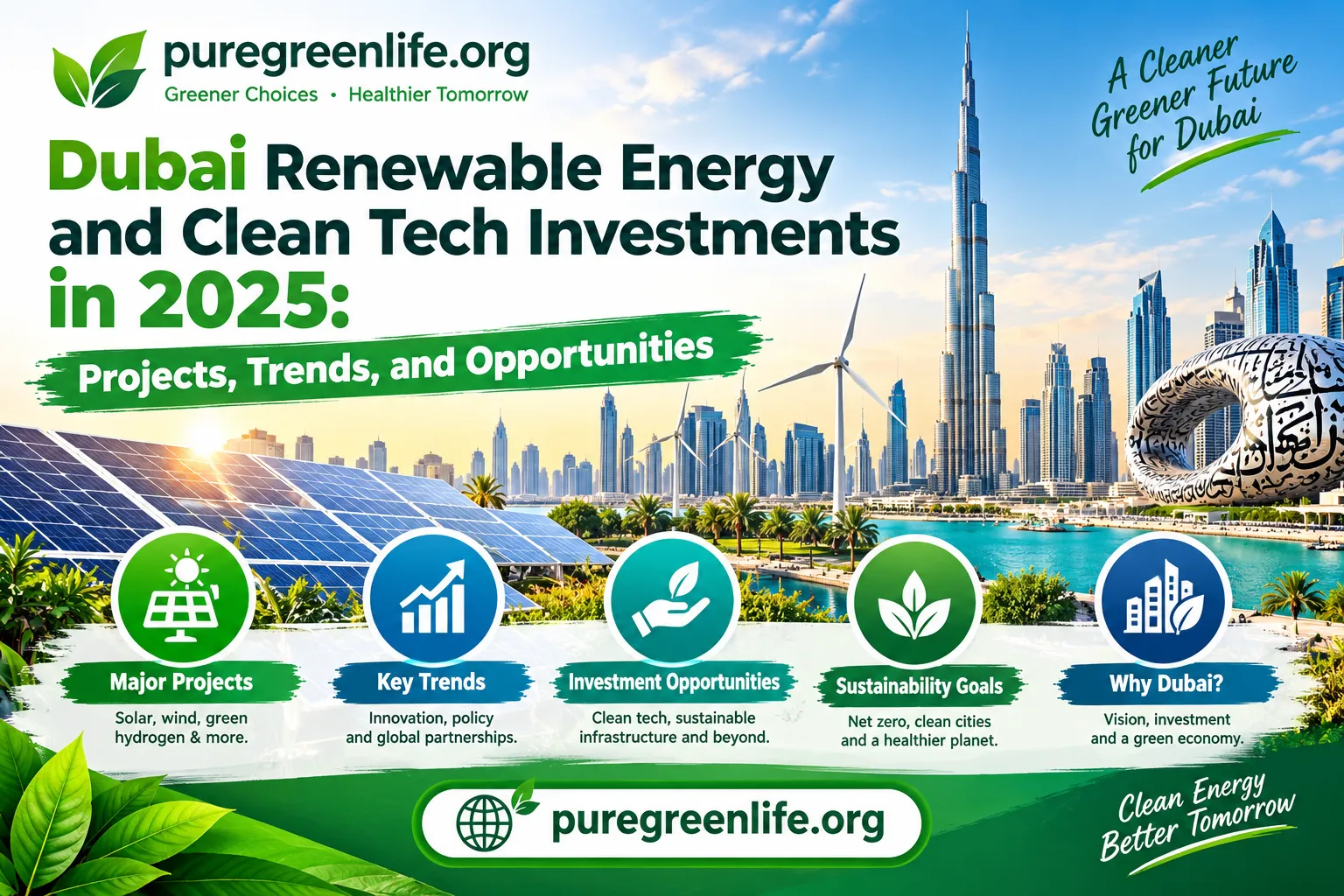
Dubai continued expanding its renewable energy sector throughout 2025. The emirate invested in solar power, energy storage, and clean technology. These projects support its plans for cleaner energy and lower emissions.
The Mohammed bin Rashid Al Maktoum Solar Park remained central to this growth. Private companies also showed interest in Dubai’s renewable energy projects. This article explores major developments, investment opportunities, and future plans.
Dubai’s Renewable Energy and Clean Tech Market in 2025
Dubai continued developing renewable energy and clean technology during 2025. Its main goal was to reduce reliance on conventional energy sources. The emirate also aimed to support economic growth through cleaner technologies.
The Dubai Clean Energy Strategy 2050 sets a long-term target. It aims to provide 100% of Dubai’s energy production capacity from clean sources by 2050. The strategy also supports Dubai’s position as a clean energy and green economy hub.
Solar power remained a major part of this plan. Dubai expanded its solar projects and explored energy storage solutions. These efforts help support growing electricity demand.
The government also encouraged private companies to participate in clean energy projects. Public-private partnerships allow companies to help develop large energy facilities. They can also bring investment, technical knowledge, and project management experience.
In 2025, Dubai’s clean energy market included several important areas. These included large-scale solar power projects, battery storage systems, and green hydrogen technology. Energy efficiency, smart energy systems, and electric vehicle charging also received attention.
These areas created different opportunities for investors and technology providers. Still, each opportunity required careful planning and financial research.
Major Renewable Energy Projects in Dubai
Dubai’s renewable energy development includes several large infrastructure projects. The Mohammed bin Rashid Al Maktoum Solar Park is its main solar project. Other initiatives support clean energy production, storage, and research.
Mohammed bin Rashid Al Maktoum Solar Park
The Mohammed bin Rashid Al Maktoum Solar Park is a major renewable energy project in Dubai. Dubai Electricity and Water Authority (DEWA) manages the solar park. It uses photovoltaic panels and concentrated solar power technologies.
The project follows an Independent Power Producer (IPP) model. Under this model, private developers help finance and build energy projects. DEWA purchases electricity under agreed project contracts. This approach allows private companies to participate in large renewable energy developments.
In March 2025, DEWA reported progress on the solar park’s sixth phase. The phase has a planned capacity of 1,800 megawatts (MW). Its investment value was reported at up to AED 5.5 billion. At that time, 600 MW was operational.
By June 2025, the solar park’s total production capacity reached 3,860 MW. This included capacity from photovoltaic and concentrated solar power technologies. Clean energy represented around 21.5% of DEWA’s total production capacity.
The solar park offers opportunities across several areas. These include solar equipment, engineering, construction, and project services. Energy storage and maintenance services may also support future developments.
Dubai’s Clean Energy and Solar Power Expansion
Dubai continued expanding its solar energy plans during 2025. DEWA also advanced plans for the solar park’s seventh phase.
In April 2025, DEWA announced interest from 47 international companies. These companies expressed interest in developing the seventh phase. The project was planned to combine solar power with battery storage.
The announced project included more than 1,600 MW of solar production capacity. It also included a 1,000 MW battery storage system. The storage system was designed to provide six hours of storage. That equals 6,000 megawatt-hours of planned storage capacity.
The project was scheduled for phased commissioning between 2027 and 2029. Therefore, it was a future development, not a completed 2025 facility.
Solar expansion can create demand for several services. Companies may provide panels, inverters, electrical systems, and engineering support. Battery suppliers may also participate in suitable projects.
Investment opportunities depend on project contracts and technical requirements. Businesses should review the tender terms before making commitments.
Clean Tech Investment Opportunities in Dubai
Dubai’s clean technology sector includes more than solar electricity. Energy storage, electric transportation, and efficient energy systems also matter. These sectors may attract companies with suitable technology and funding.
Investors should understand each sector before committing money. Project costs, regulations, and customer demand can vary significantly.
Solar Energy and Renewable Power
Solar energy remained a major investment area in Dubai during 2025. The emirate receives strong sunlight throughout much of the year. This creates suitable conditions for solar electricity generation.
Large solar projects require equipment and technical services. Companies can participate through manufacturing, installation, and engineering contracts. Solar panel supply and distribution also create potential business opportunities.
Other opportunities include inverter supply, electrical equipment, and solar project design. Businesses may also provide installation and maintenance services.
Commercial buildings may use rooftop solar systems. Businesses can explore solar installations to manage their electricity needs. Still, investors must consider project costs and contract terms. Solar generation also depends on weather, equipment, and system performance.
Energy Storage and Battery Technology
Energy storage is important for renewable energy development. Solar panels generate electricity during daylight hours. Batteries can store some electricity for later use.
This helps improve the usefulness of solar power. Storage systems can also support electricity supply during periods of lower solar generation.
Dubai’s planned seventh solar park phase included substantial battery storage. DEWA announced a 1,000 MW battery system in April 2025. It was designed to provide six hours of storage.
Battery technology may create opportunities for equipment suppliers and developers. Businesses may also provide monitoring, maintenance, and energy management systems.
Investors must consider battery lifespan and replacement costs. Safety standards and thermal management are also important. These factors can affect the long-term cost of storage projects.
Electric Vehicles and Green Transportation
Electric vehicles are another part of Dubai’s clean technology market. They use electricity instead of petrol or diesel for driving.
Dubai’s transport sector can benefit from wider EV charging access. Charging stations help drivers charge vehicles at homes and workplaces. Public charging networks also support longer journeys.
Clean transportation creates opportunities for several businesses. These include charging equipment suppliers and installation companies. Software providers can also support charging networks and payment systems.
Companies may explore partnerships with property owners and fleet operators. Commercial fleets can include delivery vehicles and company cars.
Investment success depends on charging demand and operating costs. Businesses should also check local permits and technical standards.
Government Initiatives Supporting Clean Energy Investments
Government policies play an important role in Dubai’s renewable energy market. They set long-term targets and guide major energy projects.
The Dubai Clean Energy Strategy 2050 aims to support clean energy production capacity across the emirate. It also supports clean energy infrastructure and green economic development.
Dubai Clean Energy Strategy 2050
The strategy focuses on several key areas. These include infrastructure, legislation, funding, skills, and cleaner energy sources.
It encourages investment in renewable energy projects. The strategy also supports research and technical development. These efforts help guide Dubai’s long-term energy transition.
Public-Private Partnerships
DEWA uses the Independent Power Producer model for solar park projects. Private developers can help finance and construct these facilities.
This model creates opportunities for international companies. It also allows developers to participate through project agreements.
In 2025, DEWA invited international companies to participate in its seventh solar park phase. The project attracted interest from 47 international companies.
Investors should review official tender documents and eligibility requirements. Not every company will qualify for every project.
UAE Energy Strategy 2050
The UAE Energy Strategy 2050 also supports clean energy investment. The strategy aims to increase renewable energy contributions. It also seeks to meet rising energy demand.
The UAE government has outlined investment plans for its energy transition. These plans include AED 150 billion to AED 200 billion by 2030. This figure relates to the national strategy, not Dubai alone.
Benefits of Investing in Dubai’s Renewable Energy Sector
Renewable energy investment can support Dubai’s long-term development. It can also create business opportunities across several industries.
Growing Demand for Clean Energy
Dubai’s population and economy continue creating electricity demand. Renewable energy projects can help meet some of that demand.
Solar power also reduces dependence on conventional electricity generation. Its contribution depends on installed capacity and operating conditions.
Opportunities for International Businesses
Dubai’s renewable energy projects attract international companies. The solar park’s seventh phase drew interest from firms across 17 countries.
Businesses can explore equipment supply and technical services. They may also participate through project partnerships.
Support for Environmental Goals
Renewable energy can reduce emissions from electricity generation. The actual reduction depends on the energy sources replaced.
Solar power also supports Dubai’s clean energy targets. Battery storage can help make renewable electricity available at different times.
Development of New Technologies
Clean technology projects can encourage research and innovation. Companies may develop improved batteries and energy management systems.
Research can also improve solar equipment and energy efficiency. These developments may create new commercial opportunities.
Challenges and Risks of Clean Tech Investments
Clean energy investment involves financial and technical risks. Investors should understand these challenges before entering the market.
High Initial Investment Costs
Large renewable energy projects require substantial funding. Solar panels, batteries, and electrical equipment can be expensive.
Construction and grid connection can increase total costs. Investors should prepare detailed budgets before starting projects.
Changing Technology
Clean technology continues to develop rapidly. New equipment may improve efficiency or reduce operating costs.
Older systems may become less competitive over time. Businesses should assess equipment warranties and upgrade requirements.
Project and Regulatory Requirements
Energy projects must follow applicable rules and technical standards. Companies may need approvals, permits, and qualified contractors.
Tender conditions can also vary between projects. Investors should review official requirements before submitting proposals.
Market Competition
Dubai attracts international companies and experienced developers. Businesses may face competition for contracts and customers.
Smaller companies may need specialised services or local partnerships. They should also assess demand before investing in equipment.
Future of Renewable Energy and Clean Tech in Dubai
Dubai’s clean energy plans extend beyond 2025. The emirate continues working toward its long-term energy targets.
The solar park’s seventh phase was planned to add solar power and battery storage. Its announced commissioning schedule covered 2027 through 2029.
Energy storage is likely to remain an important part of future projects. Batteries can help balance electricity supply and demand. They can also support greater use of renewable energy.
Green hydrogen may also support future clean energy development. DEWA’s pilot project at the solar park uses solar electricity to produce hydrogen. It explores hydrogen storage and other potential uses.
Electric transportation and energy efficiency may create additional opportunities. Charging networks and smart energy systems can support cleaner operations.
Still, future investment levels depend on project approvals and market conditions. Announced targets do not guarantee that every project will proceed as planned.
Investors should follow official DEWA announcements and tender notices. These sources provide updates on project schedules and participation requirements.
Final Thoughts
Dubai’s renewable energy sector continued developing during 2025. Solar power, battery storage, and clean technology remained key areas.
The Mohammed bin Rashid Al Maktoum Solar Park supported this expansion. Its projects also created opportunities for private developers and technology companies.
Investors can explore solar equipment, energy storage, and technical services. Each opportunity requires careful research and financial planning.