
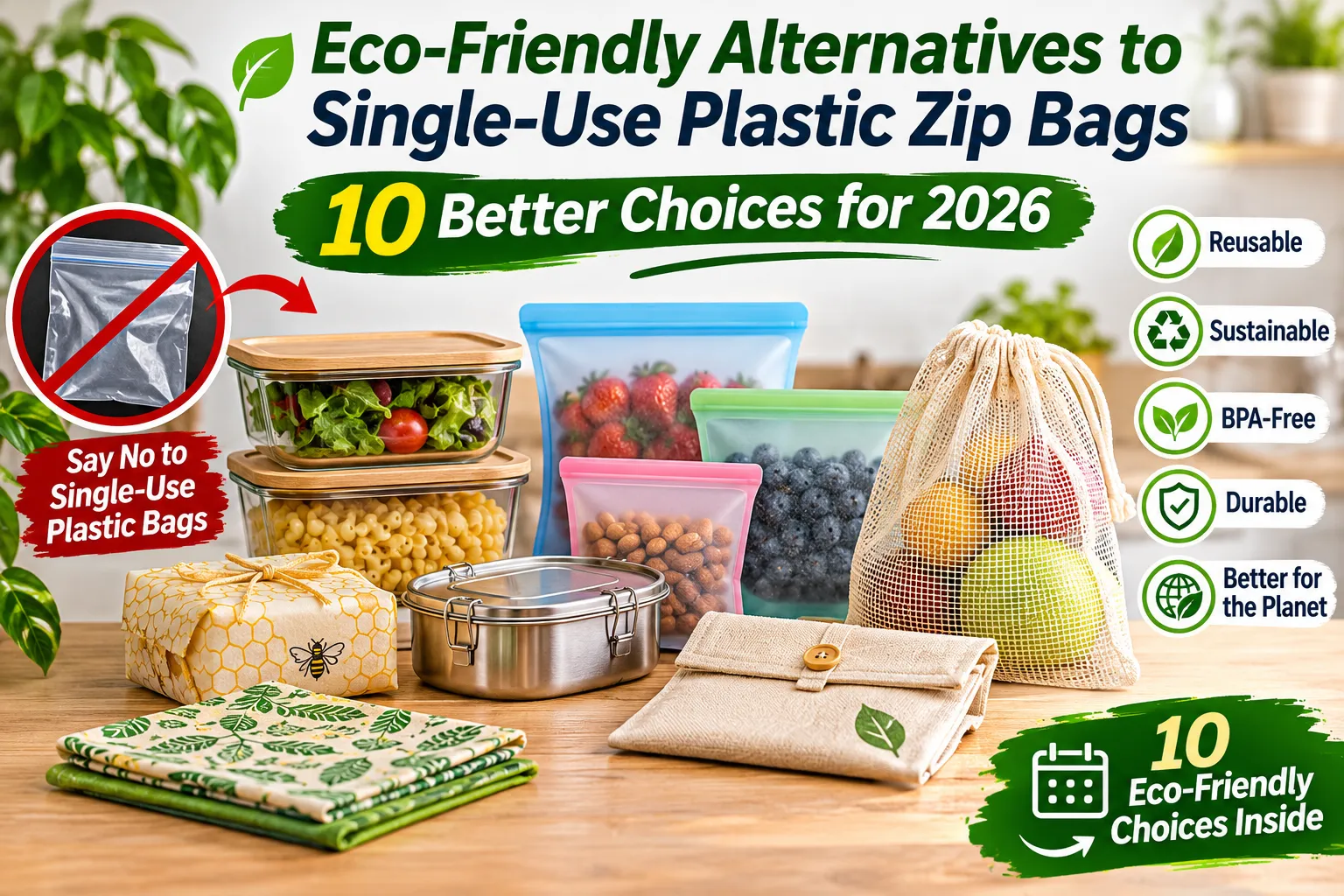
Single-use plastic zip bags are common in many homes. People use them to store snacks, pack lunches, freeze food, and organize small items. However, these bags often become waste after just one use. They can also add to plastic pollution when not disposed of properly.
The good news is that several eco-friendly alternatives can replace disposable plastic bags. Many options are reusable, easy to clean, and suitable for everyday needs. Some are better for food storage, while others work well for travel and household organization.
In this guide, we will explore ten practical alternatives to single-use plastic zip bags. You will also learn how to choose, clean, and reuse them.
Why Replace Single-Use Plastic Zip Bags?
Plastic zip bags offer convenience, but they create unnecessary waste. Most disposable bags are designed for short-term use. People often throw them away after storing one meal or snack.
These bags can also escape waste collection systems. When they enter rivers and oceans, they may harm wildlife. Animals can mistake plastic pieces for food or become trapped in plastic waste.
Choosing reusable storage products can help reduce household waste. It can also save money over time because you do not need to replace disposable bags regularly.
10 Eco-Friendly Alternatives to Single-Use Plastic Zip Bags
Several reusable products can make food storage easier and more sustainable. The right choice depends on what you want to store and how often you use it.
1. Reusable Silicone Food Bags
Reusable silicone bags are a popular replacement for disposable zip bags. They are flexible, washable, and suitable for many types of food. You can use them for snacks, sandwiches, vegetables, and leftovers.
Many silicone bags have secure seals that help prevent spills. Some models are also suitable for freezer use. Always check the manufacturer’s temperature and cleaning instructions before using them.
2. Beeswax Food Wraps
Beeswax wraps offer a reusable way to cover food. They are usually made from cotton fabric coated with beeswax and other natural ingredients. You can wrap sandwiches, cover bowls, or protect cut fruits.
The warmth of your hands helps the wrap shape around food. After use, wash it gently with cool water and mild soap. Avoid hot water because it can damage the coating.
Beeswax wraps are not suitable for every food. They should not replace sealed containers for raw meat or foods that need strong protection.
3. Reusable Cotton Produce Bags
Cotton produce bags are useful for shopping and storing certain fruits and vegetables. They are lightweight, washable, and easy to carry. You can use them for apples, oranges, potatoes, and other dry produce.
Some bags have drawstring closures for easy handling. They also help reduce the need for disposable produce bags at grocery stores.
Choose breathable cotton bags for suitable produce. Check storage requirements because some vegetables need specific humidity and temperature conditions.
4. Glass Food Storage Containers
Glass containers provide a durable option for storing leftovers and prepared meals. They do not absorb food smells easily and are simple to clean. Many also come with secure lids.
You can use them in refrigerators and freezers when the manufacturer allows it. Glass containers are also useful for meal preparation and packed lunches.
However, glass is heavier than plastic. It can also break if dropped. Choose sturdy containers with well-fitting lids for regular use.
5. Stainless Steel Food Containers
Stainless steel containers are another practical alternative. They are strong, reusable, and resistant to rust when made from suitable food-grade materials.
These containers work well for sandwiches, snacks, fruit, and dry foods. Many designs include tight-fitting lids for easier storage.
Stainless steel is especially useful for people who travel or pack lunches. However, most metal containers are not suitable for microwave use.
6. Reusable Fabric Snack Bags
Fabric snack bags are lightweight alternatives for packing everyday snacks. They are often made from cotton or other washable materials. You can use them for crackers, nuts, sandwiches, and dry snacks.
Many designs include zippers, buttons, or fold-over closures. They are easy to carry in school bags, handbags, and lunch boxes.
Choose washable materials and follow the cleaning instructions. Make sure the bags dry completely before storing them to prevent unpleasant smells.
7. Reusable Food-Grade Plastic Containers
Reusable food-grade plastic containers can also replace disposable zip bags. They are lightweight, affordable, and available in different shapes and sizes.
You can use them for leftovers, chopped vegetables, snacks, and meal preparation. Choose containers designed for food storage and check whether they are suitable for freezing or microwaving.
Avoid damaged containers with cracks or broken lids. Proper cleaning and regular inspection help keep them useful for longer.
8. Compostable Food Storage Bags
Compostable bags are designed to break down under suitable composting conditions. They may be made from plant-based materials instead of conventional plastic.
However, compostable does not always mean that a bag will break down in a home compost bin. Some products need industrial composting facilities.
Check the product label before buying. Choose certified products and follow local composting rules. These bags are usually a better option for specific disposal needs than a direct replacement for reusable storage products.
9. Reusable Bowl Covers
Reusable bowl covers can replace plastic wrap and some disposable storage bags. They stretch over bowls, plates, and food containers. Some are made from silicone, while others use washable fabric.
They are useful for covering leftovers and keeping food protected inside the refrigerator. Choose food-safe materials that fit your containers properly.
Clean them after every use. Make sure they are completely dry before storing them.
10. Reusable Vacuum-Seal Bags
Reusable vacuum-seal bags help remove air from food storage packages. This can help maintain food quality and reduce freezer burn when used correctly.
They are useful for storing meat, vegetables, and prepared meals. Some products can also be washed and reused according to their instructions.
Check whether the bags are designed for repeated use. Follow proper food safety guidance, especially when storing raw meat and other perishable foods.
Which Alternative Is Best for Different Uses?
Not every reusable product works for every storage need. Some options are better for snacks, while others suit leftovers or freezer storage.
| Alternative | Best Use | Main Benefit |
|---|---|---|
| Silicone bags | Snacks and leftovers | Flexible and reusable |
| Beeswax wraps | Covering food | Reusable food covering |
| Cotton bags | Dry produce | Lightweight and washable |
| Glass containers | Leftovers and meals | Durable and easy to clean |
| Stainless steel | Lunches and snacks | Strong and reusable |
| Fabric bags | Dry snacks | Lightweight and portable |
| Food-grade containers | Everyday storage | Affordable and practical |
| Compostable bags | Specific disposal needs | Designed for composting conditions |
| Bowl covers | Covering dishes | Reusable alternative to plastic wrap |
| Vacuum-seal bags | Freezer storage | Helps reduce air exposure |
How to Choose the Right Reusable Storage Option
Start by thinking about what you store most often. If you regularly pack snacks, silicone or fabric bags may suit your needs. Glass containers work better for leftovers and prepared meals.
Also consider how easy each product is to clean. Reusable products should be simple to wash and dry. This makes them more practical for everyday use.
Check the material and safety instructions before buying. Choose products designed for food contact. Also consider their durability, price, and expected lifespan.
Tips for Cleaning and Maintaining Reusable Bags
Proper care helps reusable storage products last longer. It also keeps them safe for regular food storage.
Wash reusable bags and containers after each use. Use warm water and mild dish soap when the product allows it. Pay special attention to corners, seals, and folds where food can collect.
Allow everything to dry completely before storing it. Avoid using damaged products with cracks, holes, or broken seals. Follow the manufacturer’s instructions for dishwasher and freezer use.
Common Mistakes to Avoid
Switching to reusable products is helpful, but choosing and using them incorrectly can create problems.
- Do not assume every reusable bag is freezer-safe.
- Avoid storing wet food in unsuitable fabric bags.
- Do not use damaged containers for food storage.
- Never put metal containers inside a microwave.
- Do not assume all compostable bags break down at home.
- Avoid buying more reusable products than your household needs.
Choosing durable products and using them regularly makes the switch more effective.
Frequently Asked Questions
Are reusable silicone bags better than plastic zip bags?
Reusable silicone bags can reduce disposable plastic waste when used many times. They are washable and suitable for different storage needs. However, their overall environmental impact depends on their production, lifespan, and cleaning requirements.
Can beeswax wraps replace plastic zip bags?
Beeswax wraps can replace plastic bags for some dry foods and food coverings. However, they are not suitable for every food. They should not be used for raw meat or hot food.
What is the cheapest alternative to plastic zip bags?
Reusable containers you already own may be the cheapest option. Glass jars, suitable food containers, and washable fabric bags can also reduce the need for disposable bags.
Are compostable bags better than reusable bags?
Reusable bags are generally a better choice when they can be used many times. Compostable bags may help in situations where disposable packaging is necessary. Their benefits depend on proper composting conditions.
How many times can reusable food bags be used?
There is no single number for every product. Their lifespan depends on the material, quality, cleaning, and daily use. Follow the manufacturer’s instructions and replace products when they become damaged.
Final Thoughts
Replacing single-use plastic zip bags does not need to be difficult. Small changes can help reduce everyday household waste. Reusable silicone bags, glass containers, cotton bags, and stainless steel options all offer practical choices.
Start with the products that match your daily routine. Use them regularly and take proper care of them. Over time, these simple changes can reduce your dependence on disposable plastic.
Read More: For more practical guides on eco-friendly products, zero-waste habits, and sustainable living, visit Pure Green Life.










One thought on “Eco-Friendly Alternatives to Single-Use Plastic Zip Bags: 10 Better Choices for 2026”